How Do You Cut Styrofoam?
To cut Styrofoam, choose tools based on the project and material density. Use a sharp utility or craft knife for small pieces and intricate shapes; score gently before making deeper cuts. A hot wire cutter is excellent for large sheets, offering smooth edges. An electric knife lets you handle thicker Styrofoam with precision, while a saw works well for deeper, detailed cuts. Ascertain you're working in a clean, ventilated area and wear protective gear. For best results, maintain a consistent hand and steady pressure. To find out about more specific techniques and tool handling, just keep exploring.
Choosing the Right Tools
Selecting the appropriate tools is fundamental when cutting Styrofoam to guarantee clean and precise results. You'll need to evaluate different tools based on the material type and the design you're aiming for. For example, if you're dealing with large Styrofoam sheets, a hot wire cutter is efficient, providing smooth edges without the mess of tiny foam particles. This technique is somewhat similar to how bakers utilize specific processes to achieve the desired quality in their products, such as the significant role yeast plays in fermentation processes. On the other hand, if you're working with smaller pieces or intricate shapes, a hot knife can offer the precision you need.
When choosing your tools, always prioritize safety precautions. Styrofoam can create a lot of dust and fumes, especially when cut with heat-producing tools. Make sure you're working in a well-ventilated area and wear a mask to avoid inhaling any particles. Safety goggles are also a must to protect your eyes from flying debris.
Another aspect is the Styrofoam's density and thickness. Denser material types require sturdier tools to guarantee a clean cut without tearing. Ultimately, selecting the right tool depends on your specific project needs, but always align your choice with both the material type and important safety precautions to achieve the best results.
Cutting With a Utility Knife
Using a utility knife is a straightforward method for cutting Styrofoam, especially when dealing with smaller pieces or simple shapes. Begin by confirming that your workspace is clean and free of obstructions. Place the Styrofoam on a flat surface for stability. Before you start, remember to take necessary safety precautions. Wear protective gloves to avoid cuts and safety goggles to shield your eyes from any stray particles, as eye injuries can occur from flying debris during cutting. It's also essential to be aware that rubbing your eyes after touching materials like Styrofoam can lead to irritation, so wash your hands before touching your face the risks associated with eye rubbing.
To achieve a clean cut, use a sharp utility knife. Dull blades can tear the Styrofoam, leading to uneven edges and a messy finish. When you're ready, mark your desired cutting line with a pencil or marker for guidance. Hold the knife at a slight angle and use steady, even pressure as you guide the blade along the marked line. It's crucial to use smooth, continuous strokes rather than short, jerky motions, which can cause jagged edges.
For thicker pieces of Styrofoam, make multiple passes with the knife, gradually deepening the cut. This cutting technique guarantees precision without exerting excessive force. Always store your utility knife safely after use to prevent accidents. By following these steps, you can efficiently cut Styrofoam with a utility knife.
Using a Hot Wire Cutter
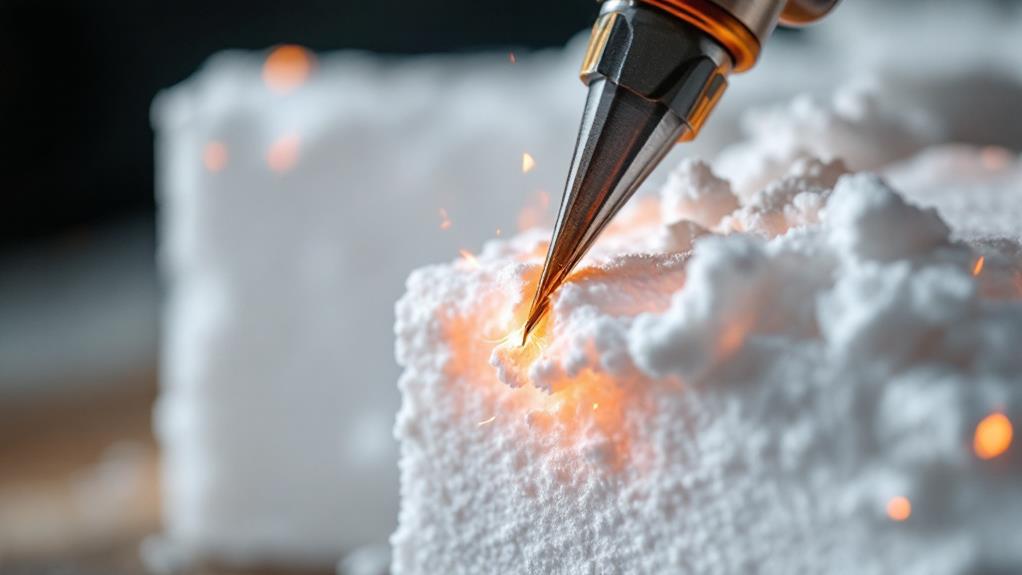
A popular method for cutting Styrofoam is employing a hot wire cutter, which offers precision and ease for diverse projects. The hot wire advantages are numerous; it allows you to make smooth, clean cuts without the mess of loose particles. This tool is perfect for intricate designs, as the heated wire effortlessly glides through the foam, giving you control over the shape and size of your cuts. Regardless of whether you're crafting models, creating art pieces, or working on construction projects, a hot wire cutter can greatly improve your results.
Before you begin, it's essential to follow safety precautions to prevent accidents. Always wear protective gloves and goggles to shield yourself from heat and potential burns. Make sure you're working in a well-ventilated area, as melting Styrofoam can release fumes that shouldn't be inhaled. Check your hot wire cutter for any frayed wires or damage before using it, ensuring it's in proper working condition. Moreover, keep flammable materials away from your workspace to minimize fire risks. By adhering to these guidelines, you'll maintain a safe environment while enjoying the benefits of precise and clean Styrofoam cutting with a hot wire cutter.
Employing a Craft Knife
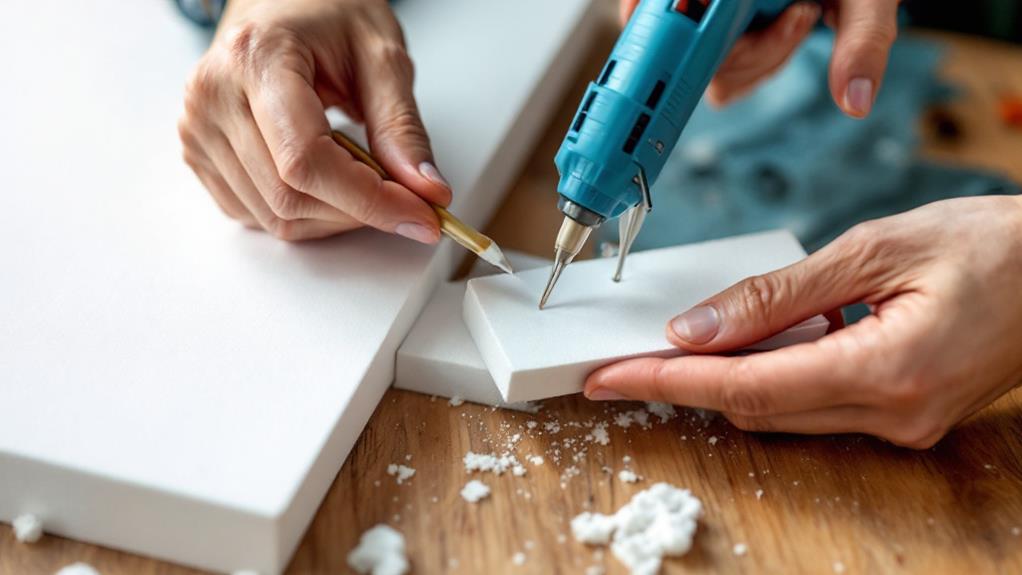
For those who prefer a more hands-on approach, a craft knife offers a versatile alternative for cutting Styrofoam. With its sharp blade, you can carve intricate shapes or trim edges cleanly. To get started, choose a craft knife with a comfortable grip and a sharp, replaceable blade. You'll want to practice some craft knife techniques, such as scoring the Styrofoam lightly before making deeper cuts. This guarantees more precision and control, preventing unintentional breakage.
Before you begin, follow vital safety precautions. Always work on a stable surface to avoid slips and mishaps. Use a cutting mat underneath the Styrofoam to protect your work area and your blade. Keep your fingers away from the blade's path, and never rush through the process. Wearing safety goggles can protect your eyes from small particles that may fly off during cutting.
When handling the craft knife, hold it at a slight angle to achieve clean cuts. Use a gentle sawing motion instead of applying too much pressure, which could damage the Styrofoam. Regularly check your blade for dullness; a sharp blade guarantees smoother cuts and reduces the risk of accidents.
Working With an Electric Knife
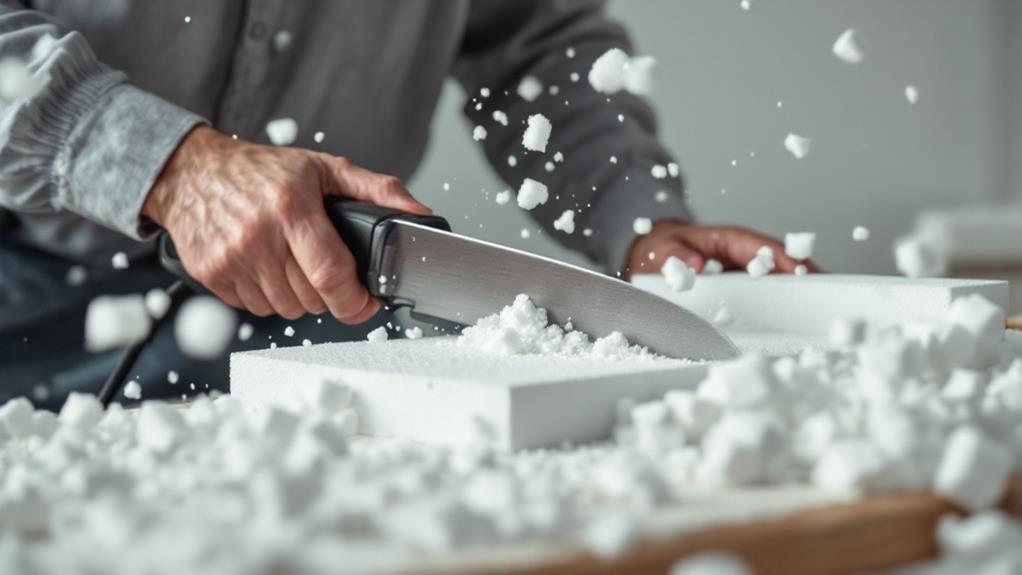
If you're ready to investigate another effective method for cutting Styrofoam, consider using an electric knife. This handy tool allows you to make precise cuts with ease and speed, especially on thicker pieces. Before you start, remember to take proper safety precautions to protect yourself. Always wear safety goggles to prevent any tiny foam particles from getting into your eyes. It's also wise to work in a well-ventilated area to avoid inhaling any dust.
Now, let's talk cutting techniques. Firstly, mark your intended cut line on the Styrofoam with a marker. This guarantees you maintain accuracy. Hold the electric knife firmly and guide it along the line at a steady pace. Avoid applying too much pressure; let the knife's oscillating blades do the work. Move slowly to prevent jagged edges or uneven cuts. If the Styrofoam starts to fray, pause and confirm the knife is clean and the blades are sharp.
Additionally, practice on scrap pieces to get a feel for the tool's speed and control. With a little practice and the right safety measures, you'll achieve clean, precise cuts efficiently.
Slicing With a Saw
When tackling Styrofoam projects, slicing with a saw offers another effective method for achieving clean cuts. To start, consider the different saw types available. A handheld hacksaw is a simple, versatile option, allowing you to cut through Styrofoam with minimal effort. If you're dealing with larger pieces, a coping saw might be more suitable due to its frame design that accommodates deeper cuts. For those with access to power tools, a jigsaw can provide efficient, precise cuts, especially for intricate shapes or curves.
Mastering the right cutting techniques is essential to guarantee smooth results. Begin by marking your cutting line on the Styrofoam with a pencil or marker. Secure the foam in place to prevent unwanted movement during sawing. When using a manual saw, apply gentle, steady pressure and saw in a forward motion, letting the saw do the work. Avoid forcing it, which can lead to rough edges. With a power saw like a jigsaw, set it to a low speed to maintain control and reduce vibrations that might damage the foam. Practice your technique on scrap pieces to perfect your method before tackling the final project.
Tips for Clean Cuts
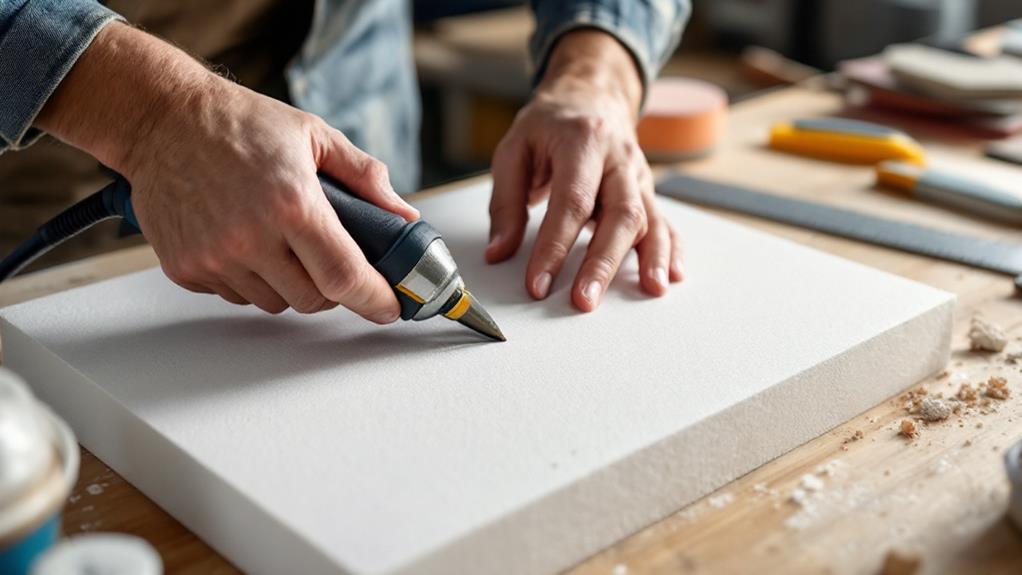
Achieving clean cuts in Styrofoam projects involves more than choosing the right tool. You need to take into account technique variations and follow crucial safety precautions for the best results. Initially, confirm the surface you're working on is flat and stable. This prevents any unwanted movement that could lead to jagged edges. When cutting, use a steady hand and consistent pressure. Quick, jerky motions can ruin the smoothness of your cut.
Experiment with different technique variations. For instance, if you're using a serrated knife, try a gentle sawing motion. With a hot wire cutter, allow the tool to glide through the foam without force. It's significant to practice your technique on scrap pieces of Styrofoam before tackling your main project, verifying you're comfortable with the tool's handling.
Don't forget about safety precautions. Always work in a well-ventilated area since some tools can release fumes from the melting foam. Wear protective eyewear and gloves to safeguard against stray particles and accidental slips. Confirm your workspace is clear of flammable materials, particularly when using tools that generate heat. With these tips, you'll achieve cleaner cuts and safer crafting experiences.
Managing Styrofoam Debris
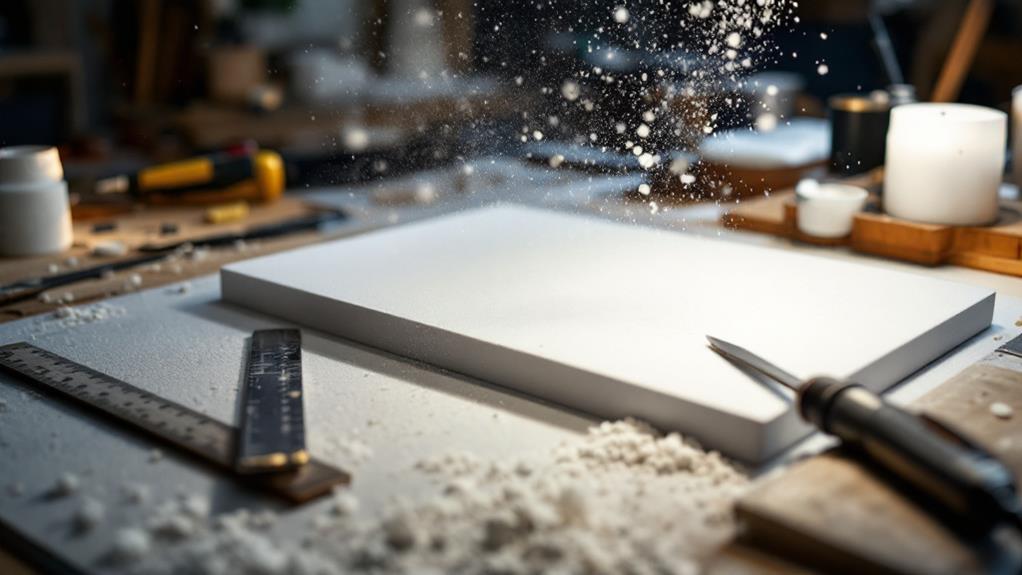
Dealing with Styrofoam debris is an essential part of any foam-cutting project. You might be surprised at how quickly the small bits and pieces can accumulate. It's vital to manage this debris effectively to keep your workspace clean and minimize environmental impact. Start by collecting all the scraps and shavings you create. This step not only tidies your area but also makes it easier to contemplate recycling Styrofoam, which can greatly help in reducing waste.
Here are some practical steps to manage Styrofoam debris:
- Use a vacuum: A shop vacuum with a hose attachment can quickly suck up small pieces, keeping your space clear.
- Designate a bin: Have a separate container for Styrofoam waste to make sorting easier for recycling.
- Explore recycling options: Check if local facilities accept Styrofoam for recycling, as not all areas have this capability.
- Reuse creatively: Think about using larger pieces for future projects or donating them to schools for art and craft projects.