How Is Polystyrene Recycled?
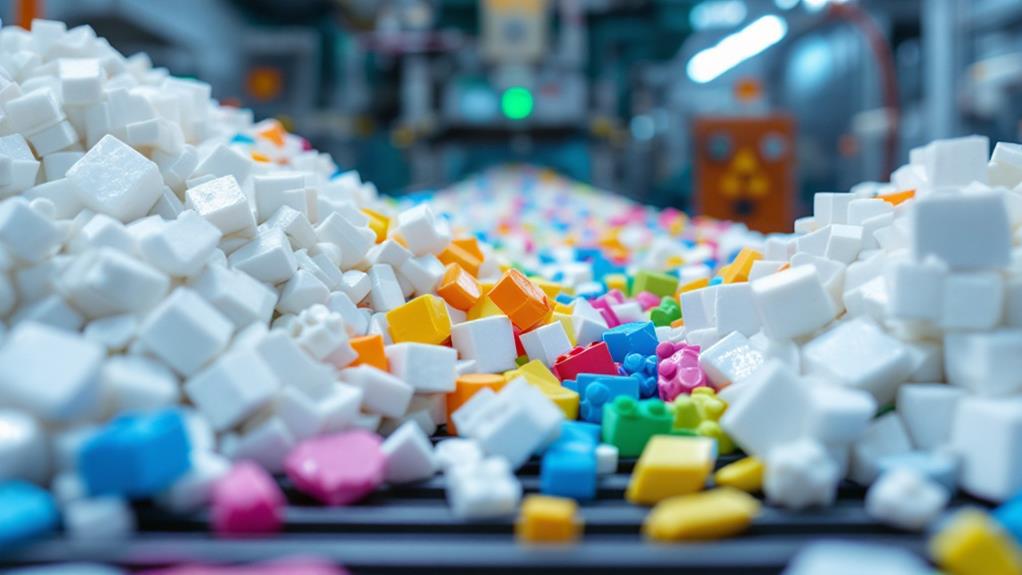
To recycle polystyrene, start by collecting and sorting it from your other waste, ensuring it's clean and free of contaminants. Polystyrene is bulky, so it's compacted into dense blocks using equipment like compactors and densifiers. This process makes it easier and more cost-effective to transport. Advanced recycling technologies, such as chemical recycling and thermal depolymerization, break it down into its original components, which can be reused to create new products. By participating in local recycling initiatives, you can help keep polystyrene out of landfills and contribute to a circular economy. There's much more to investigate in sustainable recycling practices.
Understanding Polystyrene Waste
In relation to managing polystyrene waste, understanding its origins and impact is fundamental. Polystyrene, often recognized as Styrofoam, is a pervasive material in packaging and insulation. It's lightweight, durable, and inexpensive, making it a popular choice across different industries, including food packaging and handling. However, its environmental impact is significant. When discarded, polystyrene doesn't break down easily. It can linger in the environment for centuries, contributing to pollution and harming wildlife. You've probably seen bits of it scattered on beaches or in landfills, and it's a stark reminder of the recycling challenges it poses.
One major challenge is its recycling process. Polystyrene is mostly air, making it bulky and expensive to collect and transport. It requires specialized equipment to compact, which isn't available everywhere. Moreover, contamination with food or other substances further complicates recycling efforts. The process demands careful cleaning and sorting, which can be both time-consuming and costly. As a result, many recycling facilities opt not to accept it, leading to a reliance on landfills. By grasping the complexities of its environmental impact and recycling challenges, you can better appreciate the ongoing efforts needed to manage polystyrene waste effectively.
Collection and Sorting
The expedition of polystyrene recycling begins with the essential step of collection and sorting. You need to understand that the effectiveness of recycling largely depends on how well you gather and categorize polystyrene waste. Plastics, including polystyrene, account for significant waste in municipal statistics, with over 14 million tons reported in 2017, highlighting the significance of effective recycling efforts environmental concerns. Collection methods vary, but common approaches include curbside pickups, drop-off centers, and specialized recycling programs. Each method helps gather polystyrene from households, businesses, and other sources, ensuring it's ready for the next steps in the recycling process.
Once collected, sorting processes come into play. You should realize that sorting is essential because polystyrene often gets mixed with other materials. Proper sorting makes subsequent recycling steps more efficient. You might use manual sorting, where workers separate polystyrene by hand, or automated systems, which use technology like conveyor belts and scanners to detect and isolate polystyrene from other recyclables.
Compaction Techniques
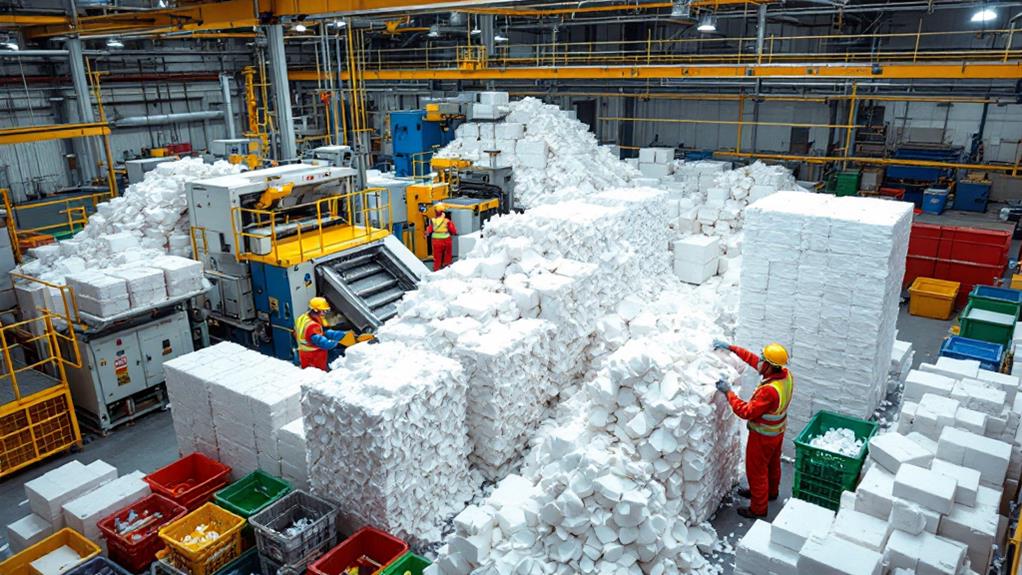
After sorting, the focus shifts to compaction techniques, a fundamental step in the polystyrene recycling process. You'll find that these methods are necessary in reducing the volume of polystyrene waste, making transportation and storage more efficient. By employing a range of compression methods, you can substantially decrease the size of bulky polystyrene items. This not only saves space but also cuts down the costs associated with moving large volumes of waste.
Using equipment like compactors and densifiers, you can compress polystyrene into dense blocks. These machines work by applying pressure, and sometimes heat, to transform lightweight, airy polystyrene into manageable forms. You'll notice that this compaction plays a critical role in minimizing the environmental impacts of polystyrene waste. By reducing the total volume, you lessen the load on landfills and facilitate easier handling in the recycling chain.
Additionally, compacted polystyrene is more appealing to recycling facilities because it's easier to process. It streamlines the subsequent steps in recycling, making the entire operation more sustainable. By focusing on effective compaction techniques, you're helping to guarantee that polystyrene recycling is both efficient and environmentally friendly.
Advanced Recycling Technologies
Revolutionary advancements in recycling technologies are reshaping how polystyrene is processed, offering more efficient and sustainable methods. You've probably heard of chemical recycling, a process that breaks down polystyrene into its original monomers. This method allows you to recover the purest form of the material, making it easier to reuse. Chemical recycling doesn't just melt the polystyrene; it breaks the bonds at a molecular level, ensuring that the recycled product is as close as possible to virgin materials. This approach can greatly reduce the environmental impact of polystyrene waste.
Another cutting-edge technique you should know about is thermal depolymerization. This process uses heat to break the long polymer chains in polystyrene back into smaller molecules. Thermal depolymerization mimics natural geological processes, but it does so at a much faster rate. By applying heat and pressure, you can convert polystyrene into valuable by-products like oil and gases, which can be used to produce new plastics or other materials.
Conversion to Reusable Materials
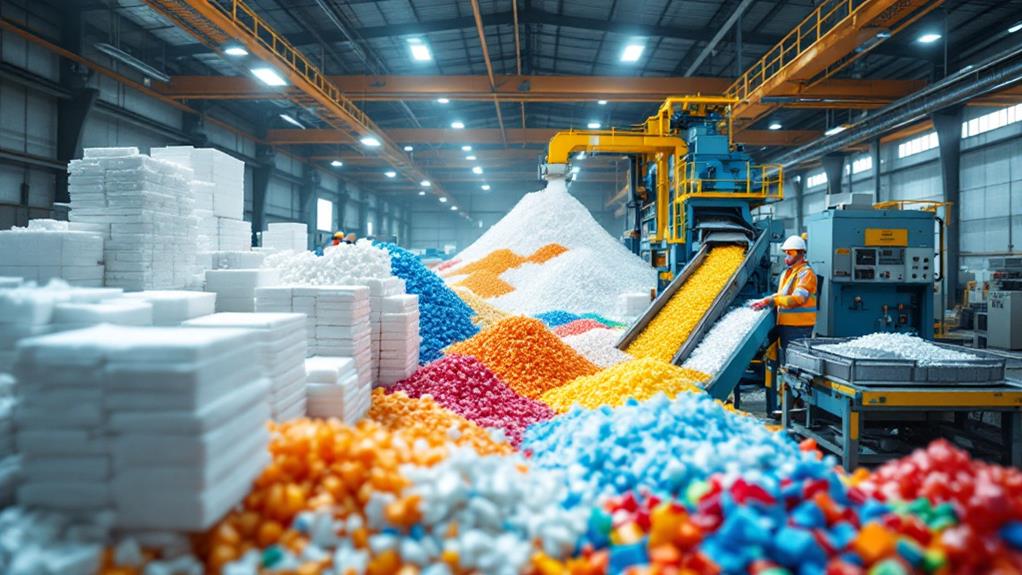
Often, turning polystyrene waste into reusable materials involves creative processes that transform it into something new and valuable. You might be surprised to learn that polystyrene's unique chemical properties can be harnessed to create useful products, reducing its environmental impact. By breaking down polystyrene into its basic chemical components, you can repurpose this plastic waste into materials like insulation, picture frames, or even new packaging products. This transformation not only helps lessen the burden on landfills but also contributes to a more sustainable use of resources.
To start, you need to understand polystyrene's chemical structure, which is primarily composed of styrene monomers. By applying heat or solvents, you can dismantle these monomers and reconfigure them into different forms. This process allows you to develop new materials with altered properties that suit diverse applications, from construction to consumer goods.
Reducing the environmental impact of polystyrene is essential, given its persistence in the environment. By converting it into reusable materials, you're not just giving polystyrene a second life; you're also promoting a circular economy. This approach minimizes waste and makes the most of the resources we use every day.
Industry Innovations in Recycling
In recent years, several industry innovations have emerged to tackle the challenge of polystyrene recycling, making the process more efficient and sustainable. You'll find that companies are now exploring biodegradable alternatives to traditional polystyrene. These alternatives are designed to break down more naturally, reducing the long-term impact on the environment. As a result, the shift towards these materials can notably lessen the burden on recycling facilities and landfills.
Another key innovation is the integration of circular economy principles into polystyrene recycling. By focusing on keeping materials in use for as long as possible, manufacturers are rethinking product design to guarantee easier recycling and repurposing. This approach not only reduces waste but also conserves resources by turning used polystyrene into new products.
Advanced recycling technologies have also been developed. For instance, some companies are using chemical recycling methods to break polystyrene down to its basic components, which can then be used to create new polystyrene products. This closed-loop process minimizes waste and optimizes resource efficiency. By embracing these industry innovations, you're seeing a move towards a more sustainable and responsible way of managing polystyrene waste.
Individual Contributions to Recycling
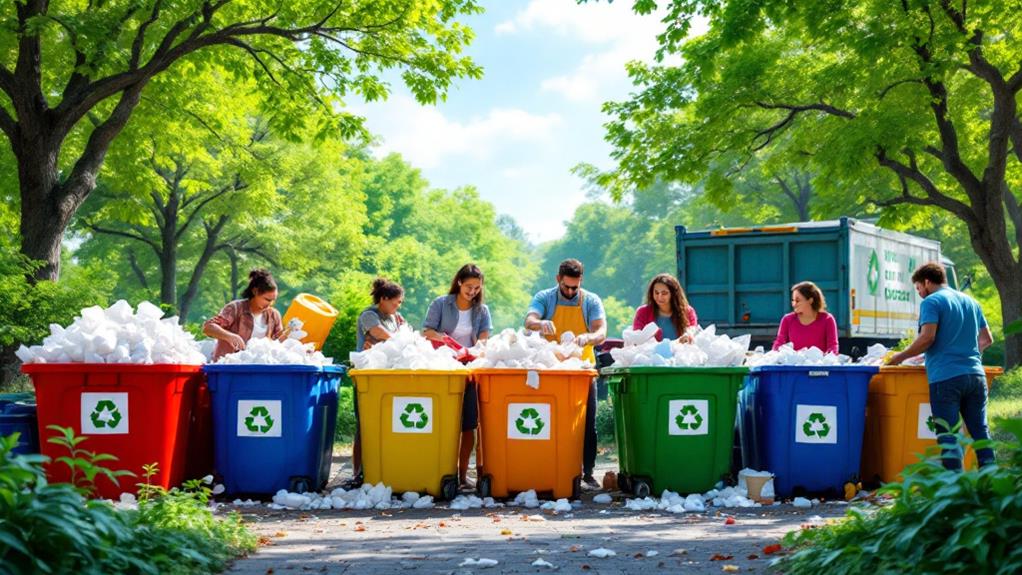
While industry innovations are essential, individual contributions to recycling play a significant role in the sustainability of polystyrene management. You have a personal responsibility to guarantee that polystyrene products are disposed of properly. Begin by separating polystyrene from other recyclables at home. This simple act can make a big difference. Educate yourself about the recycling codes and find local facilities that accept polystyrene. Not every recycling center processes it, so do a bit of research to find the right place.
Engage with community initiatives aimed at increasing polystyrene recycling. Joining a local recycling program or volunteer group can enhance your impact. These initiatives often organize collection events, making it easier for everyone to dispose of polystyrene responsibly. By participating, you contribute to a collective effort, elevating recycling rates and reducing environmental impact.
Spread awareness by talking to friends and neighbors about the importance of recycling polystyrene. Encourage them to take similar steps. Your actions can inspire others to take their personal responsibility seriously, creating a ripple effect in your community. Remember, every piece of polystyrene you recycle counts towards a more sustainable future.