How Is Styrofoam Made?
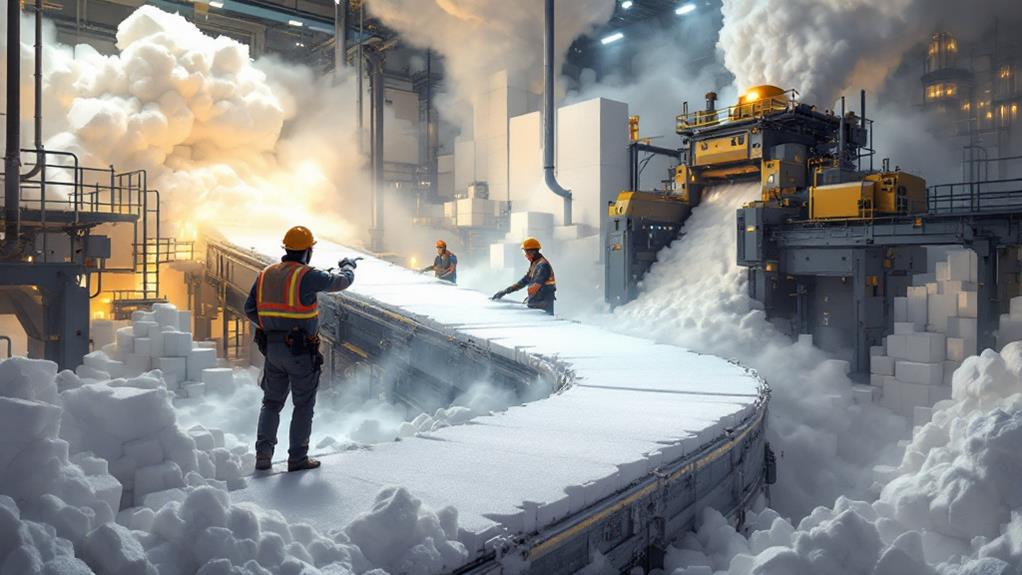
You start with styrene, a liquid from petroleum, and through polymerization, it turns into solid polystyrene. Introduce a catalyst to speed up this transformation by linking monomers into long chains. Next, take polystyrene beads and heat them so they expand up to 50 times their size, capturing air to create Styrofoam's light and insulating properties. Pour these expanded beads into molds, steam them to fuse together, and form different shapes, from food containers to packaging blocks. This process shapes the final product's form and strength. There's more to investigate about its environmental impacts and potential for recycling.
Raw Materials and Chemistry
To understand how Styrofoam is made, you need to start with its essential raw materials and the chemistry behind it. Styrofoam, a type of expanded polystyrene foam, begins its life with styrene, a liquid hydrocarbon that's a key ingredient. Derived from petroleum, styrene undergoes a chemical transformation to become a solid polymer. This transformation imbues Styrofoam with its unique properties—lightweight, insulating, and moisture-resistant. These characteristics make it incredibly adaptable for a range of application uses.
You'll find that these properties are integral to why Styrofoam is used in so many industries. Its lightweight nature makes it ideal for packaging, markedly reducing shipping costs while protecting fragile goods. The insulating properties make it suitable for building materials, providing thermal resistance in walls, roofs, and foundations. In the food industry, its moisture-resistant quality guarantees that products like disposable cups and food containers maintain their integrity when exposed to liquids.
Understanding the chemistry of Styrofoam's raw materials helps you see why it's favored for these application uses. Each property of Styrofoam ties back to the initial transformation of styrene, highlighting the importance of these raw materials in creating a product used worldwide.
Polymerization Process
Transforming styrene into Styrofoam involves a captivating polymerization process. You start with styrene, a liquid hydrocarbon, which undergoes a reaction to form polystyrene, the polymer used in Styrofoam. This transformation relies on polymerization, a chemical reaction where small molecules, called monomers, link together to form long chains. These chains are what give the final product its unique polymer properties, like flexibility and strength. Notably, just as baking soda is used to create different textures in culinary applications, the polymerization process also guarantees a unique texture in the final Styrofoam product, enhancing its insulating properties and durability baking soda's culinary applications.
In the manufacturing techniques used, a catalyst is introduced to initiate the reaction, making certain that the styrene molecules bind effectively. This catalyst is vital because it speeds up the process without being consumed, allowing the creation of uniform polymer chains. You'll find that controlling temperature and pressure is fundamental during this stage, as they can greatly affect the polymer properties, influencing the quality of the Styrofoam produced.
Once the polymerization process is complete, you have polystyrene, which can be further processed to meet specific application needs. The ability to tailor the polymer properties through precise manufacturing techniques guarantees that Styrofoam can be adapted for diverse uses, from insulation to packaging. Understanding this polymerization process is key to appreciating how versatile and adaptable Styrofoam truly is.
Expansion Techniques
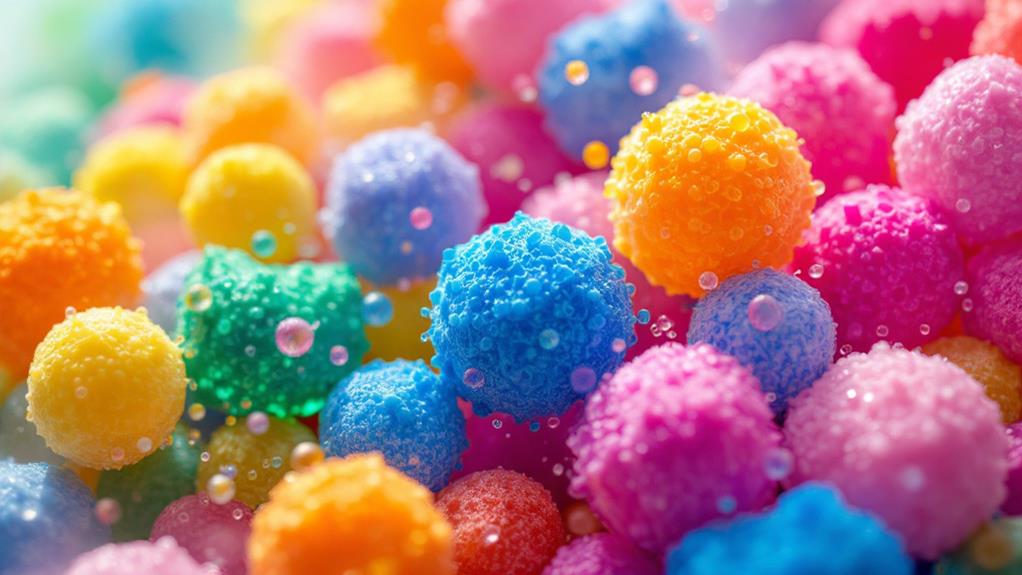
Having completed the polymerization process, the next step in creating Styrofoam is the fascinating expansion techniques. You'll find that these techniques are vital for transforming small polystyrene beads into the lightweight, foam-like material known for its excellent insulation properties. This transformation begins when you expose the beads to heat, typically in the form of steam. As the beads absorb the steam, they expand dramatically, increasing in volume by up to 50 times their original size. This expansion results in a product that is composed of 95% air and only 5% polystyrene, contributing to its low density and lightweight nature, which is critical for diverse applications in packaging and construction the manufacturing process.
During this expansion phase, each bead's structure changes, forming a closed-cell composition that traps air. This trapped air is what gives Styrofoam its remarkable insulation properties, making it ideal for use in products ranging from coffee cups to building materials. You'll notice that the beads don't just expand randomly. Instead, they form a uniform consistency, which is vital for the material's strength and effectiveness.
The key to successful bead formation lies in controlling the temperature and duration of the heating process. By carefully managing these factors, you guarantee that the beads expand uniformly and create a consistent, high-quality product. Through these techniques, you're setting the stage for the subsequent molding and shaping processes.
Molding and Shaping
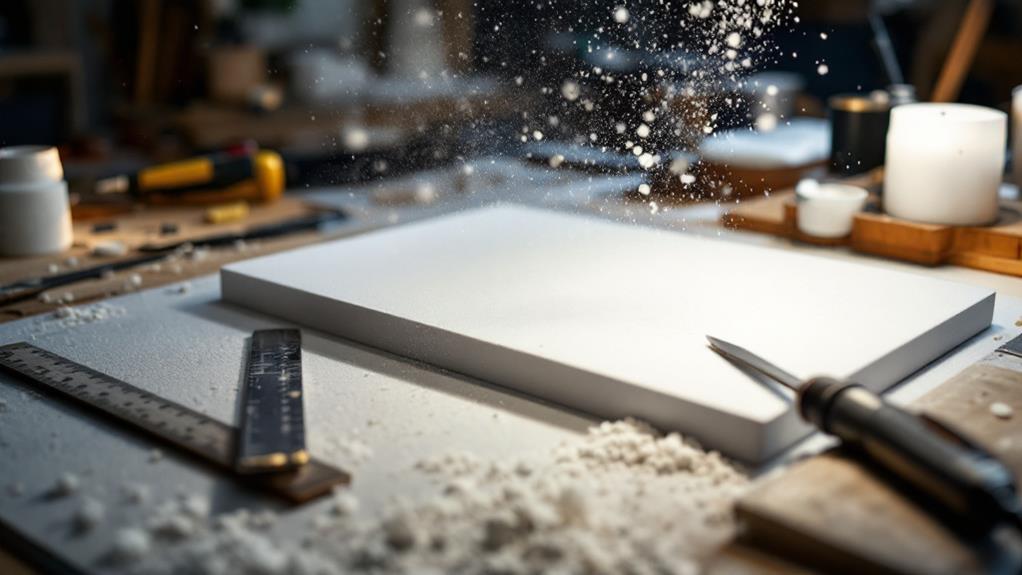
Once the beads have expanded, they move on to the molding and shaping stage, where they truly come into their own. During this phase, you'll see how the Styrofoam transforms from loose beads into the solid forms you're familiar with. The process starts by pouring these expanded beads into a mold. There are different mold types, each designed for specific products, regardless of it's a simple block or a complex shape like a cooler or packaging material.
In the mold, steam is applied, causing the beads to fuse together tightly. This is where shaping techniques come into play. The beads' fusion allows for intricate designs and precise dimensions, meeting the particular needs of diverse applications. Some molds have multiple cavities, enabling the simultaneous production of several items.
You can observe how the choice of mold types and shaping techniques greatly impacts the final product's characteristics. For instance, denser molding results in stronger, more durable Styrofoam items, while lighter molding can create more flexible products. This stage is vital because it determines the Styrofoam's final form, size, and strength, making it ready for its intended use.
Environmental Considerations
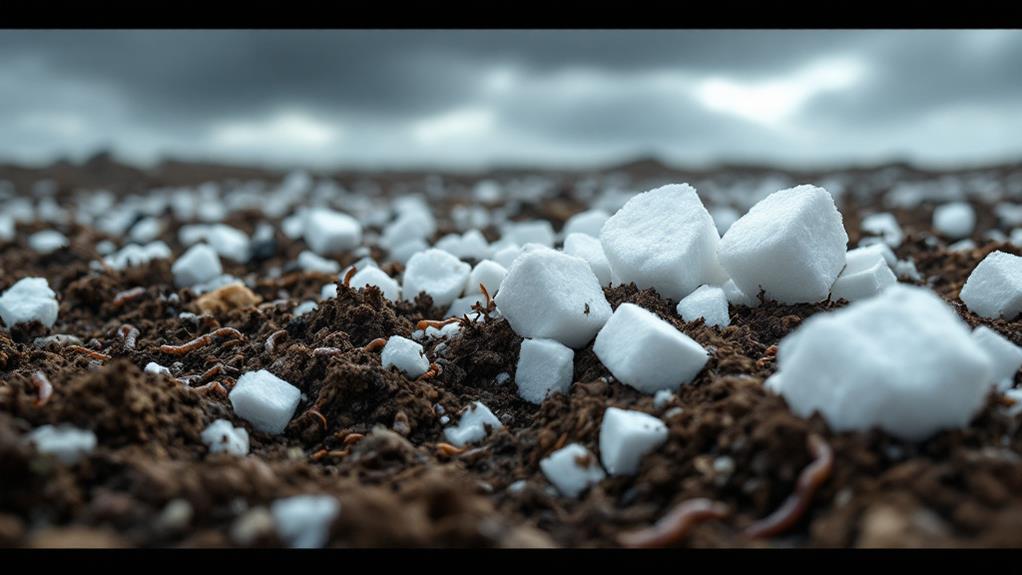
While the molding and shaping process brings Styrofoam to life, it's vital to also consider its environmental impact. Styrofoam, or expanded polystyrene, is notorious for its durability, which, unfortunately, translates to a long-lasting presence in landfills. It's not biodegradable, meaning it can persist in the environment for hundreds of years, contributing considerably to pollution and posing a threat to wildlife. This makes understanding and addressing its environmental footprint fundamental.
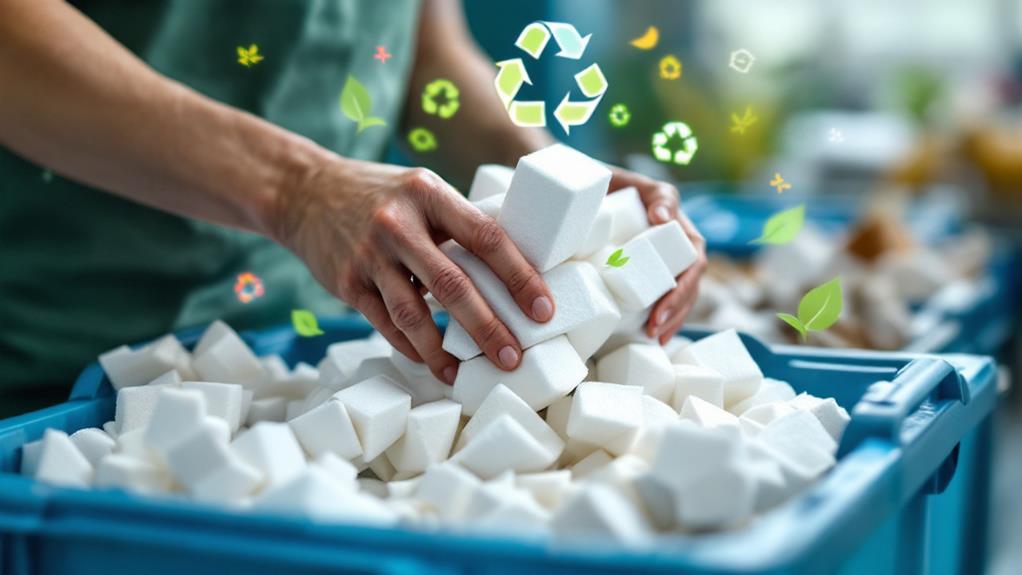
One of the main challenges with Styrofoam is its recycling. Traditional recycling centers often don't accept it due to the cost and complexity of the process. However, there are recycling alternatives that you can investigate. Some specialized facilities do offer recycling programs for Styrofoam, converting it into products like picture frames or insulation. It's worth researching local options to guarantee proper disposal.
Moreover, you can reduce Styrofoam's environmental impact by opting for products made from sustainable materials. Encouraging businesses to use biodegradable or recyclable packaging alternatives can greatly reduce waste. By making informed choices and advocating for responsible practices, you can help mitigate the adverse effects of Styrofoam on the environment.