How Long Does Styrofoam Take to Decompose?
Styrofoam, made of polystyrene foam, can take up to 500 years to decompose. It's primarily composed of air, making it lightweight and insulative but highly resistant to biodegradation. Unfortunately, this means it occupies landfill space extensively, and contributes to pollution through microplastics that harm wildlife and oceans. Recycling efforts are limited because it's challenging to process Styrofoam efficiently. While its breakdown is slow and often ineffective, exploring alternatives like biodegradable packaging can help reduce its environmental impact. Uncover more about how you can address these challenges with sustainable practices and options beyond traditional Styrofoam use.
Understanding Styrofoam Composition
Styrofoam, that ubiquitous material often found in packaging and insulation, is actually a brand name for a type of polystyrene foam. Known for its lightweight and insulative styrofoam properties, it's composed of 95% air, making it great for protecting fragile items during shipping. Its buoyancy and thermal resistance make it ideal for a variety of applications. However, these same properties contribute to its recycling challenges.
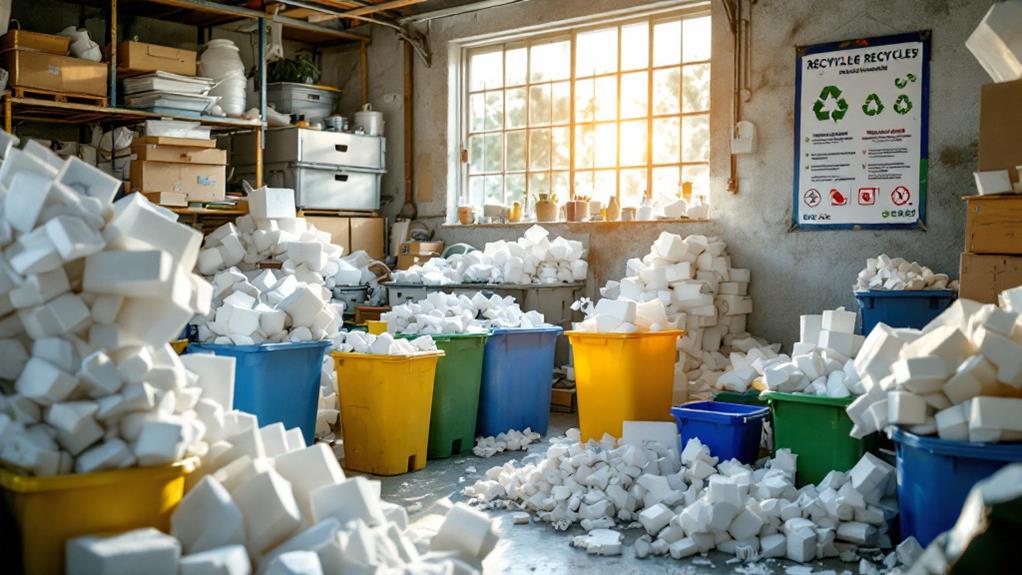
When you try to recycle Styrofoam, you'll find it's not as simple as tossing it in the blue bin. The material's composition makes it difficult to break down and repurpose. Many recycling facilities lack the infrastructure to handle it efficiently. Because Styrofoam is mostly air, transporting it to recycling centers can be costly and inefficient, often outweighing the benefits.
Furthermore, Styrofoam's low density means it takes up significant space in landfills despite its light weight. This contributes to the recycling challenges since the material doesn't compact well, making it less attractive for recyclers. While there are some specialized recycling programs, they're not widely available, leaving consumers with few options for responsible disposal. Understanding these issues is key to tackling Styrofoam's lifecycle problems.
Environmental Impact of Styrofoam
While understanding Styrofoam's composition highlights its recycling challenges, it's vital to recognize the broader environmental impact this material has. Styrofoam pollution is a significant concern, as this material is non-biodegradable and often ends up in landfills, oceans, and natural habitats. It breaks down into smaller pieces known as microplastics, which are harmful to wildlife and marine life. Animals often mistake these particles for food, leading to ingestion that can be fatal. Furthermore, the production of Styrofoam involves heating and expanding polystyrene beads, a process that consumes fossil fuels and contributes to greenhouse gas emissions, further straining our environment.
Efforts in Styrofoam recycling are limited due to the material's lightweight nature, making it economically unviable to transport and recycle. This means a vast majority of Styrofoam waste isn't recycled and instead contributes to environmental degradation. When you dispose of Styrofoam improperly, you contribute to this growing problem. The material's production also consumes fossil fuels and releases harmful emissions, further exacerbating its environmental footprint.
You can help mitigate this impact by reducing your Styrofoam use, opting for alternatives like paper, glass, or reusable containers. Supporting companies and policies that promote Styrofoam recycling initiatives is another way to make a difference. Together, these actions can help reduce Styrofoam pollution and protect the environment.
Decomposition Process Overview
When considering how long it takes for Styrofoam to decompose, brace yourself for a shock—this material can persist in the environment for hundreds of years. Unlike organic materials, Styrofoam doesn't break down easily. It's composed of polystyrene, a petroleum-based plastic, which makes it resistant to natural biodegradation methods. Microorganisms that usually help in decomposing organic waste can't efficiently process Styrofoam, causing it to linger in landfills and oceans. Interestingly, much like how geothermal energy is harnessed from deep within the Earth, groundbreaking approaches are being investigated to manage Styrofoam waste effectively, including advancements in recycling methods.
You might wonder if there are alternative ways to handle Styrofoam waste. Indeed, recycling techniques exist, though they're not widely applied. Some facilities can compress Styrofoam into dense blocks for reuse, but the process is costly and not universally available. Furthermore, chemical recycling methods are emerging, where Styrofoam is broken down into its original components for repurposing. However, these methods are still in developmental stages and aren't yet practical on a large scale.
Understanding the decomposition process is essential for addressing the Styrofoam dilemma. While it sits in our environment, examining recycling techniques and creating new biodegradation methods can pave the way for more sustainable solutions, ultimately reducing Styrofoam's ecological footprint.
Factors Affecting Breakdown Time
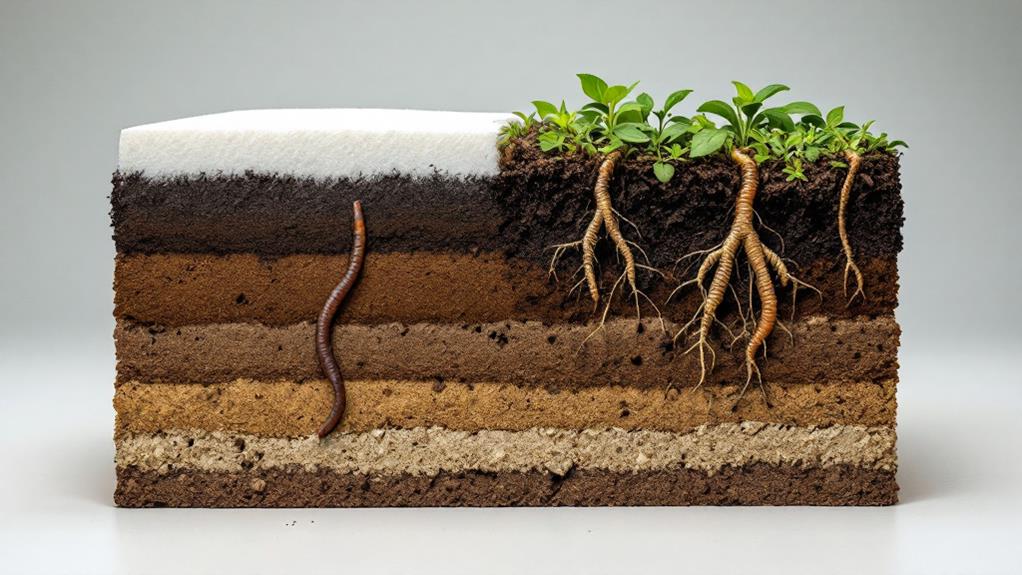
Addressing the Styrofoam issue involves understanding the diverse factors that influence its breakdown time. One of the key factors is microbial activity. Microorganisms play an essential role in breaking down many materials, but Styrofoam is particularly resistant to their efforts. Its chemical structure doesn't provide the nutrients that microbes typically need to thrive, resulting in a prolonged decomposition process. You might find that in environments where microbes are more active, the breakdown might be slightly faster, but don't expect drastic changes.
Temperature influence is another important factor to take into account. Higher temperatures can accelerate chemical reactions, potentially leading to a quicker breakdown of materials. However, with Styrofoam, this effect is minimal. Even in warmer climates, where you might think decomposition would speed up considerably, Styrofoam remains largely intact for decades. The material's resilience means that temperature changes don't have as much impact as they would on organic materials.
Comparisons With Other Materials
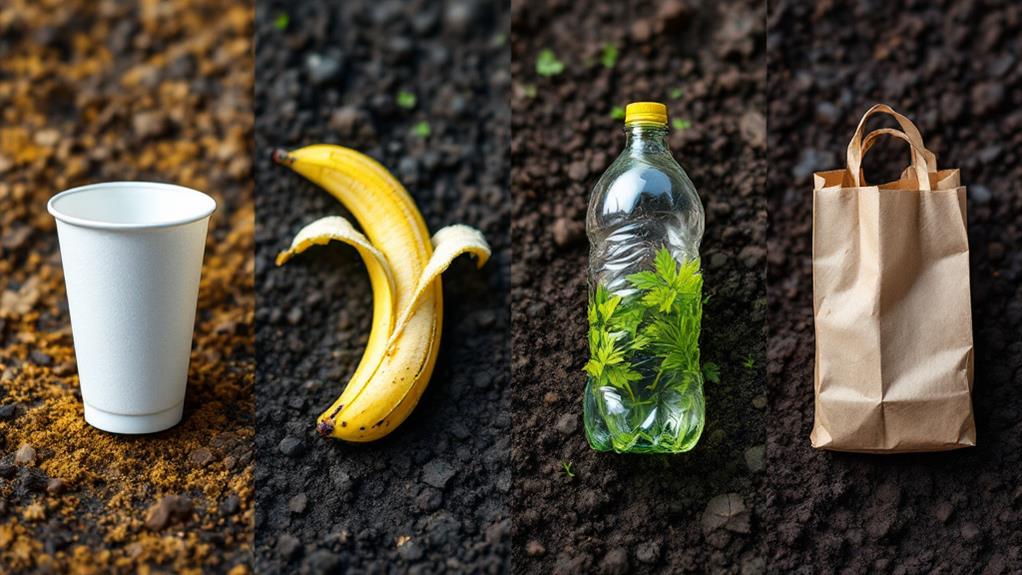
Compared to other materials, Styrofoam takes a remarkably long time to decompose. While organic waste like fruit peels or paper may break down in weeks or months, Styrofoam can persist for hundreds of years. This endurance is largely due to its chemical structure, which resists natural breakdown processes. You might have encountered biodegradability myths suggesting that Styrofoam will eventually decompose in landfills. Unfortunately, these claims aren't accurate. Styrofoam's resilience in the environment is a major concern for waste management.
When you look at materials like glass or aluminum, they might seem similar in their persistence. However, these materials have well-established recycling processes, unlike Styrofoam recycling, which remains limited and inefficient. Glass and aluminum can be continuously recycled without degrading their quality, greatly reducing their environmental impact.
Plastic, another common material, decomposes faster than Styrofoam but still takes decades. Unlike Styrofoam, multiple plastics are increasingly being designed for better biodegradability and recyclability. Understanding these differences helps you appreciate why managing Styrofoam waste is challenging. It's not just about its longevity but also the limited recycling options, making it essential to reconsider its use when possible.
Sustainable Alternatives to Styrofoam
Exploring sustainable alternatives to Styrofoam is crucial for reducing environmental impact. You can make a significant difference by choosing materials that break down naturally and don't contribute to pollution. Biodegradable packaging is a great option. It's made from organic materials like cornstarch or sugarcane, which decompose much faster than Styrofoam, sometimes in just a few months. This means less waste sitting in landfills and more nutrients returning to the earth.
Another excellent choice is compostable materials. These materials are designed to break down in composting conditions, turning into nutrient-rich soil that can be used to nurture new plants. Compostable items, like those made from bamboo or palm leaves, are perfect for single-use products. They're sturdy enough for everyday use but won't stick around for centuries like Styrofoam does.