How Plastic Impacts Marine Life: Shocking Facts

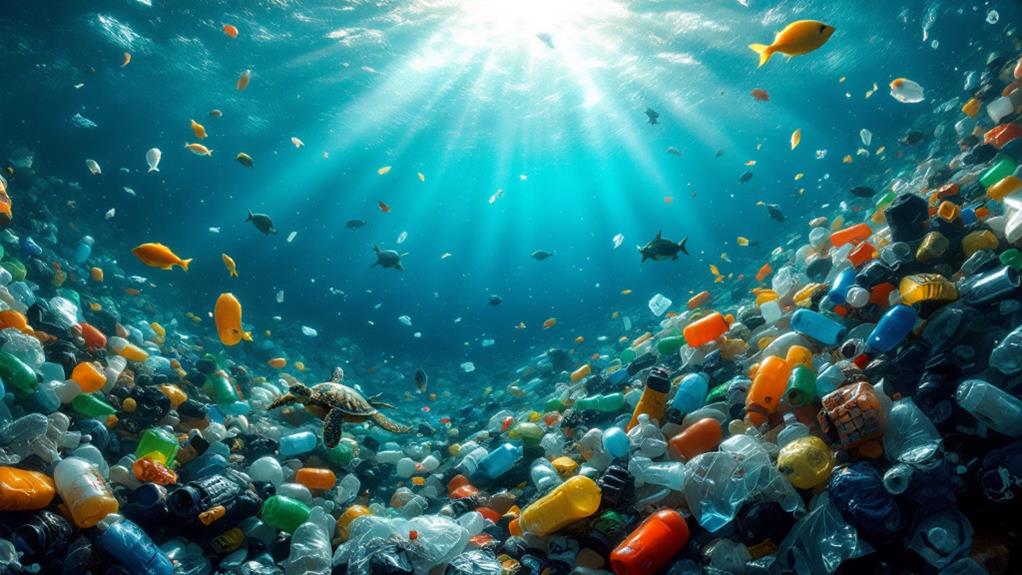
Plastic pollution in oceans is harming marine life beyond belief. Tons of plastic ruin marine habitats, threaten biodiversity, and even endanger entire species. Animals mistakenly eat plastic, which causes blockages and starvation. Worse, microplastics are invading the food chain, affecting everything from plankton to predatory fish. Discarded fishing gear entangles creatures, and coral reefs suffer from smothering and diseases. Plastic chemicals disrupt marine mammal health, affecting reproductive success. These toxic materials extend their impact to humans through contaminated seafood and air pollution. Each fact highlights the urgency of the situation, hinting there's more beneath the surface waiting for you.
Scale of Oceanic Plastic Pollution
Oceanic plastic pollution has reached staggering levels, with millions of tons dumped into the sea each year. As you explore the scale of this issue, it's fundamental to recognize that source identification plays a crucial role in tackling the problem. By pinpointing where the plastic originates, you can better understand how to prevent further contamination. A considerable amount of this waste comes from land-based sources, such as littering, poor waste management, and industrial activities. However, marine-based sources like fishing nets and shipping activities also contribute notably. Additionally, the vastness of our oceans, which include five principal divisions like the Pacific and Atlantic Oceans, makes it even more challenging to address this pollution effectively.
To combat this overwhelming tide of plastic, prioritizing pollution prevention is indispensable. You can start by supporting and advocating for policies that reduce plastic production and promote recycling. Encouraging the development of biodegradable alternatives can also make a considerable difference. It's significant to participate in and organize clean-up initiatives, which not only remove existing pollution but also raise awareness about the issue.
Threat to Marine Biodiversity
The fragility of marine ecosystems becomes painfully evident when considering plastic's threat to marine biodiversity. You might not realize it, but plastic pollution leads to severe habitat destruction. Coral reefs, seagrass beds, and mangroves, which serve as essential habitats, get smothered or physically damaged by accumulating plastic debris. This destruction not only diminishes the habitat quality but also affects the survival of numerous marine species. Just as the extinction of dinosaurs, attributed to drastic environmental changes, impacted ecosystems greatly, the ongoing degradation caused by plastic pollution poses a similar threat to marine life extinction theories. You can imagine how a home filled with debris could make life challenging, if not impossible.
Species extinction is another alarming consequence of plastic pollution. Many marine organisms, from tiny plankton to massive whales, face heightened risk. The loss of biodiversity can have cascading effects on the entire ecosystem. When a species disappears, it can disrupt food chains and impact other species that rely on it, leading to further ecological imbalance.
Consider the long-term implications: the ocean's health depends on its biodiversity. A rich variety of life forms guarantees resilience against changes and stressors. By protecting marine biodiversity from plastic threats, you help maintain the ocean's ability to support life, including human life, which relies heavily on oceanic resources.
Plastic Ingestion by Sea Creatures
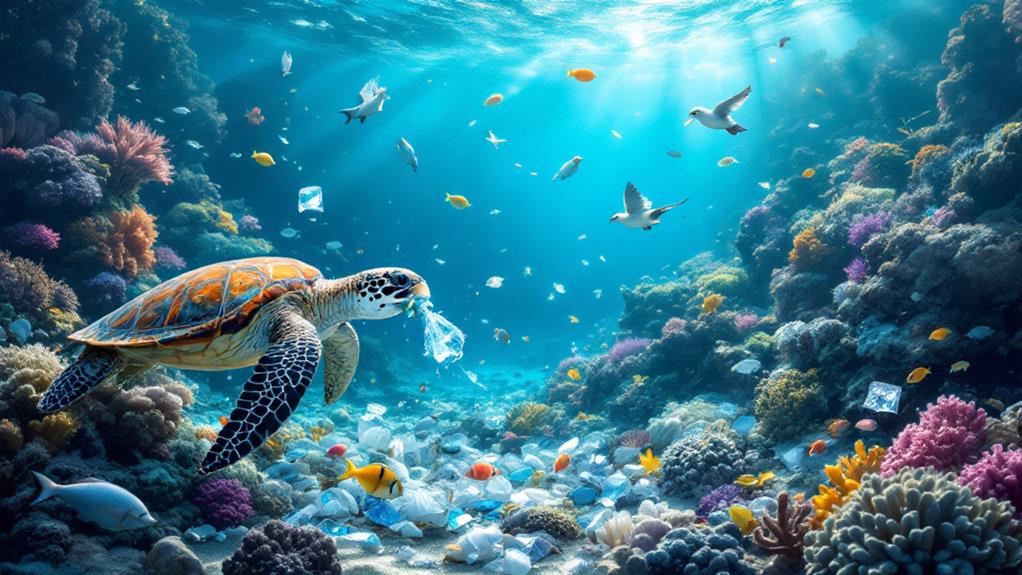
Imagine you're a sea creature traversing the vast ocean, only to be fooled by floating bits of plastic that look like food. It's a harsh reality for many marine animals, from small fish to massive whales. Numerous plastic types, such as microplastics, bottle caps, and plastic bags, mimic prey and other natural food sources. Unfortunately, these bits end up in the stomachs of countless sea creatures, leading to dire consequences.
Ingestion rates of plastic by marine life are alarmingly high. Studies show that species like sea turtles often mistake plastic bags for jellyfish. Birds, such as albatrosses, consume plastic fragments in place of fish eggs. The ingestion of plastic can cause internal injuries, blockages, and even starvation, as the creatures feel falsely satiated.
Moreover, as plastics break down, they release toxic chemicals, further damaging marine ecosystems. You might not realize it, but these plastics also enter the food chain, affecting predators and eventually, humans. By understanding the types of plastic and their ingestion rates, we can better address this issue and protect our oceans. It's essential to reduce plastic usage and improve waste management to mitigate these impacts.
Entanglement and Its Consequences
As you investigate deeper into the issue of marine plastic pollution, another grim reality surfaces—entanglement. Every year, countless sea creatures become ensnared in discarded fishing gear, a significant component of oceanic plastic waste. Ghost nets, lines, and traps drift through the water, creating invisible hazards. Sea turtles, seals, and even whales are vulnerable to these silent killers. When entangled, their movements are restricted, making it hard to swim, find food, or escape predators. Tragically, this often leads to suffocation, starvation, or fatal injuries.
You might wonder about the efforts to address this crisis. Rescue efforts are underway globally, with teams dedicated to freeing trapped animals. These operations are challenging and require specialized skills and equipment. Rescue squads work tirelessly, often racing against time to prevent further harm. While these efforts save lives, they're not a permanent solution. Reducing the amount of plastic waste entering the oceans is crucial to prevent entanglements in the beginning.
As much as rescue efforts are commendable, the fight against marine entanglement demands more proactive measures. Supporting initiatives to clean up the oceans and promoting sustainable fishing practices can mitigate the devastating effects of discarded fishing gear.
Microplastics in the Food Chain
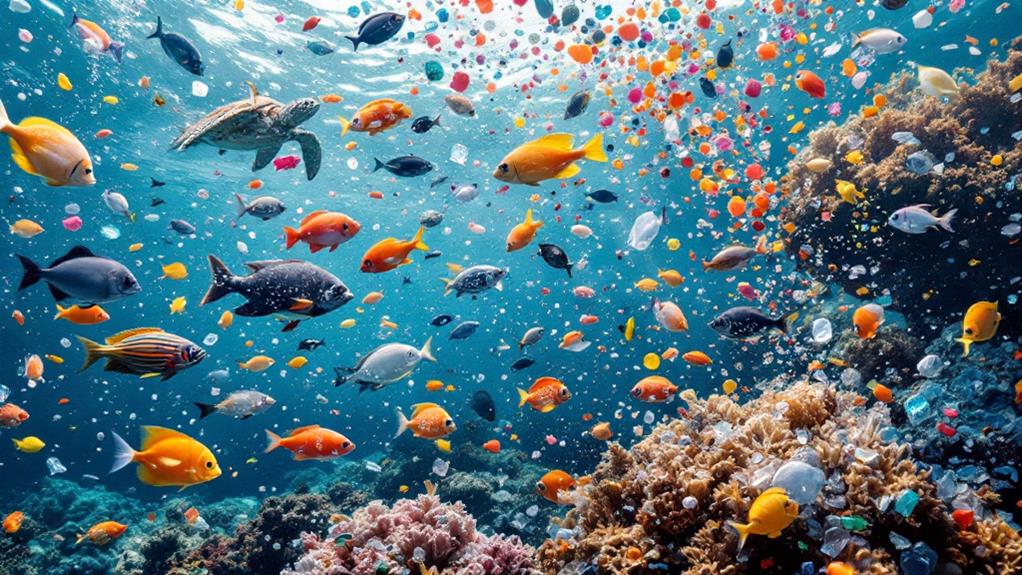
Beyond the visible dangers of entanglement, another insidious threat lurks beneath the ocean's surface—microplastics infiltrating the food chain. These tiny particles, often less than five millimeters, originate from numerous microplastic sources, including degraded larger plastics, synthetic fibers from clothing, and microbeads in cosmetic products. You might not realize it, but once these microplastics enter the marine environment, they're ingested by plankton, the foundation of the oceanic food web.
As small fish consume plankton, the microplastics begin their progression up the food chain. Larger predators eat these smaller fish, and so on, leading to bioaccumulation effects. Microplastics accumulate in the tissues of marine animals and can cause physical harm, such as lacerations and blockages, and chemical harm through the leaching of toxic substances.
You've probably heard that what happens in the ocean doesn't stay there. Humans are part of this chain too. Consuming seafood means you're at risk of ingesting these microplastics, along with their harmful pollutants. This contamination of the food chain is not just a marine issue; it's a global health concern, reminding us of the urgent need to address plastic pollution.
Impact on Coral Reefs
Coral reefs face a significant threat from plastic pollution, which can smother and harm these fundamental marine ecosystems. When plastic debris drifts into coral habitats, it can physically damage the delicate structures, leading to habitat degradation. This disruption isn't just a visual scar on the reef; it directly impacts the reef's ability to support marine life. Plastic can block sunlight, which is critical for the symbiotic algae living in coral tissues. Without sufficient light, these algae can't photosynthesize effectively, leading to coral bleaching. When corals bleach, they lose their brilliant colors and become more susceptible to disease and death.
You might not realize it, but plastic waste can also introduce harmful pathogens to coral reefs. These pathogens can accelerate the decline of already stressed coral colonies. As a result, the general biodiversity of the reef suffers. When coral reefs degrade, the marine species that rely on them for shelter and food face dire consequences. This loss of biodiversity affects not only the ocean's health but can also impact local communities that depend on reefs for fishing and tourism. By understanding and addressing plastic pollution, you can help protect these crucial underwater ecosystems for future generations.
Effects on Marine Mammals
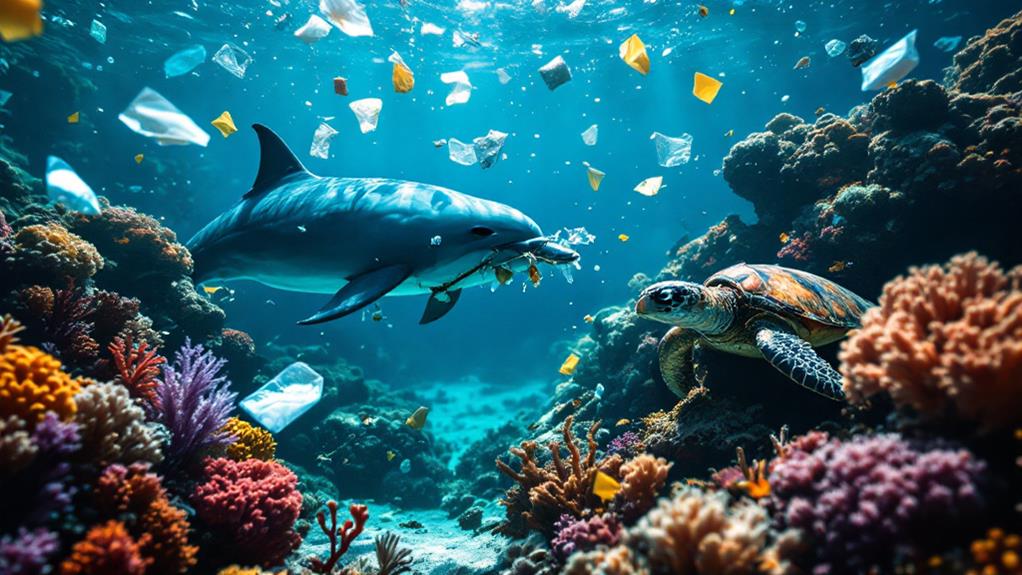
Imagine a world where majestic marine mammals like dolphins, whales, and seals are constantly threatened by the ever-growing presence of plastic in their environment. Unfortunately, this isn't just a dystopian vision; it's the harsh reality these creatures face every day. Plastic debris in the oceans affects marine mammal behavior considerably. You might see dolphins tangled in discarded fishing nets, struggling to swim or surface for air. Whales ingest plastic bags, mistaking them for jellyfish, which can lead to fatal blockages in their digestive systems. Such encounters alter their natural behaviors, making them more vulnerable to other threats.
Moreover, plastic pollution greatly impacts the reproductive health of marine mammals. The toxic chemicals leaching from plastic debris can disrupt their hormonal systems. This can result in reduced fertility rates, affecting population sizes and species survival. For example, seals exposed to these toxins may experience difficulties in breeding or produce fewer healthy offspring. You can imagine how these disruptions to behavior and reproductive health create a cascading effect, endangering entire marine ecosystems. Addressing the root causes of plastic pollution is crucial to safeguard the future of these incredible marine mammals and their ocean homes.
Disruption of Marine Habitats
Plastic pollution infiltrates marine habitats, disrupting the delicate balance of underwater ecosystems. When you think about marine life, you might picture lively coral reefs, teeming with fish and other creatures. But plastic debris turns these thriving environments into wastelands. Large pieces of plastic can crush corals and smother habitats, leading to habitat loss that forces marine species to leave their homes. Without these essential habitats, the entire ecosystem faces an imbalance, as species that depend on these environments for shelter and food struggle to survive.
You should also consider how microplastics, tiny plastic particles, add another layer of disruption. They settle on the ocean floor, embed in sediment, and even get consumed by marine organisms. This ingestion can lead to toxic accumulation in the food chain, affecting not just individual organisms but entire populations. As a result, the intricate food web becomes unbalanced. Predators may find their prey less available, while herbivores might find their food sources tainted.
The disruption of marine habitats from plastic pollution isn't just a problem for the ocean. It's a call to action for everyone. By reducing plastic use, you can help restore balance to these crucial ecosystems.
Plastic Pollution and Human Health
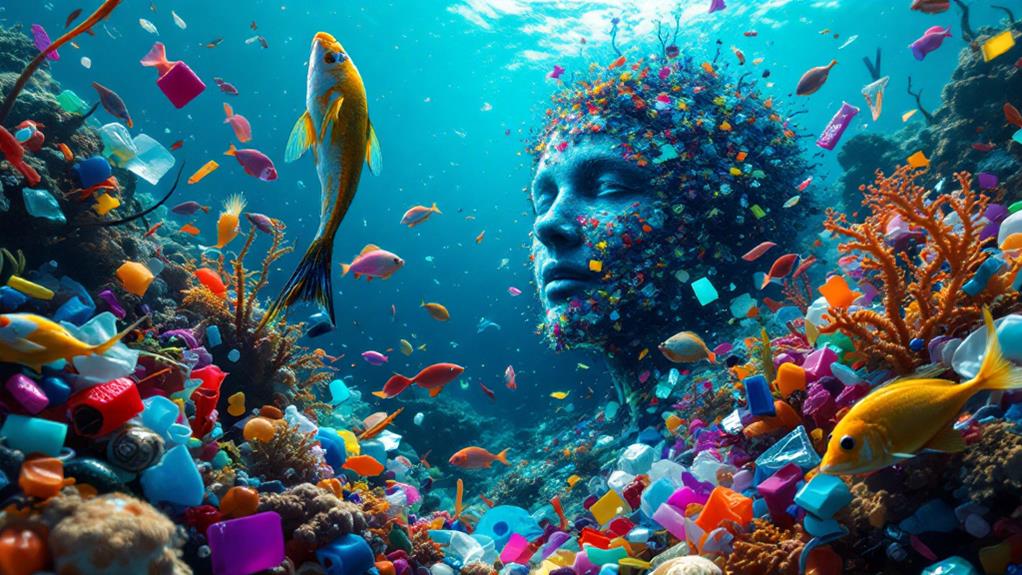
You might not realize it, but plastic pollution doesn't just harm marine life—it poses significant risks to human health too. When plastic waste ends up in the ocean, it breaks down into tiny pieces called microplastics. These microplastics can make their way into the seafood you eat, potentially impacting your health. Consuming seafood contaminated with microplastics exposes you to harmful chemicals like bisphenol A (BPA) and phthalates, which are linked to several health risks.
Ingesting these chemicals can disrupt your hormones, leading to reproductive issues and developmental problems. Furthermore, plastic waste contributes to the proliferation of harmful bacteria and toxins in the ocean, which can contaminate water sources. When you drink or use this water, you might be exposing yourself to pathogens that could cause serious illnesses.
Additionally, plastic waste incineration releases toxic substances into the air, which you then breathe. These emissions can increase your risk of respiratory diseases, heart conditions, and even cancer. Addressing plastic pollution isn't just about saving marine life; it's essential for protecting your health and ensuring a safer environment for everyone. Reducing plastic use and supporting sustainability can make a real difference.