The Strongest Glue Options for Bonding Plastic
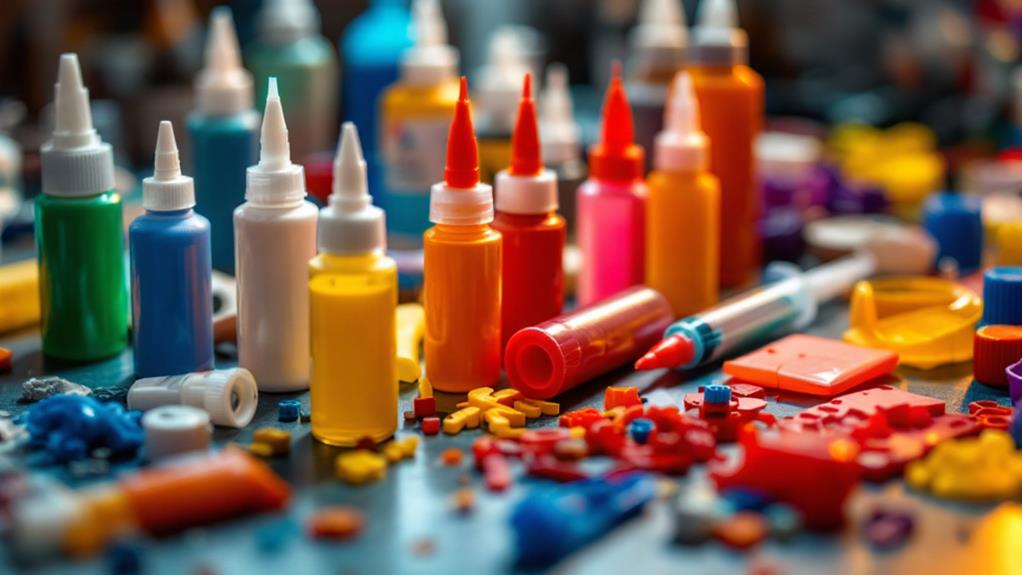
When you're aiming to bond plastic, several strong glue options stand out. Epoxy adhesive offers robust and reliable bonds, especially for uneven surfaces. For quick fixes, super glue (cyanoacrylate) works wonders thanks to its fast-acting properties. If you're dealing with precise joints, plastic weld solvent chemically fuses surfaces for maximum strength. Consider polyurethane glue for flexible and moisture-resistant adhesion. UV-curing adhesive provides rapid strength with exposure to light. Each option excels in different scenarios, ensuring durability and performance. Stick around, and you'll uncover which adhesive best meets your specific needs and project demands.
Epoxy Adhesive
Epoxy adhesive is often the preferred choice when you're looking to bond plastic with strength and reliability. This adaptable adhesive is renowned for its remarkable durability and resistance to environmental factors. When you're diving into epoxy types, you'll find two main categories: one-part and two-part epoxies. One-part epoxies are pre-mixed and cure with heat, making them ideal for industrial applications where high temperatures are not an issue. On the other hand, two-part epoxies require you to mix resin and hardener, but they offer incredible bonding strength and are suitable for a range of epoxy applications, especially in household or DIY projects. The development of effective adhesive formulations, akin to the innovations in ballpoint ink composition, has greatly improved the performance of these adhesives.
When applying epoxy adhesive, you'll notice its ability to fill gaps and create a seamless bond between plastic surfaces. This makes it perfect for projects where surfaces don't perfectly align. In addition to bonding plastic, epoxy is used for repairing, coating, and even crafting. It's resistant to moisture, chemicals, and temperature fluctuations. Regardless of whether you're fixing a broken plastic chair or sealing a plastic model, epoxy adhesive provides a strong, long-lasting bond. Understanding the different epoxy types and their applications guarantees you choose the right product for your plastic bonding needs.
Super Glue (Cyanoacrylate)
While epoxy adhesives offer robust solutions for plastic bonding, another popular choice in the adhesive world is super glue, scientifically known as cyanoacrylate. It works through mechanism of adhesion, utilizing molecular attraction to form strong bonds almost instantaneously. You'll find that its adhesive properties are impressive for quickly bonding different types of plastic. Super glue is a fast-acting adhesive that forms strong bonds almost instantaneously. What makes it appealing is its ability to cure and harden without the need for supplementary clamps or heat, making it a convenient option for quick fixes.
When it comes to application techniques, you'll want to verify the plastic surfaces are clean and dry. Any dirt or moisture can hinder the bonding process, reducing the glue's effectiveness. Apply a small amount of the cyanoacrylate to one surface and press the pieces together firmly. Hold them in place for about 30 seconds to guarantee a solid bond. Be cautious not to overapply, as excess glue can lead to a weaker joint or unsightly residue.
Super glue's versatility makes it suitable for a wide range of plastic types, but it's crucial to check compatibility with the specific plastic you're working on. Always store your super glue in a cool, dry place to maintain its effectiveness.
Plastic Weld Solvent
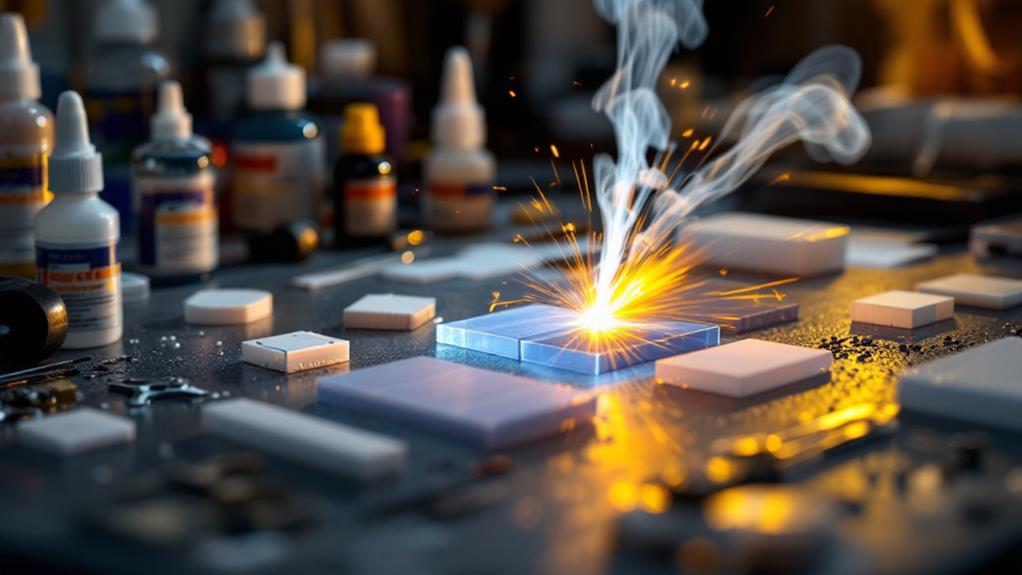
Plastic weld solvent acts as a powerful bonding agent by chemically fusing plastic surfaces together. When you apply it, the solvent temporarily softens the plastic, allowing the two surfaces to meld into one seamless piece. This approach is particularly effective because it doesn't just hold the pieces together; it creates a bond as strong as the original material.
To get the best results, you need to focus on proper plastic surface preparation. Start by cleaning the surfaces thoroughly to remove any dirt, grease, or oils. Sanding the surfaces lightly can also help, as it provides a slightly rough texture for better adhesion. Once prepared, you can apply the solvent using a brush or a syringe for precise application.
Plastic welding techniques vary, but the key is to use the right amount of solvent. Too little won't create a strong bond, and too much can warp or dissolve the plastic. Allow the pieces to set for the recommended time to guarantee a solid bond. With careful application and proper preparation, plastic weld solvent can be an invaluable tool in your plastic bonding arsenal, creating durable and lasting joins.
Polyurethane Glue
For those seeking a flexible and strong adhesive, polyurethane glue stands out as an excellent option for bonding plastic. Regardless of if you're tackling a DIY project or making repairs, polyurethane glue offers flexibility and durability. It works well with a range of plastic types, making it a go-to choice for many enthusiasts. But how do you guarantee the best results when using this glue? Let's explore some crucial tips.
- Application Techniques: Start by cleaning the surfaces to be bonded thoroughly. Apply a thin, even layer of glue to one side and press the pieces together firmly. Use clamps to hold them in place if necessary.
- Curing Times: Polyurethane glue can take anywhere from 4 to 24 hours to cure fully, depending on the environmental conditions like temperature and humidity. Be patient and let it set properly for the best bond.
- Moisture Activation: This glue requires a bit of moisture to activate. Lightly mist one of the surfaces with water before applying the glue.
- Gap-Filling Properties: One of the standout features of polyurethane glue is its ability to fill gaps, making it ideal for uneven surfaces.
With these tips, you'll achieve a reliable bond with polyurethane glue.
UV-Curing Adhesive
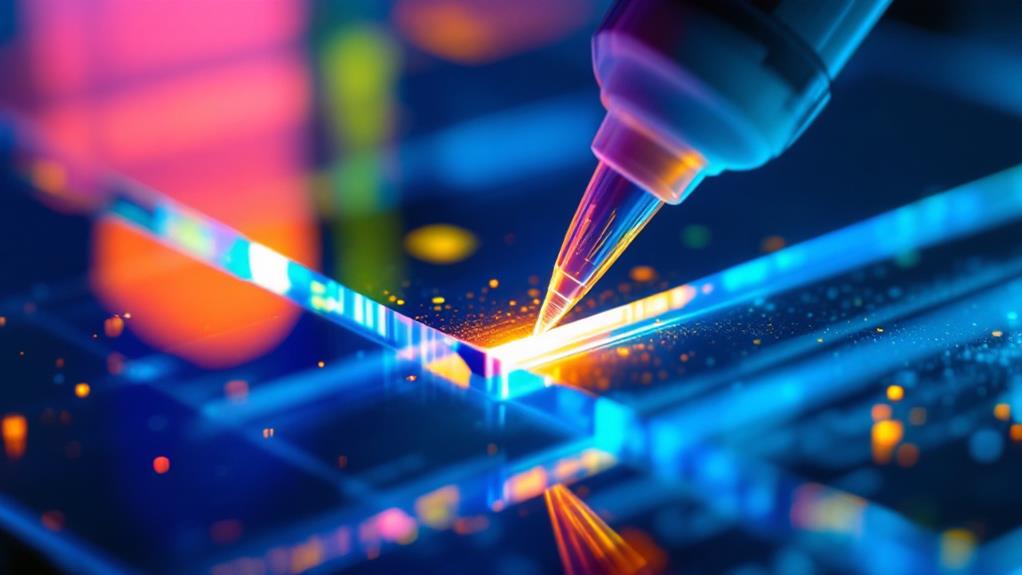
If you need a quick and reliable bond for plastic, UV-curing adhesive might be your best bet. This type of adhesive offers a speedy solution, as it cures rapidly when exposed to ultraviolet light. You won't have to wait hours for the adhesive to set. Instead, you'll achieve a strong bond in just seconds, making it perfect for urgent repairs or manufacturing processes.
UV-curing adhesives are adaptable and used in a wide range of adhesive applications, from electronics to automotive industries. They work well on different types of plastic, ensuring a firm grip without compromising the material's integrity. Plus, they're clear, which means you won't have to worry about unsightly glue marks on your finished project.
To use UV-curing adhesive, you'll need a UV light source. Apply the adhesive to the surfaces you want to bond, then expose it to the light. The UV rays trigger a chemical reaction that solidifies the adhesive, creating a durable connection. This method minimizes waste and allows for precise application, making it an efficient choice for both DIY enthusiasts and professional projects. When you need speed and strength, UV-curing adhesives deliver impressive results.
Hot Melt Glue
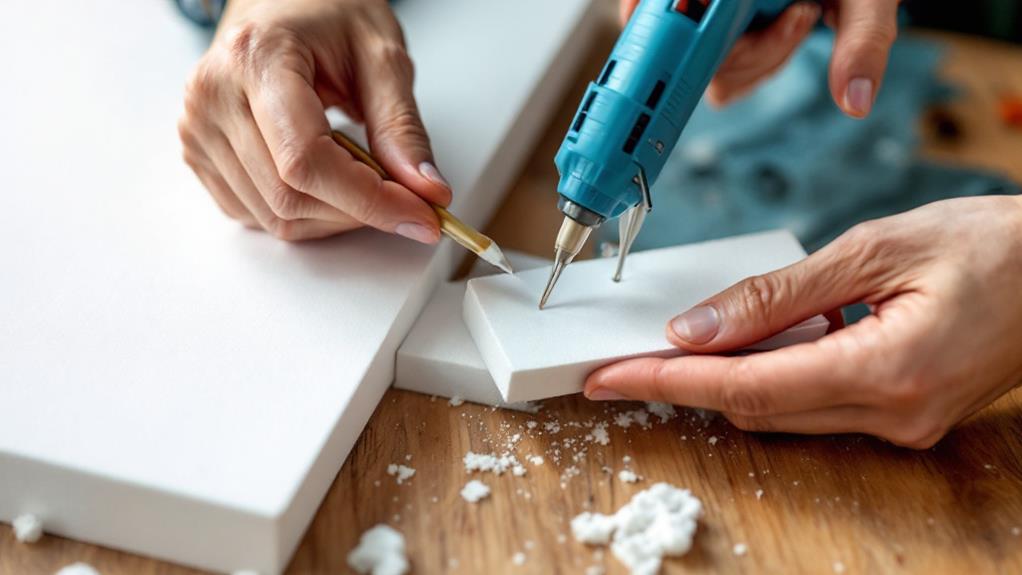
While UV-curing adhesives offer speed, hot melt glue provides versatility and ease of use that many find invaluable for bonding plastic. If you're looking for a reliable adhesive for your projects, hot melt glue is worth considering. It's perfect for a range of hot melt applications, from arts and crafts to more industrial uses. Here's why you might want to choose hot melt glue for your next plastic bonding task:
- Ease of Use: You'll find hot melt glue straightforward to apply. It doesn't require mixing and it dries quickly, allowing you to proceed with your project without delays.
- Versatility: Hot melt glue sticks to a variety of surfaces, not just plastic. This makes it a handy tool in your DIY arsenal for different materials.
- Temperature Resistance: Once cooled, hot melt glue can withstand a range of temperatures, making it suitable for outdoor projects or environments with fluctuating temperatures.
- Economical: If you're watching your budget, you'll appreciate that hot melt glue is typically more affordable compared to other adhesives.
Acrylic-Based Glue
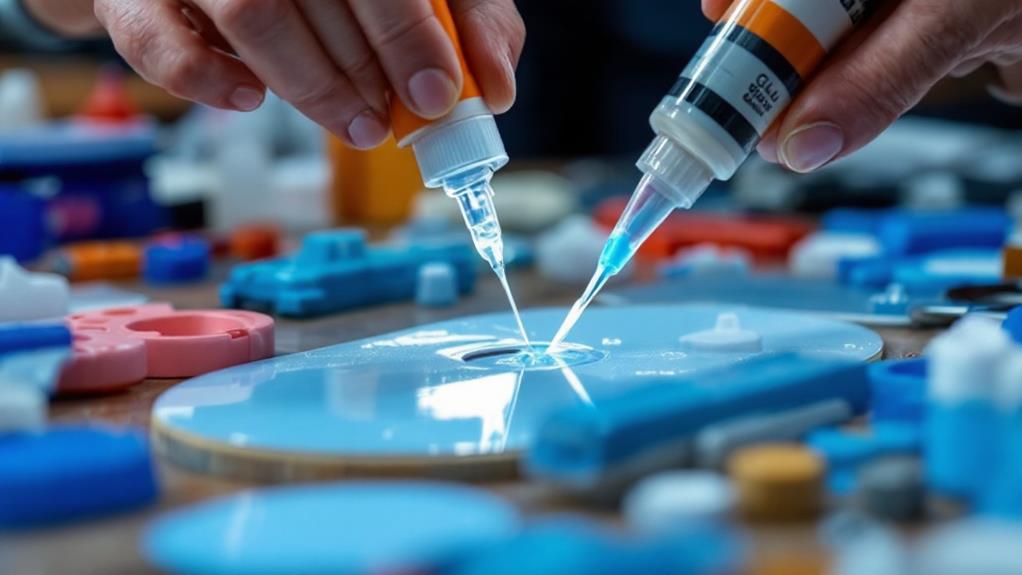
Acrylic-based glue is a robust adhesive option that delivers strong and durable bonds, especially effective for plastic materials. You'll find it's perfect for projects requiring a reliable connection. This type of glue is versatile and suitable for a variety of plastic types, ensuring you get the job done right. To achieve the best results, focus on effective application techniques. Start by cleaning the plastic surfaces to remove any dirt or grease. Next, apply a thin, even layer of glue to one of the surfaces. Press the pieces together firmly and hold them in place for a few moments to allow the initial bond to set.
Understanding drying times is essential for acrylic-based glue. Typically, it takes about 10 to 20 minutes for the adhesive to set, but full curing might require up to 24 hours. During this period, you should avoid stressing the bond. Patience is key, so give it adequate time to develop its full strength. Acrylic-based glue is known for its excellent resistance to environmental factors like moisture and temperature changes, making it an ideal choice for both indoor and outdoor projects. Follow these steps, and you'll have a reliable, long-lasting bond.
Silicone Adhesive
Silicone adhesive offers another excellent solution for bonding plastic, especially when flexibility and resistance to extreme conditions are vital. It's adaptable, making it suitable for a range of silicone applications, and it's known for its ability to maintain strong bonds without losing elasticity. This makes it perfect for projects where the bonded materials need to withstand movement or vibration without breaking apart. Plus, silicone sealants are fantastic for sealing gaps and joints, providing both adhesion and a waterproof barrier.
Here's why you should consider using silicone adhesive for your next project:
- Flexibility: Silicone adhesive maintains its elasticity, making it ideal for applications involving frequent movement or temperature changes.
- Temperature Resistance: It withstands both high and low temperatures, ensuring your bond remains intact in harsh conditions.
- Waterproofing: Silicone sealants create a watertight seal, protecting against moisture damage, which is significant for outdoor or bathroom projects.
- Durability: Silicone applications are known for their long-lasting performance, maintaining adhesion over time without deteriorating.
Contact Cement
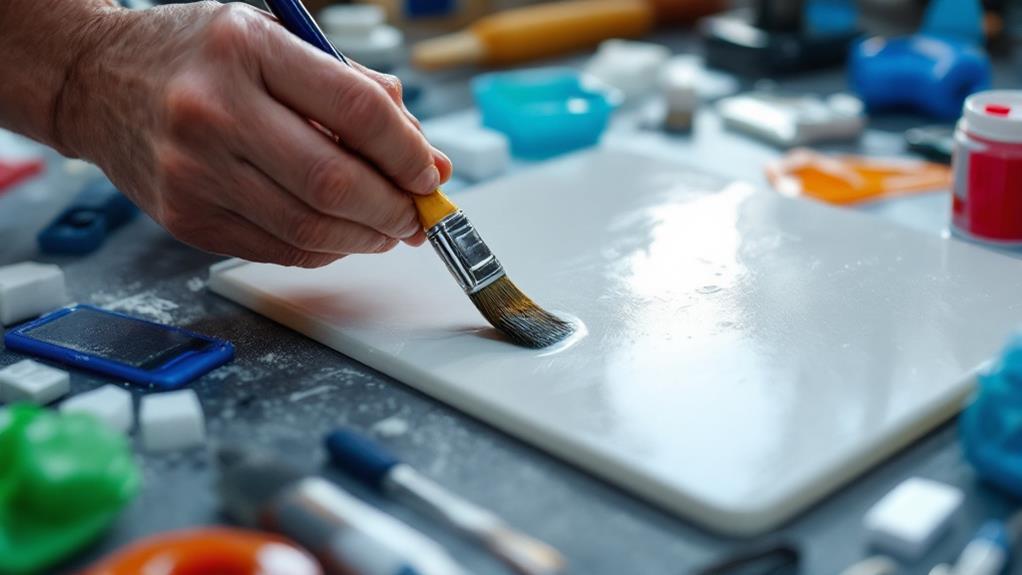
Contact cement grabs attention with its remarkable ability to create strong, permanent bonds between plastic surfaces. If you're tackling a project that demands precision and durability, contact cement is your go-to adhesive. It's especially effective for large, flat plastic surfaces where other adhesives might struggle. One of the key contact cement advantages is its immediate bonding capability. You apply it to both surfaces, let it dry briefly, and then press them together for an instant, unyielding hold.
In terms of contact cement applications, you'll find it incredibly versatile. It's not just for plastic; you can use it on a range of materials like wood, leather, and metal. This makes it ideal for projects that involve mixed materials. Its waterproof nature is another plus, ensuring that your bond withstands moisture and humidity.
However, you should handle contact cement with care. It requires precise alignment since you won't have a second chance to adjust once the surfaces touch. Also, work in a well-ventilated area due to its strong fumes. With these tips in mind, you'll harness the full potential of contact cement for your plastic bonding needs.
Rubber-Based Glue
While contact cement offers impressive bonding strength for plastic, rubber-based glue provides a flexible alternative that excels in different scenarios. You'll find that the rubber properties make this type of adhesive perfect for situations where movement or vibrations are common. This flexibility prevents cracking and guarantees that the bond remains strong even under stress.
Rubber-based glue is especially useful in a variety of adhesive applications. Its versatility makes it a go-to choice for many projects. Here's why you might consider using rubber-based glue for bonding plastic:
- Flexibility: The rubber properties allow the glued materials to flex without breaking, making it ideal for items that require movement or bending.
- Water Resistance: Rubber-based glue offers excellent resistance to water, making it suitable for both indoor and outdoor applications.
- Temperature Tolerance: It can withstand a wide range of temperatures, maintaining its adhesive strength in both hot and cold conditions.
- Durability: The glue forms a long-lasting bond that can handle frequent use and wear over time.