Tips for Reducing Plastic Waste at Home
You can cut down on plastic waste at home by making smart choices every day. Start by using reusable bags for shopping, and swap out plastic containers for glass or metal ones. Bring your own containers to buy in bulk and avoid single-use plastics like straws and water bottles by choosing reusable alternatives. Make your own cleaning solutions with natural ingredients, reducing both plastic waste and chemical exposure. Composting is another great way to minimize your plastic trash. Embracing these sustainable habits gradually will contribute to a cleaner environment. There's much more to discover on this expedition to sustainability.
Adopt Reusable Bags
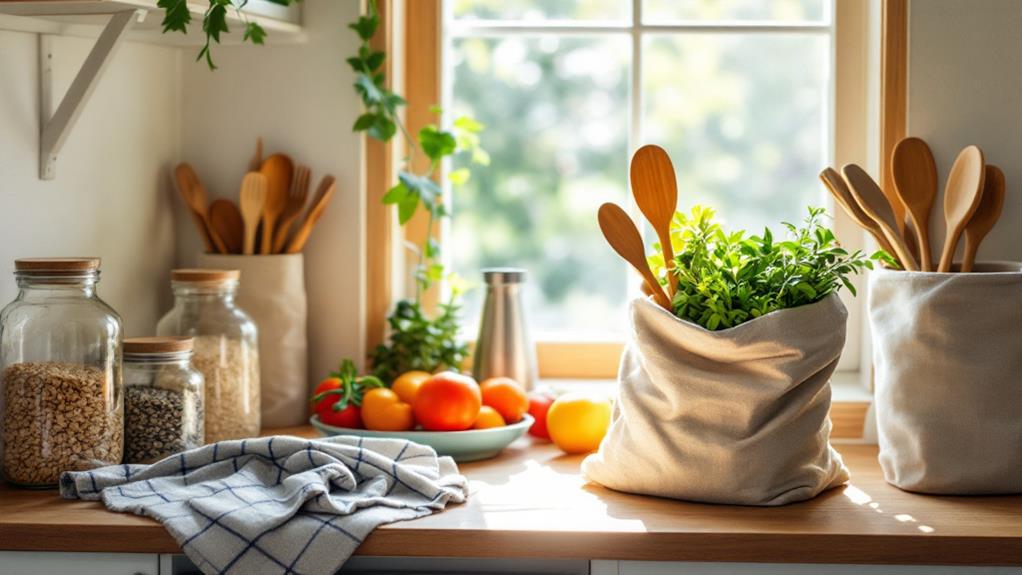
Let's face it, single-use plastic bags are a major contributor to plastic waste, but you can make a difference by switching to reusable bags. By adopting this simple habit, you're not just reducing your plastic footprint; you're embracing a more sustainable lifestyle. One of the key benefits of reusables is their durability. Unlike flimsy plastic bags that tear and end up in landfills, reusable bags are designed to withstand the test of time. You'll find that they come in different sizes and materials, offering you eco-friendly alternatives tailored to your needs. Furthermore, just as bees play an essential role in maintaining ecosystem equilibrium, your efforts to reduce plastic waste contribute to a healthier planet. Bees and environmental health highlight the interconnectedness of our actions and their impact on nature.
When you choose reusable bags, you're also setting an example for others. Imagine the ripple effect when friends and family see your commitment to sustainability. It might inspire them to follow suit, amplifying the positive impact on the environment. Plus, many stores offer incentives for bringing your own bags, so it's a win-win situation.
Switching to reusable bags isn't just about reducing plastic waste; it's about taking a stand for the planet. By making this small change, you contribute to a cleaner, healthier Earth for future generations. So, grab a reusable bag and start making a difference today.
Opt for Glass Containers
While reusable bags tackle plastic waste on the go, opting for glass containers addresses the issue within your home. Glass storage not only reduces plastic use but also offers a healthier, more durable option for keeping food fresh. Unlike plastic, glass doesn't leach harmful chemicals into your food, making it a safer choice for you and your family. Plus, glass is non-porous, which means it won't absorb stains or odors, ensuring that your leftovers taste just as good the next day. Moreover, the environmental impact of materials like glass is considerably less harmful compared to single-use plastics, as glass is 100% recyclable and retains its quality no matter how many times it's recycled the environmental impact of gold mining.
Switching to glass containers is one of the simplest eco-friendly alternatives you can implement. Start by replacing your plastic food storage containers gradually. You don't have to do it all at once—swap them out as they wear out. Glass containers often come in different sizes and shapes, making them versatile for storing everything from soups to salads. They're also microwave and dishwasher safe, providing convenience to your everyday routine.
Furthermore, glass is 100% recyclable, and it retains its quality no matter how many times it's recycled. By choosing glass, you're contributing to a sustainable cycle that helps reduce landfill waste and conserve natural resources. Make the switch today and enjoy the benefits of a greener kitchen.
Choose Bulk Shopping
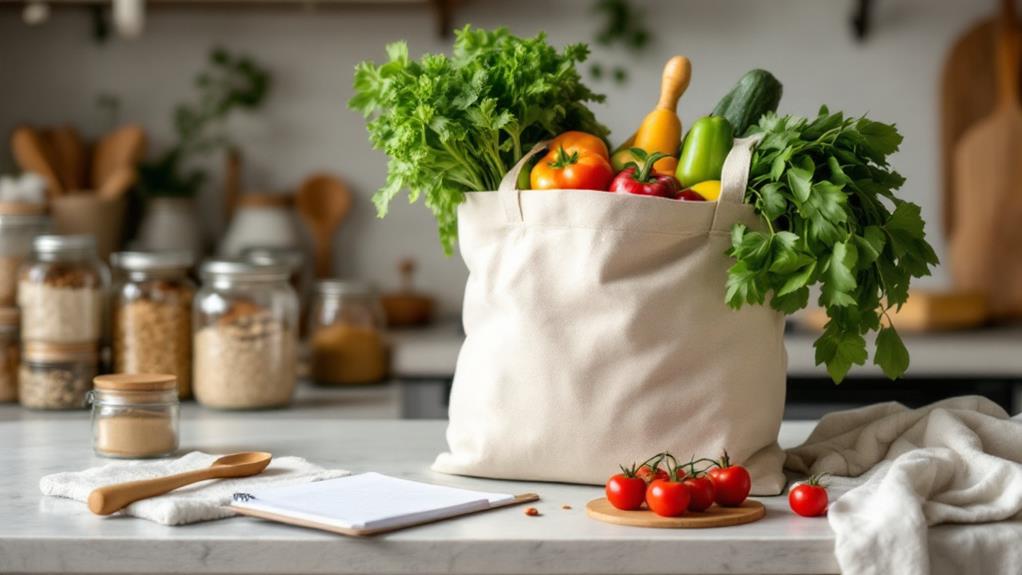
Engage in the habit of choosing bulk shopping to effectively cut down on plastic waste. When you shop from bulk bins, you're skipping the unnecessary packaging that often comes with pre-packaged goods. Instead of picking up items wrapped in layers of plastic, you can bring your own reusable containers or bags to fill with just the amount you need. This package-free approach not only reduces waste but also gives you more control over your purchases, helping to minimize food waste at home.
To start, scout out local grocery stores or specialty shops that offer a wide range of products in bulk bins. Common items available in bulk include grains, nuts, spices, and even some household necessities like soap and detergent. By selecting these items in bulk, you're actively reducing the demand for single-use packaging, leading to less plastic production and disposal. Remember to label your containers with the product codes to make checkout a breeze.
Choosing bulk shopping is a simple yet impactful step toward a more sustainable lifestyle. Not only does it benefit the environment, but it can also save you money in the long run by allowing you to buy only what you need.
Avoid Single-Use Plastics
Single-use plastic items, like straws, cutlery, and bags, are some of the biggest contributors to plastic pollution. By choosing to avoid these items, you can make a significant impact on reducing waste. Start by swapping out plastic straws for reusable metal or silicone ones. These plastic alternatives are durable, easy to clean, and help cut down on waste. Likewise, replace disposable cutlery with bamboo or metal utensils that you can use repeatedly.
When it comes to shopping, bring your own cloth bags instead of relying on plastic ones. Many stores offer eco friendly packaging options or incentives for using your own bags. Moreover, consider investing in a reusable water bottle. This simple change can eliminate the need for single-use plastic bottles, saving both money and the environment.
In the kitchen, use glass or stainless steel containers for food storage instead of plastic wrap or bags. These alternatives are not only better for the planet, but they also keep your food fresh longer. By being mindful of these choices, you're taking a proactive step in reducing your plastic footprint and promoting a more sustainable lifestyle.
Implement DIY Cleaners
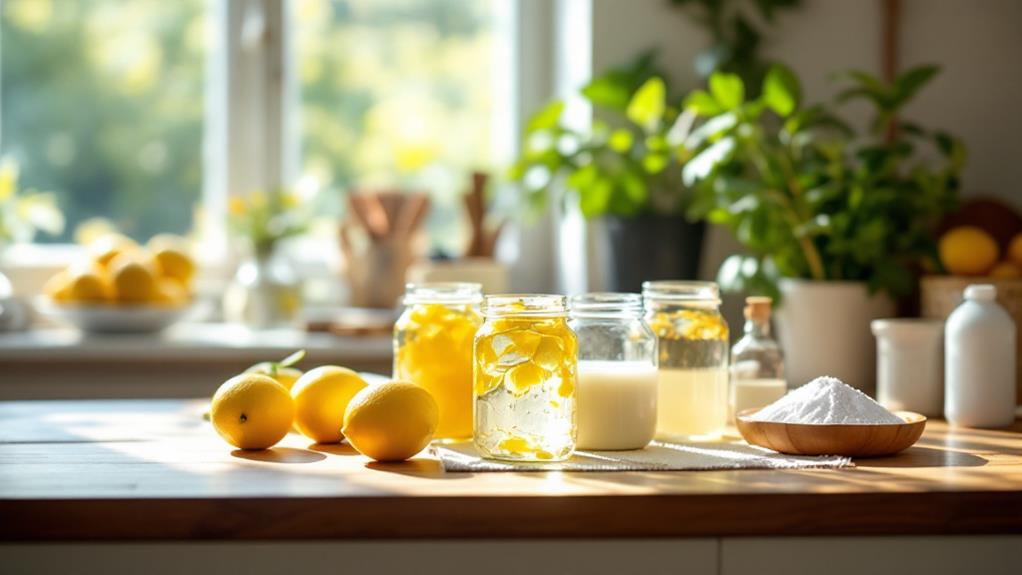
Reducing plastic waste doesn't stop at avoiding single-use items; it extends into our cleaning routines as well. By making your own cleaners, you can greatly cut down on plastic packaging and harmful chemicals. DIY recipes for household cleaning products are not only effective but also environmentally friendly. You'll often find that simple, natural ingredients like vinegar, baking soda, and lemon juice can tackle most cleaning tasks.
Start with a basic all-purpose cleaner. Mix equal parts water and vinegar in a reusable spray bottle. Add a few drops of your favorite crucial oil if you prefer a pleasant scent. This mixture is great for countertops, windows, and more. For a scrubbing paste, combine baking soda with a bit of water. This paste works wonders on stubborn stains and grime.
Using DIY cleaners allows you to repurpose old containers, reducing plastic waste even further. You're not just helping the environment; you're also avoiding the toxins found in many commercial cleaners. With a little effort, you can transform your home into a cleaner, greener space. Plus, these homemade solutions are often cheaper, saving you money while saving the planet.
Practice Composting
Composting is a powerful way to minimize plastic waste and enrich the soil. By starting a compost pile, you're turning kitchen scraps into nutrient-rich material rather than sending them to a landfill. When you compost, you're effectively reducing the need for plastic trash bags, as much of your waste is redirected to the compost bin. This simple habit can greatly cut down on how often you take out the trash, and you'll see the compost benefits in your garden's health and productivity.
Begin by collecting kitchen scraps like fruit peels, coffee grounds, and vegetable leftovers. Keep a small container in your kitchen to make it easy to gather these items. Once your container is full, empty it into a compost bin or pile outside. Make sure to mix in some dry materials like leaves or shredded paper to help balance moisture and facilitate decomposition. Over time, your compost will break down into a dark, crumbly substance that you can use to fertilize your plants.
Composting not only helps reduce household waste but also contributes to a healthier environment. You're not just minimizing waste—you're creating something valuable for your garden and the planet.
Encourage Sustainable Habits
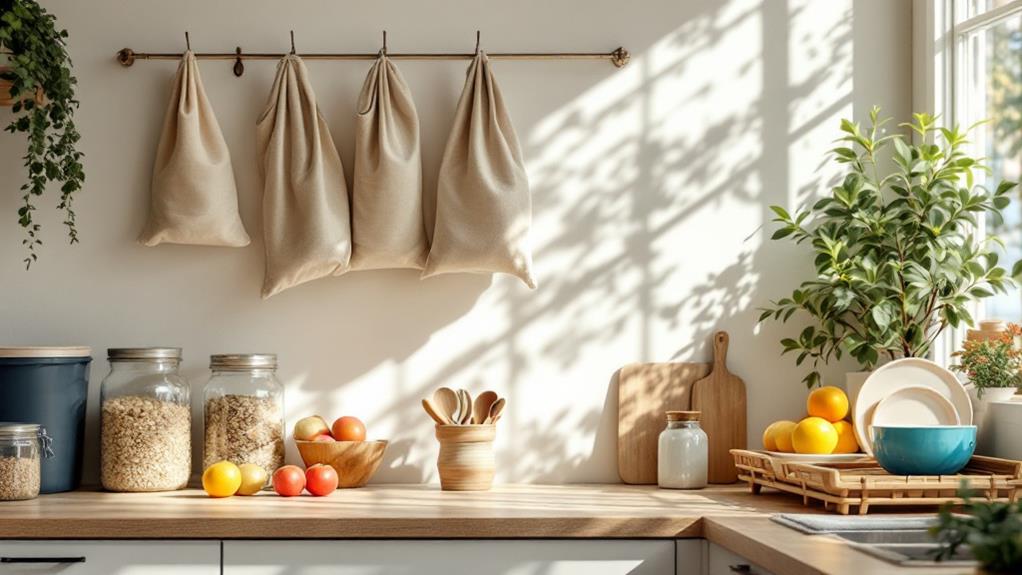
Fostering a mindset of sustainability can considerably diminish plastic waste in your daily life. By embracing a minimalist lifestyle, you'll find it easier to reduce unnecessary consumption and make thoughtful choices. Start by evaluating your current habits and identifying areas where you frequently use plastic. This might include single-use items like water bottles, grocery bags, or packaging materials. Once you've pinpointed these areas, focus on making eco friendly swaps.
Replace disposable items with durable, reusable alternatives. For instance, carry a stainless steel water bottle and invest in cloth grocery bags. These simple changes not only reduce plastic waste but also encourage you to think twice about your purchases. In the kitchen, consider glass or stainless steel containers to store leftovers instead of plastic wrap or bags.
Incorporating sustainable habits into your routine can also involve supporting brands focused on eco-friendly practices. Choose products with minimal packaging and prioritize companies that use recycled materials. Remember, every small step contributes to a larger impact. By nurturing these habits, you're not just reducing plastic waste but also inspiring others to adopt a more sustainable lifestyle. Consistent effort and mindful choices can lead to significant change.