Which Plastic Is Used to Produce Thermocol?

You're surrounded by thermocol more than you realize, and it's all thanks to the versatile plastic known as polystyrene. This plastic forms the base of expanded polystyrene (EPS), which is thermocol's scientific name. Developed in the 1940s, it's cherished for being lightweight and an excellent insulator. Manufacturers expand tiny polystyrene beads with steam, then mold them into the foam structures you see in packaging, construction, and crafts. However, polystyrene's non-biodegradable nature makes its disposal challenging. To understand the complex path of thermocol from production to recycling, there's much more to uncover.
Understanding Thermocol
Thermocol, commonly known as expanded polystyrene (EPS), is a versatile material used in numerous applications. You've likely come across it in packaging, insulation, and even arts and crafts. Understanding thermocol's history can give you a better appreciation for how it became such a staple. Initially developed in the 1940s, thermocol was prized for its lightweight and insulating properties, quickly gaining popularity across diverse industries. It offered an groundbreaking solution for shipping fragile items safely and keeping buildings energy efficient. Furthermore, thermocol is a form of plastic, which is part of a larger category that includes materials produced through processes like polymerization and polycondensation. However, as you investigate thermocol's benefits, it's crucial to evaluate thermocol alternatives due to environmental concerns. Thermocol, being non-biodegradable, poses significant disposal challenges. You'll find that alternatives like biodegradable packing peanuts, molded pulp, and even mushroom-based materials are gaining traction. These options aim to provide similar benefits while reducing environmental impact.
Composition of Thermocol
As you consider alternatives to thermocol, it's important to understand what makes up this material. Thermocol is a lightweight, foam-like substance primarily used for thermal insulation and packaging. It's known for its ability to trap air, which makes it an excellent insulator, keeping things warm or cold as required. This insulating property has made it a popular choice in numerous industries, from construction to shipping. Furthermore, the effectiveness of thermocol in maintaining temperature is similar to how yeast fermentation produces gas bubbles in dough, contributing to the final product's characteristics yeast activity influences dough rise.
When you think about thermocol alternatives, it's vital to recognize the unique composition of thermocol that gives it these properties. The material consists of tiny, closed-cell structures filled with air. These cells are what provide the thermal insulation properties, making it effective for protecting temperature-sensitive items. Each cell acts as a barrier, preventing heat transfer and maintaining temperature stability.
Understanding the composition helps you see why finding suitable thermocol alternatives can be challenging. Many alternatives attempt to replicate the air-trapping capability that makes thermocol so effective. However, not all can match its lightweight nature and insulating efficiency. So, when evaluating options, focus on materials that offer similar thermal insulation without compromising on weight and versatility. This insight guarantees you choose the best solution for your specific needs.
Polystyrene as the Base Plastic
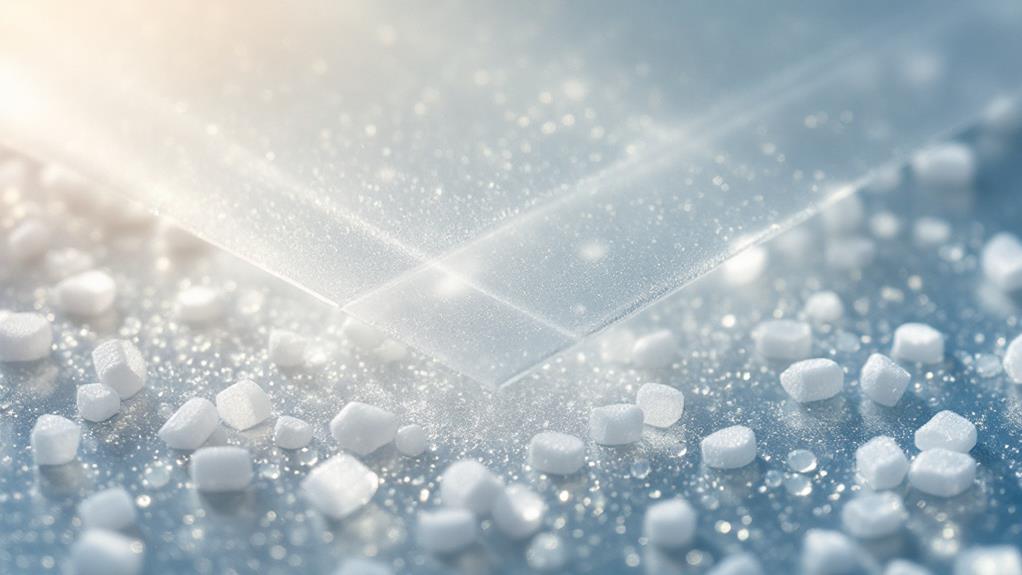
Many may not realize that polystyrene serves as the base plastic for thermocol, giving it its characteristic properties. You might wonder why polystyrene is chosen over others. Well, it's all about the unique advantages it brings to the table. Thermocol benefits greatly from polystyrene, making it an ideal choice for different applications. Here's why:
- Lightweight Nature: Polystyrene's low density makes thermocol incredibly lightweight, perfect for packaging and insulation needs.
- Insulating Properties: It's an excellent insulator, which means thermocol keeps things hot or cold, making it useful in temperature-sensitive packaging.
- Cost Efficiency: Polystyrene is relatively inexpensive, making thermocol a cost-effective option for both manufacturers and consumers.
- Versatility: Its ability to be molded into various shapes and sizes means you can use thermocol for everything from packing peanuts to architectural models.
While polystyrene alternatives like biodegradable plastics are emerging, they often lack the same level of effectiveness and affordability. However, being aware of environmental impacts, you might consider these alternatives for specific uses. Understanding polystyrene's role helps you appreciate why thermocol remains a staple in many industries.
Properties of Polystyrene
Understanding why polystyrene is used for thermocol starts with examining its intrinsic properties. Polystyrene properties make it an ideal choice for creating lightweight, yet sturdy materials. You'll find that its low density is a key factor, allowing thermocol to be easily shaped and transported. This material is composed mainly of carbon and hydrogen, providing a stable structure that resists moisture absorption. Because of this, polystyrene is perfect for applications where moisture resistance is essential.
One of the standout polystyrene properties is its excellent thermal insulation. It's incredibly effective at trapping air within its structure, offering superior insulation compared to other materials. You'll appreciate how this makes thermocol a great option for maintaining temperatures in packaging or construction. Furthermore, polystyrene is resistant to bacteria and fungi, ensuring that it remains durable over time without degrading.
Polystyrene also boasts impressive impact resistance, which means it can absorb shocks and protect fragile items during transportation. Despite being lightweight, it provides adequate cushioning, reducing the risk of damage. These properties collectively make polystyrene a flexible and reliable material for thermocol, proving its worth in different industries like packaging, construction, and more.
Production Process of EPS
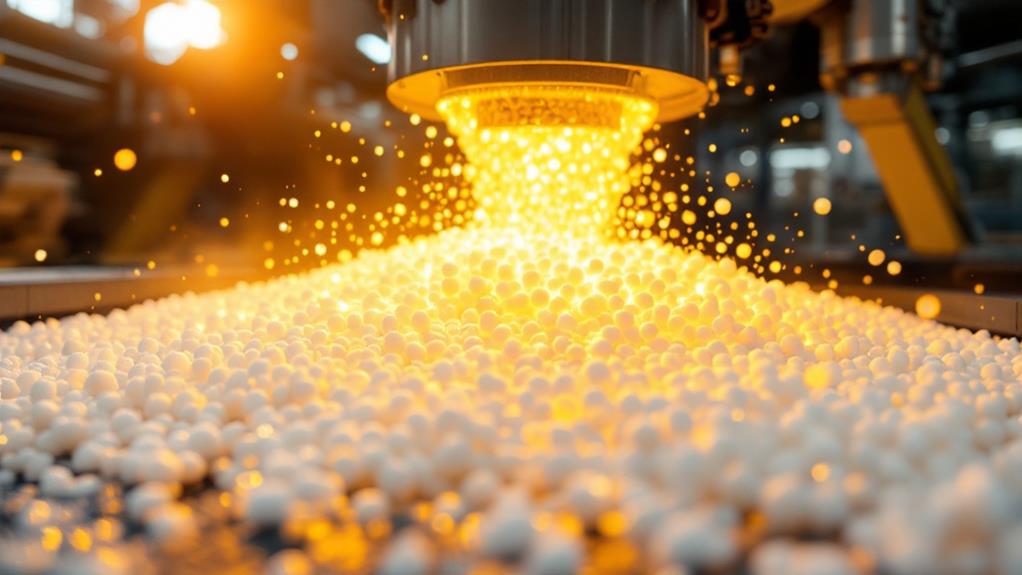
To grasp how Expanded Polystyrene (EPS) is produced, you'll investigate a series of precise steps that transform raw polystyrene beads into a versatile material. The production methods are quite fascinating and guarantee that EPS retains its unique characteristics. Here's how it all unfolds:
- Pre-expansion: You'll start with tiny polystyrene beads containing a blowing agent like pentane. When heated with steam, these beads expand up to 40 times their original size, forming lightweight, pre-expanded beads.
- Conditioning: Next, these expanded beads need time to stabilize and cool. This step is vital because it allows air to replace the blowing agent within the bead structure, guaranteeing uniform expansion and improved EPS characteristics.
- Molding: Now, you'll place the conditioned beads into molds where they're heated again with steam. This heat causes them to fuse together, forming solid blocks or custom shapes, depending on the mold used.
- Cutting and Shaping: Ultimately, after the molded blocks have cooled and solidified, they're cut into the desired shapes and sizes using hot wire or other cutting techniques. These precise cuts are fundamental for customizing EPS for diverse uses.
Applications of Thermocol
In numerous industries, Thermocol, or Expanded Polystyrene (EPS), proves to be an incredibly versatile material due to its lightweight and insulating properties. You'll find it widely used in packaging solutions, where its shock-absorbing qualities protect delicate items during transport. Regardless of your shipping needs for electronics, glassware, or pharmaceuticals, EPS guarantees your products arrive undamaged. It's an excellent choice for both businesses and individuals looking to safeguard their items with minimal added weight.
Beyond packaging solutions, EPS plays a vital role as insulation materials in the construction industry. You can use it to insulate walls, roofs, and floors, improving energy efficiency by reducing heat transfer. This means a more comfortable indoor environment and lower energy bills. Whether you're constructing a new building or renovating an existing one, incorporating Thermocol can make a significant difference.
Additionally, Thermocol finds applications in the creative arts and crafts. Its ease of shaping and ability to hold paint and decorative materials make it ideal for creating models, prototypes, and props. Regardless if you're a professional artist or a hobbyist, EPS opens up endless possibilities for your projects. So, next time you encounter Thermocol, consider how its applications might benefit you.
Environmental Impact and Recycling
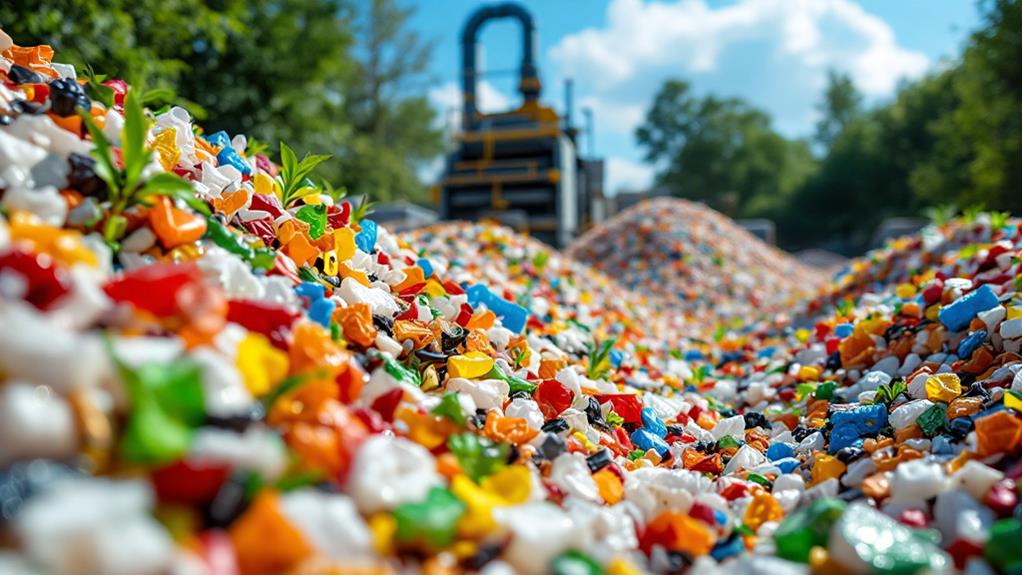
Frequently overlooked, the environmental impact of Thermocol, or Expanded Polystyrene (EPS), raises significant concerns. It's not just about the visible litter; EPS poses sustainability challenges due to its long decomposition time. As a user, you might not realize that EPS can take hundreds of years to break down, affecting ecosystems and wildlife.
Consider these key sustainability challenges and recycling methods:
- Non-Biodegradability: EPS doesn't easily decompose, contributing to long-lasting waste in landfills and the natural environment.
- Limited Recycling: While there are recycling methods for EPS, they aren't widely available. Specialized facilities are needed to process and repurpose the material into new products.
- Resource Consumption: EPS production requires significant energy and resources, contributing to pollution and resource depletion, further complicating sustainability efforts.
- Recycling Initiatives: Some communities are implementing recycling programs. You can contribute by supporting local EPS recycling initiatives and spreading awareness about its environmental impact.