Who Invented Styrofoam?
Ray McIntire, a scientist at Dow Chemical, invented Styrofoam by accident in the 1940s. While experimenting with styrene and a volatile agent, he stumbled upon a lightweight, durable foam, later branded as Styrofoam. McIntire's innovation opened new doors for insulation and packaging, thanks to its impressive insulating properties and versatility. Dow Chemical capitalized on this breakthrough, refining the production process and bringing it to the market with great success. As you investigate further, you'll see how this accidental invention transformed multiple industries and what alternatives are emerging in response to environmental concerns.
Early Developments in Polystyrene
Although the expedition of polystyrene began long before its commercial success, it was in the early 20th century that significant advancements took place. You might be surprised to learn that polystyrene history dates back to 1839 when a German apothecary, Eduard Simon, originally uncovered it. He didn't realize its full potential, though, and it took decades for others to understand how to use it effectively. It wasn't until the 1920s that Hermann Staudinger, a German chemist, laid the groundwork for polymer chemistry, allowing for the commercial production of polystyrene. The understanding of atomic arrangements in materials, akin to how diamond's tetrahedral structure contributes to its exceptional hardness, played a vital role in advancing polymer chemistry.
In the 1930s, the BASF company in Germany took polystyrene to the next level by refining its production processes. This led to its widespread industrial applications, transforming it into a versatile material fundamental for numerous industries. You'd find it in products ranging from household items to electrical appliances, thanks to its ability to be molded into different shapes and its insulating properties. As industries adopted this groundbreaking material, polystyrene became a staple in manufacturing. By understanding the historical context and evolution of polystyrene, you can appreciate its impact on modern industrial applications and its path from revelation to indispensable material.
The Birth of Foam Polystyrene
In the 1940s, the development of foam polystyrene marked a notable turning point in materials science. You'll find that this groundbreaking material stems from manipulating the chemical properties of polystyrene, a polymer known for its rigidity and clarity in solid form. By introducing air during its production, manufacturers created a lightweight, foam-like structure that greatly differed from its original state. This transformation required a keen understanding of how gases could be trapped within the polymer matrix, resulting in a product that maintained strength while being considerably lighter. The creation of foam polystyrene exemplifies the advancements in plastic production processes, showcasing how creative techniques can lead to new materials with improved properties.
The manufacturing processes of foam polystyrene involved heating polystyrene beads with a blowing agent, typically a hydrocarbon. As you heat the beads, they expand dramatically, forming a cellular structure filled with air pockets. This process not only improves the material's insulating properties but also makes it buoyant and shock absorbing. You can see why these characteristics are desirable across multiple industries, from construction to packaging.
Dow Chemical's Key Innovations

Foam polystyrene's expedition took a significant leap forward with the innovations introduced by Dow Chemical. When you think about Dow Innovations, you're diving into a world where chemical advancements reshaped how materials were perceived and used. Dow Chemical didn't just dabble in polystyrene; they transformed it. By harnessing their expertise in chemistry, they developed a unique process to produce foam polystyrene, which later became synonymous with the brand name Styrofoam.
You might wonder how Dow managed to stand out. They pioneered techniques that optimized the expansion of polystyrene beads. This process involved heating the beads to a specific temperature, causing them to expand and form a lightweight yet robust material. Their innovation didn't stop there. Dow focused on enhancing the material's insulating properties, making it ideal for a variety of applications, from construction to packaging.
Dow Chemical's advancements weren't just technical; they were visionary. By creating a product that combined strength, durability, and versatility, they transformed industries and set new standards for material performance. Thanks to Dow's relentless pursuit of chemical advancements, foam polystyrene evolved into a cornerstone of modern material science.
Ray McIntire's Breakthrough
Ray McIntire's breakthrough in the world of materials was a serendipitous finding that forever altered how we use synthetic polymers. Imagine you're working on a project trying to create a flexible electrical insulator. McIntire was doing just that at Dow Chemical when he accidentally stumbled upon something remarkable. He was experimenting with styrene and other chemicals, hoping to create a unique product. During his trials, McIntire's inspiration struck when he used a volatile agent to expand the styrene, resulting in a foamy substance that was lightweight yet sturdy.
This chance revelation wasn't just a happy accident; it became the foundation of what we now know as Styrofoam. By identifying and harnessing the properties of this creative material, McIntire inadvertently laid the groundwork for a product that's become ubiquitous in our daily lives. The Styrofoam legacy is a proof of how unexpected findings can lead to groundbreaking advancements.
Through McIntire's breakthrough, you've seen how a single moment of serendipity can yield a material with a lasting impact. His work didn't only change the course of materials science but also expanded the possibilities for future advancements across diverse industries.
Styrofoam's Entry Into the Market
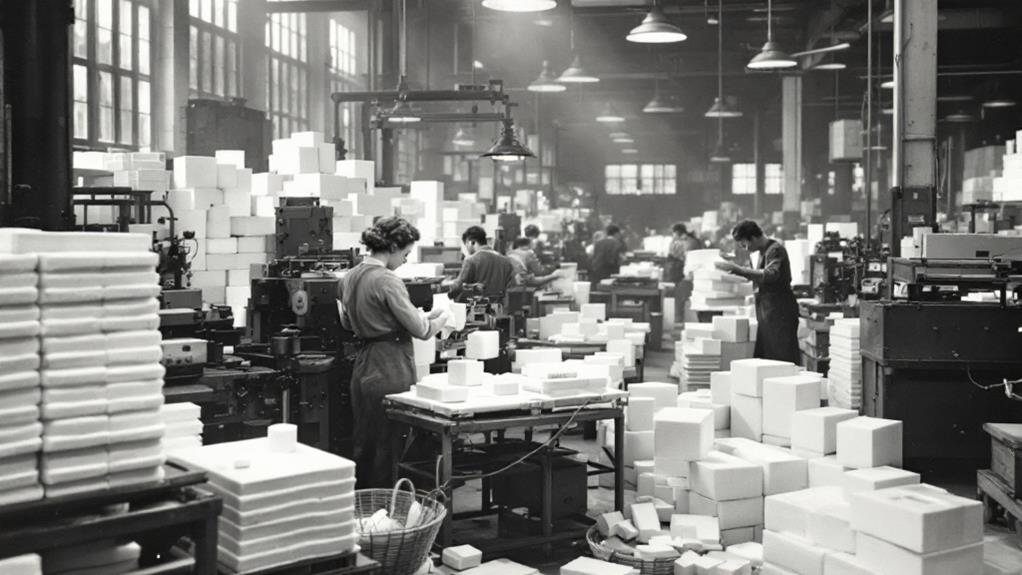
Embracing innovation, Dow Chemical didn't waste time in recognizing the commercial potential of Ray McIntire's accidental invention. You might wonder how this innovation shifted from a lab revelation to a market staple. The styrofoam history is compelling and sheds light on how Dow strategically introduced it to the market. In the early 1940s, Dow Chemical patented the process of creating this lightweight, moisture-resistant material. They saw an opportunity to revolutionize the insulation industry and soon began producing and marketing this new product.
As you explore the market introduction of Styrofoam, you'll see Dow's clever tactics. They initially targeted the construction sector, emphasizing Styrofoam's superior insulating properties. By highlighting its unique benefits, such as energy efficiency and durability, Dow quickly captured the attention of builders and architects. They didn't stop there. Dow actively expanded Styrofoam's market presence by showcasing its versatility in other sectors, preparing the groundwork for what would become a ubiquitous material.
Understanding styrofoam history and its market introduction reveals Dow's vision and strategic acumen. They transformed a lab accident into a commercially successful, widely used product, setting the stage for Styrofoam's future applications.
Applications and Uses of Styrofoam
From construction to crafts, Styrofoam's versatility has made it a staple in countless applications. You'll find it playing an essential role in insulation materials, where its lightweight and thermal-resistant properties keep buildings energy-efficient. Regardless of whether you're constructing a new home or renovating an older one, Styrofoam insulation can drastically reduce heating and cooling costs by maintaining a stable indoor climate.
In the domain of packaging solutions, Styrofoam shines as a protector of goods. If you've ever ordered electronics or fragile items online, chances are they arrived safely because they were cushioned by Styrofoam. Its shock-absorbing qualities make it ideal for safeguarding items during transit, ensuring they reach you intact.
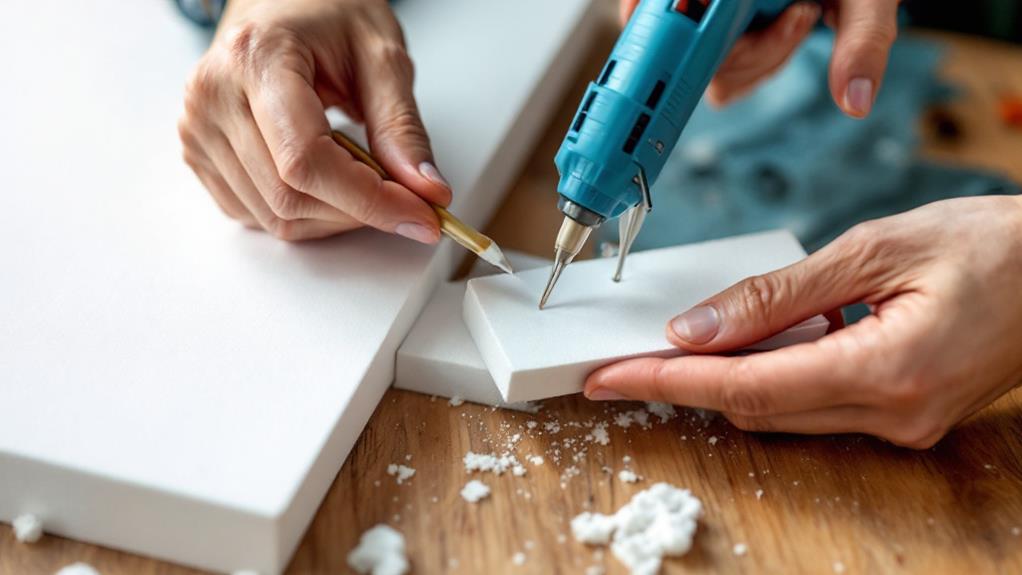
Beyond these practical uses, Styrofoam is also popular in arts and crafts. If you're into DIY projects, you've likely used it to create everything from holiday decorations to school models. Its ease of cutting and shaping allows your creativity to flourish without limits.
Environmental Impact and Issues

While Styrofoam proves invaluable in many applications, its widespread use comes with significant environmental concerns. You might not realize it, but Styrofoam is notoriously difficult to recycle. Unlike materials such as paper or metal, Styrofoam can't be easily processed due to its structure. It's mostly air, making transportation costly and recycling economically unfeasible in many areas. This leads to massive amounts of Styrofoam ending up in landfills, where it takes centuries to decompose.
You'll find that environmental regulations are beginning to address these issues. Many places are enacting laws to limit or ban Styrofoam usage in packaging and food containers. These regulations aim to reduce its environmental footprint, but they also present challenges for businesses that rely on its low cost and versatility. As a consumer, you might notice more options for disposal and recycling, yet the infrastructure often lags behind, leaving you with limited choices.
Understanding these recycling challenges and environmental regulations helps you make informed decisions. By opting for alternatives when possible and supporting policies that minimize Styrofoam's impact, you play a part in reducing its environmental burden. It's about balancing convenience with responsibility.
Modern Alternatives to Styrofoam
As awareness of Styrofoam's environmental impact grows, the demand for contemporary alternatives has surged. You're likely seeking options that are not only practical but also kind to the planet. Fortunately, cutting-edge solutions are emerging, offering you choices that are both sustainable and effective. These alternatives cater to diverse needs, from everyday packaging to insulation.
Here are three modern alternatives to Styrofoam that you might consider:
- Biodegradable Packaging: This option is made from natural materials like cornstarch, bamboo, or even mushroom mycelium. These materials decompose much faster than Styrofoam, reducing landfill waste and leaving a smaller ecological footprint.
- Recycled Paper Products: Often used for packaging, recycled paper is an eco-friendly material that doesn't compromise on protection. By recycling paper, you help reduce the demand for new paper production, conserving resources and energy.
- Plant-Based Plastics: Derived from renewable sources like corn or sugarcane, these bioplastics mimic the properties of traditional plastics. They break down more quickly and can often be composted, making them an excellent choice for sustainable packaging.