Why Are Some Plastics More Durable Than Others?
You're noticing varying durability in plastics because of their specific chemical make-up and how they're produced. Plastics are composed of long polymer chains, and those with longer, tightly packed chains exhibit greater strength and resilience. The choice and integration of additives also improve durability by providing UV and thermal resistance. Manufacturing techniques like extrusion and molding guarantee the uniform distribution of material, affecting durability. In contrast, biodegradable plastics break down faster due to different chemical structures. These factors combine to determine why some plastics withstand more stress while others don't. Investigate further to see how these aspects influence plastic performance.
Chemical Composition of Plastics
Plastics are primarily composed of long chains of molecules known as polymers, which you might recognize as the backbone of different synthetic materials. These polymers are synthesized from primary chemicals, often derived from crude oil distillation, and when you're trying to understand why some plastics are more durable than others, it's vital to evaluate the chemical composition, starting with the polymer types involved. Different polymers, such as polyethylene, polypropylene, and polystyrene, each have unique properties that contribute to a plastic's strength, flexibility, and resistance to degradation.
It's not just the type of polymer that matters, though. Molecular weight plays a significant role in determining the durability of a plastic. Higher molecular weight generally means longer polymer chains, which can lead to increased toughness and resistance to wear and tear. When you're dealing with plastics with high molecular weight, you often find they have better tensile strength and are less likely to break down under stress.
Understanding these factors helps you appreciate how the chemical composition of plastics influences their durability. By selecting the right polymer type and optimizing the molecular weight, manufacturers can create plastics that meet specific durability requirements, making them suitable for a wide range of applications.
Role of Polymer Chains
While understanding the chemical composition provides a foundation, examining the role of polymer chains offers deeper insights into plastic durability. For instance, just as beta-carotene protects skin from UV damage, the structural integrity of polymer chains can improve the overall resilience of plastics against environmental stressors. You need to take into account how the polymer structure and chain length influence the strength and resilience of plastics. Initially, a more intricate polymer structure often translates to improved durability. Secondly, longer chain lengths generally result in stronger intermolecular forces, making the plastic tougher. Thirdly, how these chains are arranged can affect flexibility and resistance to wear and tear.
When you look at polymer structure, you'll see that tightly packed chains create a denser and more robust material. This structure can resist external forces better, making the plastic less prone to breaking. The chain length is significant as well. Longer chains interlock more effectively, providing greater mechanical strength. You'll notice that plastics with extended chains are often used in demanding environments, like automotive parts or construction materials.
Impact of Additives
Over time, additives have become fundamental in improving the functionality and durability of plastics. You might wonder how these tiny components can make such a significant impact. Well, by selecting specific additive types, you can boost performance enhancements like UV resistance, flexibility, and thermal stability. When you're developing a plastic product, durability testing guarantees that these enhancements meet the necessary standards.
Different processing methods and formulation strategies allow you to incorporate additives effectively. For example, certain additives require precise mixing to achieve their desired effect, while others need to be added at specific stages of production. It's imperative to balance these factors with cost implications, as some additives can be expensive, affecting the complete budget of your project.
Environmental considerations also play a critical role. Choosing eco-friendly additives can reduce the environmental impact of your plastic products. You'll need to navigate regulatory standards too, as these confirm that the additives used are safe for both consumers and the environment. By understanding and applying the right additives, you can create plastics that are not only more durable but also environmentally responsible, meeting industry expectations and consumer demands.
Production Techniques
Understanding the impact of additives naturally leads us to explore how production techniques influence the durability of plastics. When you consider the varying strength of plastics, the way they're produced plays an essential role. Let's examine two prevalent techniques: injection molding and extrusion processes. These methods not only affect the structural integrity but also the longevity of the plastic products you encounter daily.
- Injection Molding: This technique involves injecting molten plastic into a mold to form complex shapes. It's ideal for producing durable parts because it guarantees uniform material distribution and minimizes weaknesses.
- Extrusion Processes: In extrusion, plastic is melted and pushed through a die to create continuous shapes like pipes and sheets. Consistent pressure and temperature control during this process can improve the plastic's durability.
- Material Consistency: Both techniques demand precise control over material consistency. Any variation can affect the finished product's strength and resilience.
Environmental Resistance
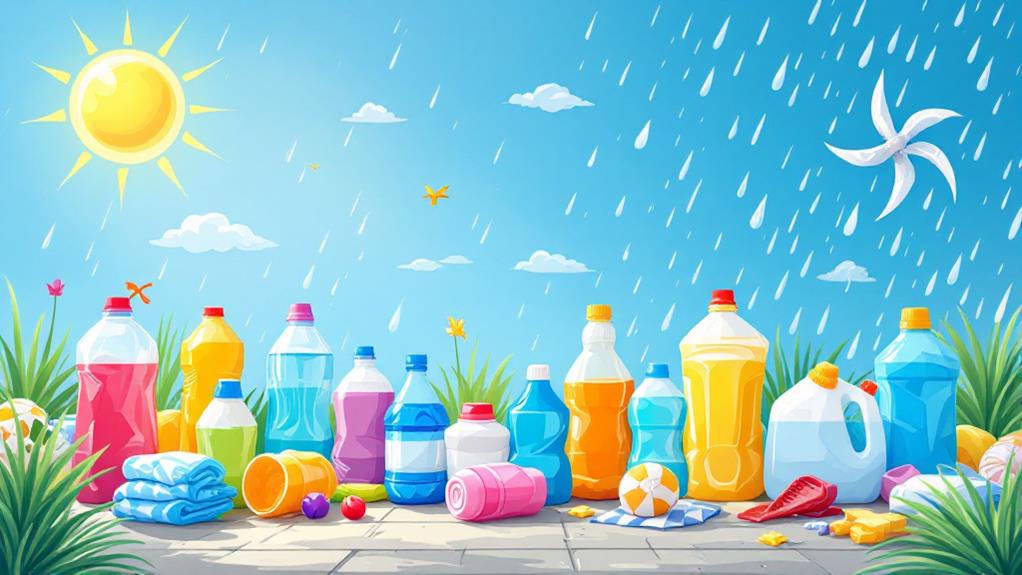
Confronting environmental challenges is essential in evaluating the durability of plastics. You need to understand how different factors like weather resistance and UV stability contribute to a plastic's lifespan. When a plastic has strong weather resistance, it withstands harsh environmental conditions like rain, wind, and temperature fluctuations without degrading. UV stability is important, too, as it prevents plastics from becoming brittle and discolored when exposed to sunlight for extended periods.
Thermal resistance plays a significant role in guaranteeing that plastics maintain their integrity under varying temperatures. Without it, plastics might warp or melt when exposed to heat, reducing their usability and lifespan. Similarly important is a robust moisture barrier, which prevents water absorption that could lead to swelling or weakening of the material.
Consider impact resistance and abrasion resistance when evaluating environmental durability as well. Impact resistance guarantees that plastics can absorb shocks without cracking, while abrasion resistance helps them withstand wear and tear from friction or scraping. By focusing on these characteristics, you can determine which plastics are best equipped to handle environmental stresses, making sure they remain reliable and effective over time. This understanding is key to choosing the right materials for your needs.
Applications of Durable Plastics
In a world increasingly focused on sustainability and efficiency, durable plastics find applications across a broad spectrum of industries. Their adaptability and longevity make them an attractive choice for many sectors. Consider how they improve your daily life:
- Automotive Components and Aerospace Parts: Durable plastics boost fuel efficiency and safety by reducing vehicle weight while maintaining strength. They're used in everything from bumpers to interior panels.
- Medical Devices and Electronics Housings: These plastics provide the reliability and precision needed for life-saving equipment and gadgets. They're resistant to chemicals and withstand sterilization processes, ensuring long-lasting performance.
- Consumer Products and Packaging Materials: Regardless of it being sturdy packaging that protects goods during shipping or durable consumer electronics, these plastics meet the demands of modern life by balancing toughness with lightweight design.
In construction applications, plastics serve as fundamental materials in piping, insulation, and even as structural components, enduring harsh conditions without degrading. Sporting goods also benefit from durable plastics, offering athletes equipment that's both strong and lightweight, improving performance and safety. By choosing durable plastics, you're embracing materials that contribute to a more efficient and sustainable future across diverse domains.
Comparison With Biodegradable Plastics
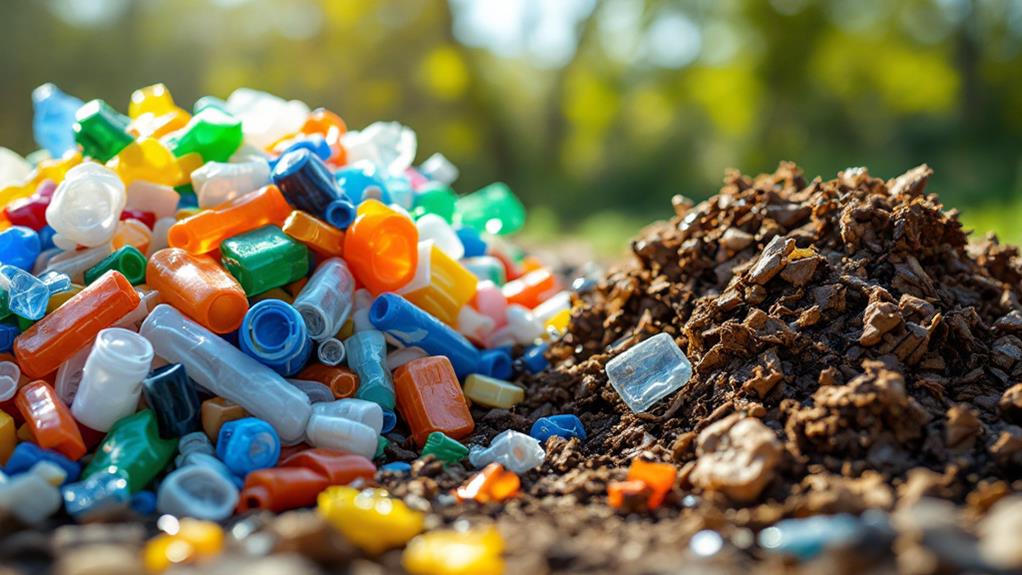
While durable plastics have become fundamental across diverse industries due to their resilience, it's imperative to weigh them against biodegradable plastics for a thorough perspective. Durable plastics are known for their strength and long-lasting nature, making them ideal for products that need to withstand harsh conditions. However, this same longevity contributes to significant environmental impact, as these plastics can take hundreds of years to decompose.
In comparison, biodegradable plastics offer an alternative with their ability to break down more quickly under natural conditions. These plastics incorporate biodegradable properties, allowing microorganisms to decompose them faster than traditional plastics. This leads to a reduced environmental impact, as they contribute less to landfill accumulation and ocean pollution.
When you consider the benefits and drawbacks, it's essential to understand the balance between durability and environmental responsibility. Durable plastics provide lasting solutions but at the cost of long-term environmental consequences. On the other hand, biodegradable plastics promise a smaller ecological footprint but might not offer the same level of strength and longevity. As you navigate this choice, consider your specific needs and the potential environmental consequences to make an informed decision between the two types of plastics.
Implications for Recycling
As you investigate the implications for recycling, it is vital to recognize the unique challenges presented by both durable and biodegradable plastics. Durable plastics, while long-lasting, often resist breakdown in traditional recycling processes, leading to significant recycling challenges. On the other hand, biodegradable plastics can complicate recycling streams as they require different handling methods.
Consider these points:
- Mixed Waste Streams: Durable and biodegradable plastics can end up in the same recycling bin, causing contamination. This mix can hinder effective recycling efforts and increase costs.
- Limited Recycling Technology: Many recycling facilities aren't equipped to process durable plastics efficiently. This lack of capacity results in reduced recycling rates and more plastics ending up in landfills.
- Need for Specialized Facilities: Biodegradable plastics need specific conditions to decompose properly. Without specialized facilities, these plastics might not break down as intended.
To address these recycling challenges, recycling innovations are fundamental. You can investigate advanced sorting technologies to separate different types of plastics more effectively. Developing closed-loop systems, where durable plastics are continuously recycled into new products, can help reduce waste. By understanding and acting on these implications, you're contributing to a more sustainable future for plastic waste management.
Related posts