
Why Do We Call It Plastic Surgery?
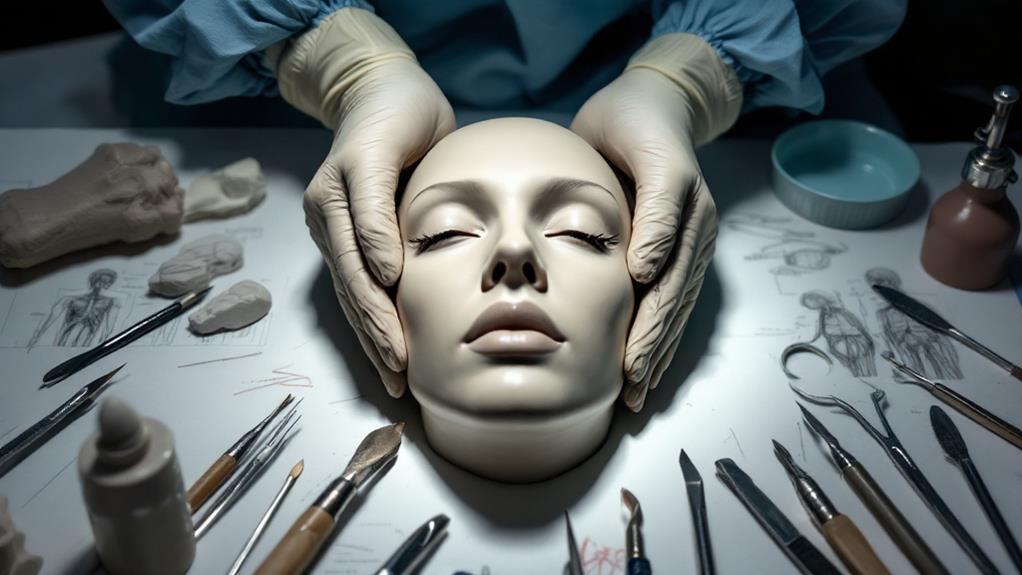
You call it "plastic surgery" because the term "plastic" comes from the Greek word "plastikos," meaning to mold or shape. This reflects the surgery's goal to reshape and restore the body. It isn't just about aesthetics; the practice dates back thousands of years with ancient techniques resembling modern surgeries. Unlike what some may think, its art and science blend to improve both form and function. Over time, technological advancements have deepened its impact greatly, making it a crucial part of both restorative and cosmetic procedures. There's much more behind this fascinating field than meets the eye.
Origins of the Term
The term "plastic surgery" might sound modern, but its roots stretch back to ancient times. You might find it surprising that the concept of altering the human body isn't new. The historical terminology behind "plastic" comes from the Greek word "plastikos," meaning to mold or shape. This isn't about synthetic materials; it's about the art of reshaping the human form. Just as dough undergoes transformation through the fermentation process, so too does the human body through skilled surgical techniques.
When you think about surgical terminology, it often conjures up images of sterile rooms and advanced technology. However, ancient texts show that people have been performing surgeries for millennia. In India, the Sushruta Samhita, an ancient Sanskrit text dating back to around 600 BCE, describes techniques resembling modern rhinoplasty. Even back then, the focus was on restoring form and function, the essence of what we now term "plastic surgery."
Understanding these origins provides you with a deeper appreciation for the field. It's not just about aesthetics; it's a discipline that's been evolving over centuries. By tracing the historical terminology and early surgical attempts, you grasp how the term "plastic surgery" has come to represent a sophisticated blend of art and medicine.
Greek Influence on Language
Throughout history, Greek influence on language has been profound and far-reaching, especially in the domain of medicine and science. You've probably noticed how many scientific and medical terms derive from Greek roots. This isn't a coincidence. The Greeks laid the groundwork for much of the terminology we use today, particularly in these fields. With their rich tradition of observation and inquiry, they crafted words that precisely described complex concepts. For example, the term "stethoscope" is derived from Greek words meaning "chest" and "to see," highlighting the significance of observation in medical practice the invention of the stethoscope.
When you consider the linguistic evolution over the centuries, Greek terminology has played an essential role. Words like "cardiology" (from "kardia" meaning heart) and "dermatology" (from "derma" meaning skin) are just a couple of examples of how Greek roots continue to shape our understanding and communication within these disciplines. The term "plastic" in "plastic surgery" also comes from the Greek word "plastikos," meaning to mold or shape.
Early Medical Practices

Greek influence on medical terminology sets the stage for exploring early medical practices. In ancient times, the Greeks laid the groundwork for medical understanding, and their language shaped the terms still used today. Imagine living in a world where ancient healing was a blend of art and science, with practitioners relying on both intuition and observation to mend the human body. They didn't have the technology we have now, but their curiosity and dedication led to groundbreaking revelations.
You'd find that reconstructive traditions date back thousands of years. Early physicians didn't just treat illnesses; they also attempted complex procedures like setting broken bones and even reconstructing damaged body parts. These efforts were driven by necessity, often inspired by war injuries or accidents that required creative solutions. The ancient Egyptians, for example, are known for their attempts at nasal reconstruction, a practice that would evolve over centuries.
In this context, you'd see how early medical practitioners were pioneers, establishing a foundation for future advancements. Their reconstructive efforts set a precedent, demonstrating the human desire to restore form and function, a tradition that continues to define modern plastic surgery today.
Evolution of Techniques
Imagine a world where surgeons wielded sharpened bronze tools, laying the groundwork for the sophisticated techniques we see today. Back then, procedures were rudimentary, yet they sparked the progression of surgical advancements. Fast forward to now, and you'd witness a transformation in reconstructive techniques that have dramatically improved outcomes and patient safety.
Early methods were crude, but necessity drove innovation. Over centuries, advancements in anesthesia and antisepsis paved the way for more complex surgeries. You're living in an age where microscopes and lasers are your surgeon's tools of choice, ensuring accuracy and minimal scarring. The introduction of sterile procedures and antibiotics further transformed surgery, reducing infections and increasing success rates.
You've also seen the integration of technology in surgical practices. Today, computer-assisted surgeries allow for careful planning and execution. Reconstructive techniques have evolved to incorporate skin grafts and tissue expansion, offering solutions once deemed impossible. Surgeons now use 3D printing to create custom implants, pushing the boundaries of what's achievable.
As you reflect on the evolution of surgical techniques, it's clear each advancement builds upon the last, turning once unimaginable ideas into everyday practice.
The Role of Artistry

The artistry in plastic surgery plays a vital role in achieving both functional and aesthetic results. As you explore the world of plastic surgery, you'll uncover that it's not just about altering appearances but also about enhancing one's natural beauty and functionality. The surgeon must blend artistic expression with surgical precision to create results that are not only pleasing to the eye but also harmonious with the patient's features.
When contemplating a procedure, think about how a surgeon approaches their work like an artist approaches a canvas. They visualize the final outcome, considering symmetry, proportion, and balance. This artistic vision is fundamental, as it guides every incision and adjustment. The ability to see the potential in a patient's features and translate that vision into reality requires both creativity and a steady hand.
Moreover, surgical precision guarantees that each step of the procedure is executed flawlessly. This precision minimizes risks and optimizes the desired outcome. Essentially, the art of plastic surgery is a delicate dance between creativity and technical skill. The mastery of both elements is what sets exceptional plastic surgeons apart, allowing them to craft results that are as functional as they are beautiful.
Modern Day Applications
Today, plastic surgery has transformed far beyond its original scope, finding applications in a multitude of modern contexts. You might think of it as purely cosmetic, but its reach extends much further. From minimally invasive techniques to complex reconstructive procedures, the advancements are vast. If you're considering plastic surgery, you'll find options that focus on improving function or appearance with minimal recovery time. Techniques like laser treatments and injectables offer non-surgical ways to augment your features or correct minor issues without major downtime.
On the reconstructive side, plastic surgery plays a vital role in helping individuals regain normal function and appearance after trauma, illness, or congenital conditions. Surgeons use advanced methods to reconstruct parts of the body, restoring both form and function. Whether it's a hand surgery for better mobility or breast reconstruction post-mastectomy, these procedures aim to enhance quality of life.
You'll also find that plastic surgery is increasingly used to address changes associated with aging, offering solutions that are tailored and precise. With the evolution of these techniques, you have more options than ever, paving the way for personalized care that aligns with your needs and lifestyle.
Common Misconceptions

Despite its widespread use and acceptance, plastic surgery is often surrounded by misconceptions that can lead to misunderstandings about its purpose and effects. You might think it's only about vanity, but that misses the mark. One common misconception is that everyone who opts for plastic surgery is driven purely by superficial desires. In reality, many individuals have misunderstood motivations, seeking surgery for reasons that go beyond aesthetics, such as improving their quality of life or addressing conditions like cleft palate or severe burns.
Another misconception is that societal pressure is the sole reason people pursue these procedures. While societal norms and expectations can play a role, it's not the only factor. People often choose plastic surgery for personal reasons, which may include correcting injuries, elevating self-esteem, or achieving a sense of normalcy. You shouldn't assume that someone is succumbing to societal pressure just because they opt for surgery.
It's also easy to overlook the fact that plastic surgery encompasses a wide range of procedures, not just cosmetic improvements. By understanding the broader scope and varied motivations behind these surgeries, you can appreciate the complexity and personal nature of each decision.
Cultural Impact
Plastic surgery has a profound impact on cultures worldwide, shaping perceptions of beauty and identity. As you navigate through diverse societies, you'll notice how cultural perceptions are heavily influenced by plastic surgery. Over time, societal standards evolve, often reflecting the aesthetic ideals promoted by media representation. You'll see these ideals plastered across billboards, television, and social media, dictating what's deemed attractive or desirable.
Historically, attitudes towards body image have shifted considerably. What was once considered beautiful centuries ago may not align with today's standards. The rise of celebrity influence plays a huge role here; when public figures undergo cosmetic procedures, they often set new trends that ripple across global cultures. You'll find yourself comparing your own body image to these seemingly flawless figures, perhaps feeling compelled to meet those same standards.
In this technological era, media representation constantly bombards you with images of perfection, altering how you perceive yourself and others. It's essential to recognize that these representations can distort your understanding of natural beauty. By understanding the cultural impact of plastic surgery, you can better navigate the pressures and adopt a more authentic sense of self.
Future of Plastic Surgery

Looking ahead, the future of plastic surgery promises to be both groundbreaking and transformative, reflecting the cultural shifts and technological advancements of our time. You'll witness how 3D printing, robotics, and artificial intelligence revolutionize procedures, making them safer and more precise. Imagine surgeries where AI assists surgeons in planning and executing tasks with unmatched accuracy. It's not just about improving aesthetics; it's about improving lives through reconstructive surgeries, giving hope to those affected by trauma or congenital conditions.
However, with advancements in technology come ethical factors you can't ignore. As procedures become more accessible and less invasive, the demand for cosmetic improvements might surge. This raises questions about societal pressure, body image, and the potential for addiction to surgery. You'll need to reflect on how these technologies are used responsibly, ensuring they serve the patient's best interests, not just societal ideals.
Additionally, as technology progresses, there's a need for updated regulations and standards to protect patients. You'll see the importance of balancing innovation with ethical practice, ensuring that the future of plastic surgery is not only technologically advanced but also ethically sound. This balance is vital for the field's continued growth and acceptance.