Why Does Plastic Litter Endanger Wildlife?
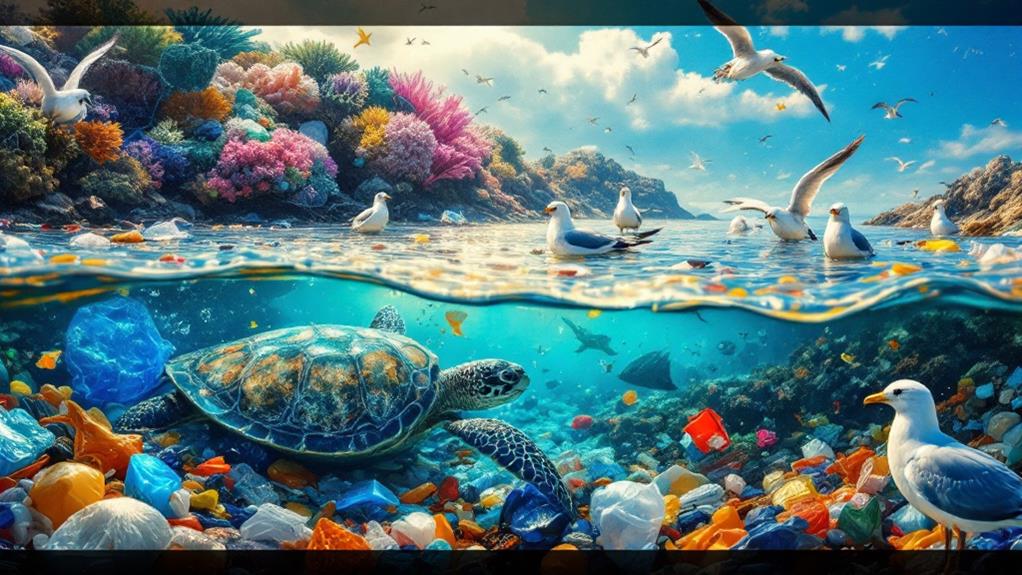
Plastic litter endangers wildlife because animals often ingest debris, mistaking it for food, leading to malnutrition and even starvation. Entanglement is another risk, with discarded fishing gear hindering movement and causing injuries or infections. Furthermore, plastics release toxic chemicals, such as BPA, that can disrupt hormones and damage reproductive systems. This pollution harms marine ecosystems, damages coral reefs, and threatens bird populations by affecting nesting and survival rates. Habitat degradation from accumulated plastic also isolates wildlife, leading to a loss of biodiversity. By understanding these threats, you can grasp the extensive impact of plastic on wildlife and ecosystems.
Ingestion of Plastic Debris
Plastic debris ingestion poses a significant threat to wildlife, impacting numerous species across the globe. You might not realize how widespread this issue is, but animals often mistake plastic for food. This leads to microplastic ingestion, which occurs when small plastic particles enter the food chain. These tiny pieces aren't always visible, yet they accumulate in the digestive systems of marine life, birds, and even terrestrial animals. When you consider the sheer amount of plastic in our environment, it's no wonder that plastic accumulation is a growing concern. The health of ecosystems is fundamentally linked to the survival of diverse species, including those affected by plastic pollution, as bees play vital roles in maintaining ecosystem equilibrium.
Ingesting plastic debris disrupts animals' ability to process real nutrients. For instance, seabirds often consume plastic waste, mistaking it for fish or other prey. This choice leads to a false sense of fullness, which can cause starvation. Marine creatures like turtles and fish also suffer, as their bodies can't digest these materials. The plastic just sits in their stomachs, taking up space needed for actual sustenance.
You can help combat this issue by reducing your plastic use and supporting clean-up initiatives. Every action counts in reducing the amount of plastic that wildlife encounters, ultimately protecting these vulnerable species from a preventable threat.
Entanglement Risks for Animals
Entanglement in plastic waste poses a severe threat to wildlife, affecting countless animals worldwide. When animals encounter discarded plastic, especially fishing gear like nets and lines, they can become trapped. This entanglement restricts their ability to move, hunt, and escape predators. As with many infections, wildlife can also have compromised immune systems, making them more vulnerable to the effects of entanglement and other stressors, including chickenpox. Imagine a sea turtle struggling to swim because it's caught in a discarded fishing net. It can't reach the surface to breathe, leading to exhaustion or even death.
You might wonder how such incidents impact wildlife conservation. Well, entangled animals often suffer injuries, infections, or starvation, decreasing their population numbers. For species already at risk, like certain seals or seabirds, this can push them closer to extinction. Every entangled animal represents a setback for conservation efforts, making it harder to maintain balanced ecosystems.
It's vital to address this issue by participating in cleanup activities and supporting policies that reduce plastic waste. By doing so, you help protect wildlife from these entanglement risks. You can also advocate for responsible disposal of fishing gear to prevent it from becoming a hazard. Your actions can contribute to a safer environment for animals and promote effective wildlife conservation.
Toxic Chemical Exposure
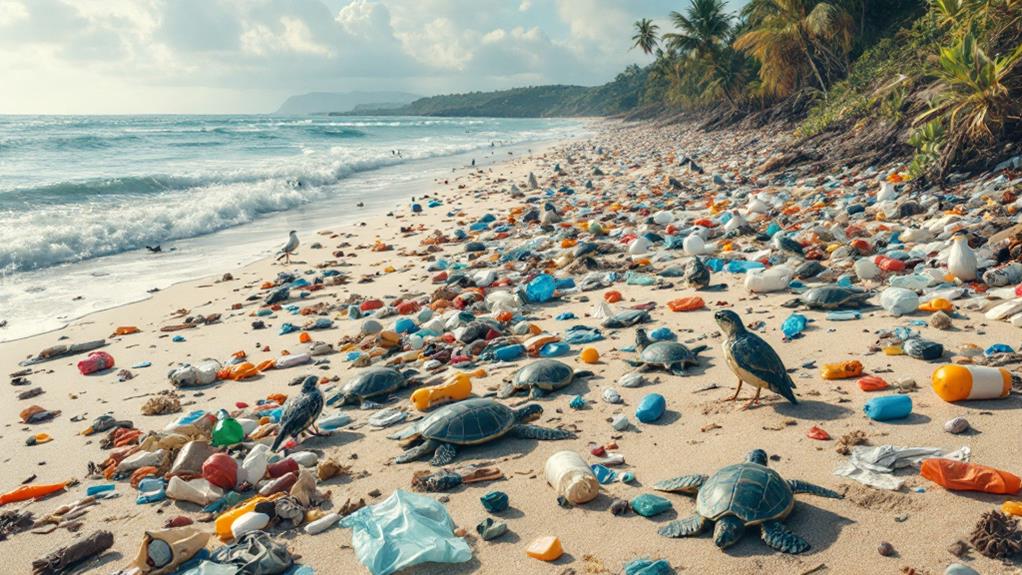
Many animals face significant threats from toxic chemical exposure due to plastic litter. When plastics break down in the environment, they release harmful substances through a process known as chemical leaching. This process occurs when water or other environmental factors cause chemicals in the plastic to seep out. These chemicals often include harmful compounds such as BPA and phthalates, which can disrupt the natural balance of ecosystems.
You might wonder how these chemicals affect wildlife. Well, many of these substances act as endocrine disruptors, interfering with hormone systems in animals. This can lead to reproductive issues, developmental problems, and even behavioral changes. For example, animals that ingest plastics or come into contact with contaminated water might experience skewed sex ratios or reduced fertility.
It's not just a problem for a few species, either. Chemical leaching affects a wide range of animals, from birds and fish to mammals and reptiles. As these chemicals accumulate in the food chain, the impact multiplies, endangering entire ecosystems. By understanding the dangers of plastic pollution and its toxic effects, you can help advocate for solutions that protect wildlife and preserve natural habitats.
Impact on Marine Life
Marine life suffers immensely from the impact of plastic litter in oceans and seas. When you think about plastic pollution, consider how it invades marine ecosystems, posing a severe threat to countless species. Sea turtles, for instance, often mistake floating plastic bags for jellyfish, leading to ingestion that can cause internal injuries or death. Fish and other marine animals can ingest microplastics, tiny plastic particles that accumulate toxins over time. This not only harms them but also affects the larger food chain, including humans who consume seafood.
You might be surprised by how quickly plastic pollution can alter entire marine ecosystems. Coral reefs, which support an incredible diversity of life, are especially vulnerable. Plastics can smother corals, blocking sunlight and hindering their ability to photosynthesize and grow. Furthermore, plastic debris can carry invasive species across oceans, further disrupting local marine life.
Your everyday actions can contribute to this ongoing crisis, but you also have the power to help. By reducing plastic use and supporting clean-up efforts, you can make a difference. Every small step helps protect the marine life that relies on healthy oceans and seas to survive.
Threats to Bird Populations
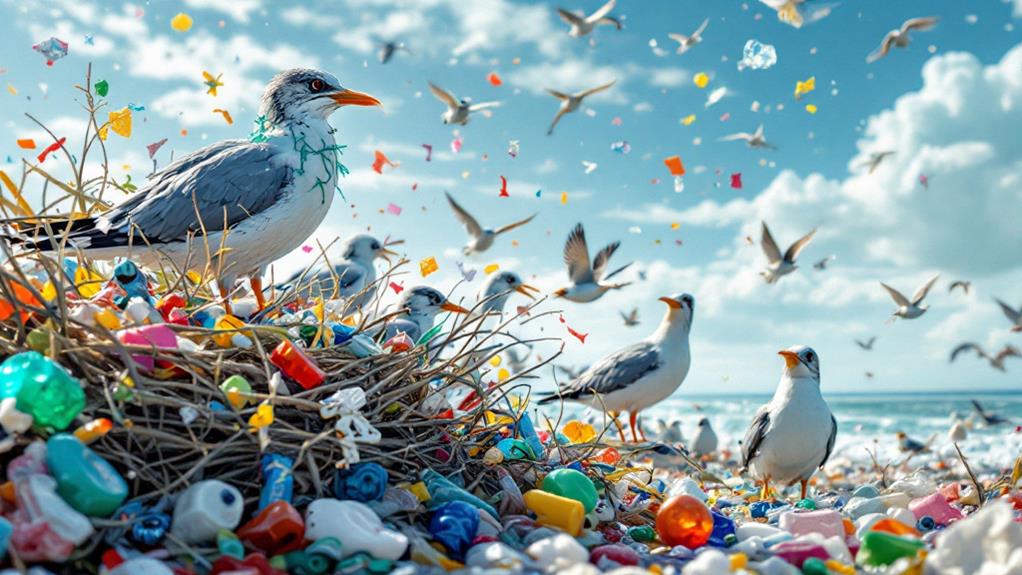
Bird populations face significant threats from plastic litter, impacting their survival and health. You might notice birds using plastic materials in their nesting behavior. Unfortunately, this can lead to dire consequences. When birds incorporate plastic into nests, it can cause entanglement, injury, or even death for both adults and chicks. Sharp edges of plastic can harm delicate eggs and hatchlings. Additionally, plastic doesn't provide the insulation that natural materials do, which affects the survival rate of the young.
You also need to reflect on how plastic litter disrupts birds' feeding habits. Birds often mistake small plastic pieces for food. Consuming this plastic can lead to malnutrition, as it fills the stomach without providing any nutritional value. The ingested plastic can also cause internal injuries or blockages, leading to starvation or death. In some cases, parent birds unknowingly feed plastic to their chicks, drastically reducing their chances of survival.
The presence of plastic litter affects the natural habitats where birds feed and nest. This not only reduces available resources but also increases their vulnerability to other threats. By understanding these dangers, you can help advocate for changes to protect bird populations from plastic pollution.
Microplastics and Food Chains
An alarming amount of microplastics has infiltrated food chains, posing a significant threat to wildlife and ecosystems. As these tiny plastic particles accumulate, they disrupt the natural order, causing an ecosystem imbalance. You might wonder how microplastics find their way into food chains. It starts with marine organisms like plankton ingesting microplastics. As these organisms are consumed by larger predators, the microplastics accumulate at each trophic level, eventually reaching top predators, including birds, fish, and even mammals.
You might think that such small particles couldn't cause much harm, but their impact is profound. Microplastics can leach harmful chemicals, affecting the health and reproductive systems of animals. Over time, this microplastics accumulation leads to weakened populations and altered behaviors, threatening species survival.
As you consider the broader implications, keep in mind that you, too, are part of this interconnected web. Humans consume seafood, which means microplastics can end up on your plate. By raising awareness and reducing plastic use, you can help combat this issue. It's essential to act now to prevent further damage and restore balance to our ecosystems, ensuring the survival of wildlife and the health of our planet.
Habitat Degradation Effects
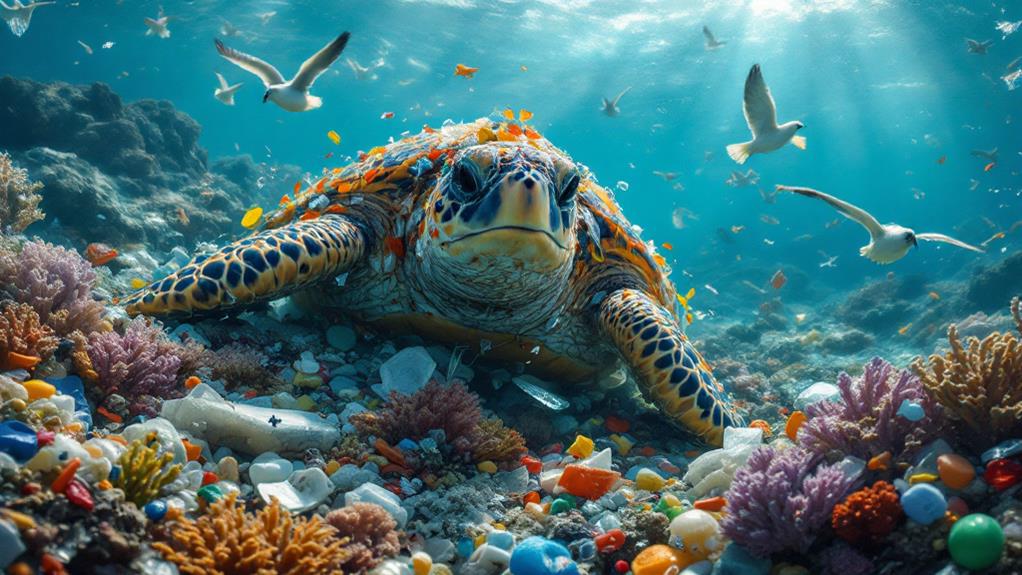
Plastic pollution doesn't just infiltrate food chains; it also wreaks havoc on habitats worldwide. As you investigate numerous ecosystems, you'll notice how plastic litter contributes considerably to habitat degradation. When plastic accumulates in a region, it can lead to habitat fragmentation, breaking up the natural environment into isolated patches. This fragmentation disrupts the movement and migration of wildlife, forcing them into smaller, less sustainable living areas.
Consider the diverse pollution sources that introduce plastic into habitats. Coastal areas often suffer due to ocean currents that bring in vast amounts of plastic waste. Rivers and streams carry litter from urban centers to remote environments, spreading pollution far beyond its origin. As a result, wetlands, forests, and coral reefs are all affected, losing their ecological balance.
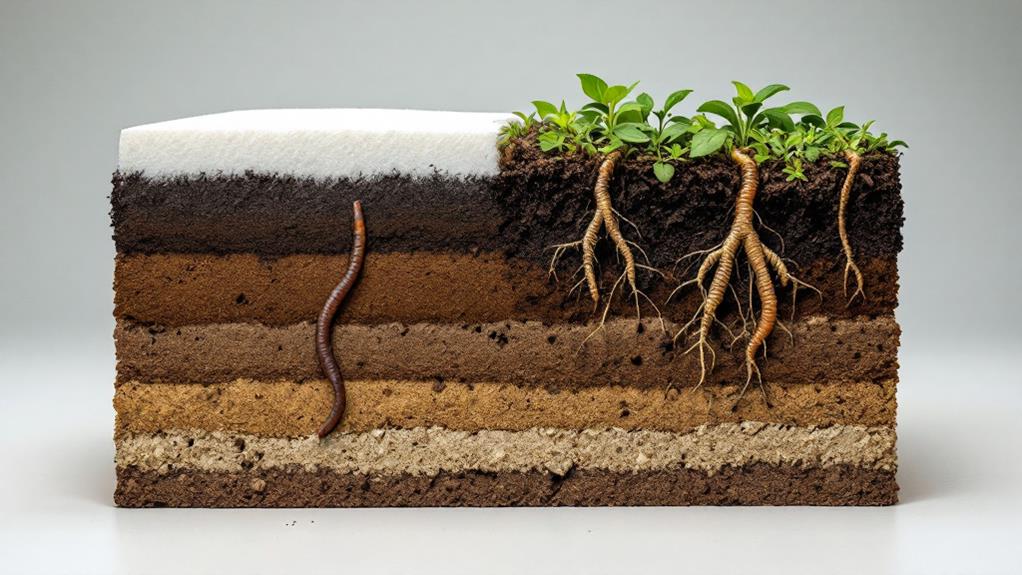
You might think a piece of plastic here or there isn't a big deal, but it compromises the integrity of entire ecosystems. Plants and animals struggle to adapt to the changing landscapes. The accumulation of plastic in these habitats can also alter soil and water quality, reducing the availability of crucial resources. By understanding the impact of plastic on habitat degradation, you're better equipped to champion conservation efforts.
Disruption of Reproductive Systems
Many species face significant reproductive challenges due to plastic pollution in their habitats. You may find it surprising how plastic litter can disrupt reproductive health in wildlife. Chemicals leaching from plastics, like bisphenol A (BPA) and phthalates, act as endocrine disruptors. These substances mimic or interfere with hormones, essential for regulating the reproductive systems of animals. When organisms ingest or come into contact with these chemicals, it can lead to severe consequences.
You'll notice that endocrine disruption impacts animals' abilities to reproduce successfully. For example, it may alter sex ratios in fish or reptiles, skewing populations towards an imbalance. In some cases, it can cause infertility or developmental issues in offspring, making it difficult for species to sustain their numbers. You might not realize it, but even small amounts of these chemicals can trigger significant changes in hormonal activities.
Taking this into account, it's clear that maintaining the delicate balance of reproductive health in wildlife is vital. Plastic pollution doesn't just threaten individual species; it poses a risk to entire ecosystems by destabilizing population dynamics. By understanding this, you can appreciate the urgent need to reduce plastic waste and its harmful effects on nature.
Loss of Biodiversity
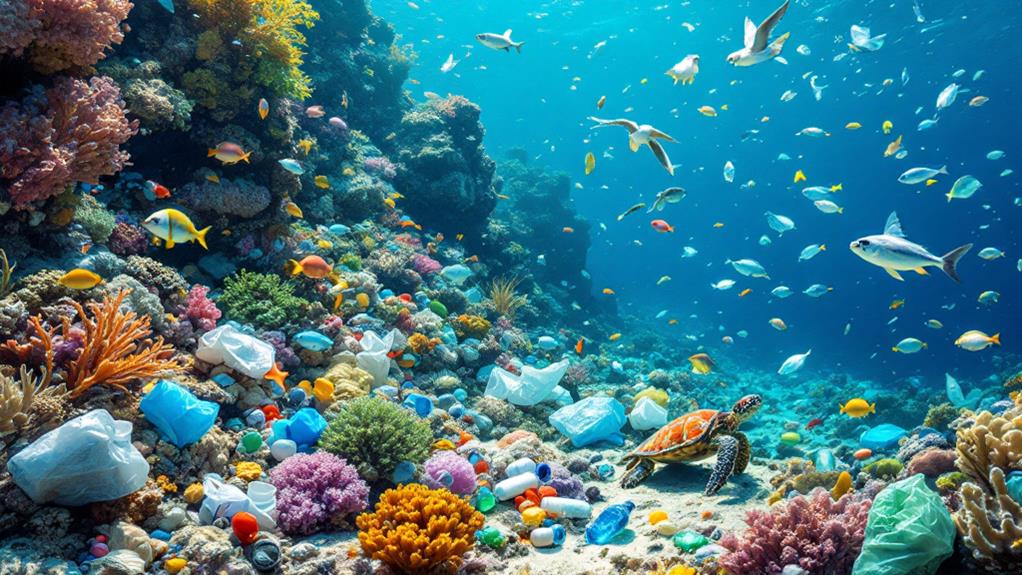
The alarming increase in plastic litter directly contributes to the loss of biodiversity across the globe. When you see plastic debris scattered across natural habitats, you're witnessing the disruption of ecosystem stability. Plastic waste fragments habitats, making it difficult for wildlife to thrive, causing species to migrate or even face extinction. This fragmentation alters the food web, as species that once depended on each other can no longer interact effectively, weakening ecological resilience.
Your role in conservation efforts becomes essential as these disruptions challenge wildlife protection. With plastic litter paving the way for invasive species to enter and dominate new environments, native species struggle to survive, further jeopardizing biodiversity. Plastic waste doesn't just litter landscapes; it's an environmental policy issue that needs urgent attention. Effective policies can mitigate the impact of plastic on ecosystems, but they require your support and advocacy.
You can help by pushing for stronger regulations that address plastic pollution and its ties to climate change. Every small action counts toward preserving ecosystem stability. By engaging with these efforts, you contribute to a world where biodiversity thrives, ensuring a more resilient planet for future generations.
Long-term Environmental Consequences
Addressing the immediate impacts of plastic litter on biodiversity is just the beginning. You need to take into account the long-term environmental consequences as well. Plastic pollution disrupts ecosystem balance, which is crucial for maintaining a healthy environment. When plastic waste accumulates in natural habitats, it affects the food chain, starting from the smallest organisms. Microplastics are ingested by plankton, which are then consumed by larger marine animals. This contamination moves up the food chain, affecting wildlife health across diverse species. Over time, it can lead to a decline in populations of affected animals, potentially causing irreversible changes to the ecosystem.
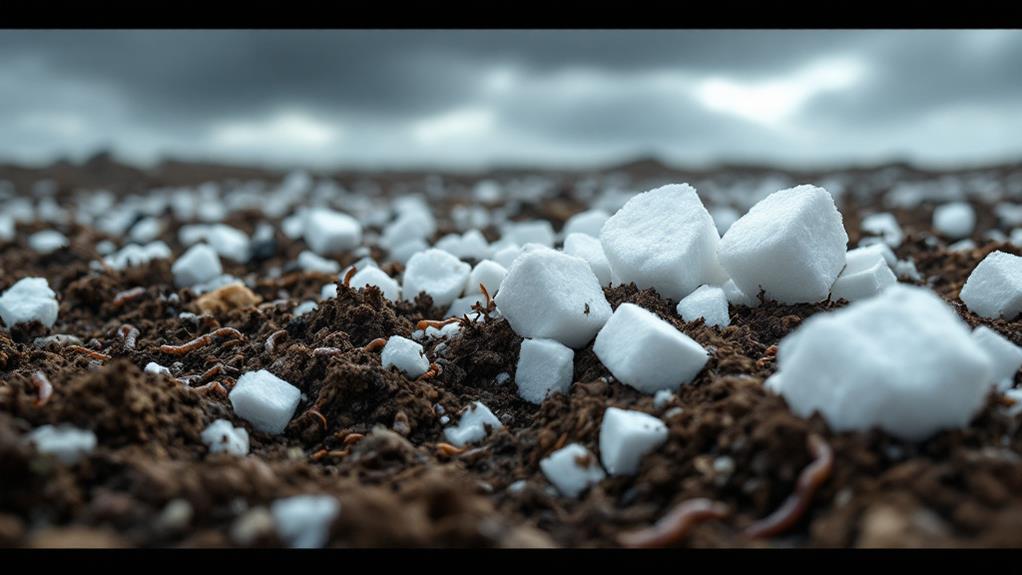
Moreover, plastics don't decompose easily. They persist in the environment for hundreds of years, continuously releasing harmful chemicals. These toxins leach into the soil and waterways, further disturbing ecosystem balance. When you think about the future, it's clear that these environmental changes could result in loss of habitat, scarcity of resources, and increased competition among species. Ultimately, the impact on wildlife health becomes a broader concern that directly affects human life too. By understanding these long-term consequences, you can take informed actions to mitigate the effects of plastic litter and protect our planet's ecosystems.