Why Is Polystyrene Soluble in Acetone and Not Water?
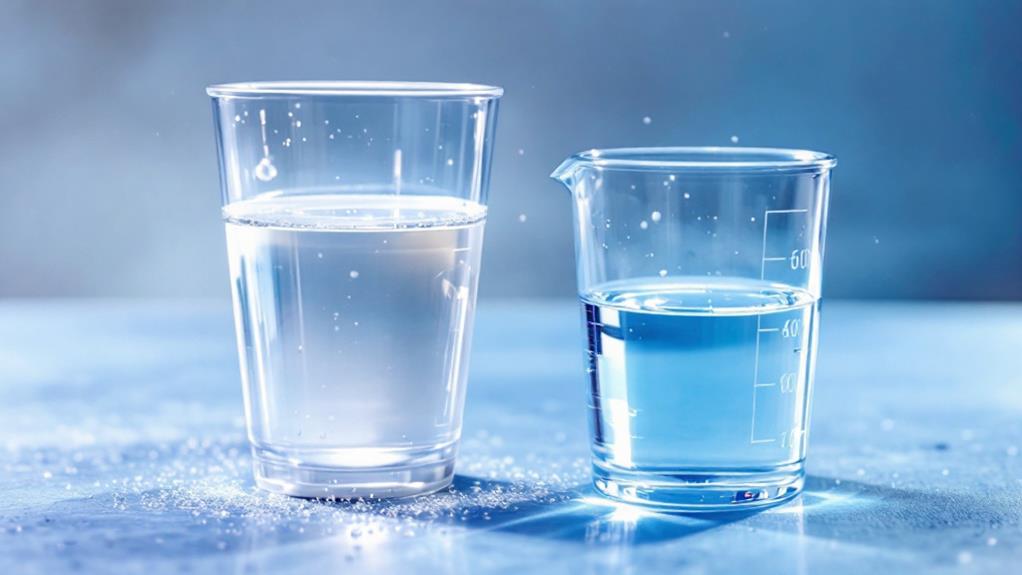
Polystyrene dissolves in acetone but not in water because of the differences in polarity and intermolecular forces. Polystyrene is non-polar, and while acetone is polar, it can still interact with non-polar regions of polystyrene, thanks to dispersion forces. Water, on the other hand, is also polar but relies on strong hydrogen bonding, which doesn't mix with polystyrene's non-polar nature. This is why you'll find acetone as an effective solvent for breaking down polystyrene, while water remains ineffective. These chemistry fundamentals open up interesting applications when you uncover more about it.
Understanding Polystyrene's Structure
Polystyrene is a versatile polymer that you'll find in many everyday products due to its unique properties. Its applications range from food packaging to construction materials, showcasing its adaptability. To understand why polystyrene behaves the way it does, you need to look at its structure. Polystyrene's structure consists of long chains of styrene monomers, which are hydrocarbons. These chains result in a molecular arrangement that is primarily linear, giving polystyrene its rigidity and ability to be molded into diverse shapes.
When you examine polystyrene at a molecular level, you'll notice that each styrene unit in the chain contains a phenyl group—a ring of carbon atoms that contributes to its stability. This molecular arrangement makes polystyrene a thermoplastic, meaning it can be reshaped when heated and retains its form upon cooling. The linear alignment of the chains allows for some flexibility, but the presence of the bulky phenyl groups increases the material's strength and resistance to bending.
Properties of Acetone
To better understand polystyrene's behavior in different environments, let's investigate acetone's properties. Acetone is a well-known solvent, renowned for its ability to dissolve numerous substances efficiently. It's a colorless, volatile liquid with a distinct smell, often found in household products and industrial applications. Its solvent capabilities make acetone useful in multiple applications, such as removing nail polish, cleaning laboratory equipment, and thinning paints. Moreover, the interaction between acetone and certain polymers, such as polystyrene, can be compared to the binding properties of cement in concrete, showcasing how specific materials react with solvents.
Now, let's break down these properties into key points:
- Volatility: Acetone evaporates quickly, which is advantageous for applications requiring rapid drying times. However, this also means it must be handled with care to avoid inhalation.
- Polarity: Acetone's polar nature allows it to interact with other polar substances, making it an effective solvent for materials like polystyrene. Its polarity enables it to break down certain polymers by disrupting their molecular structures.
- Acetone Safety: Due to its flammability, you should always use acetone in well-ventilated areas, away from open flames or sparks. Proper storage in a cool, dry place is crucial to prevent accidents.
- Solvent Versatility: Acetone is versatile, dissolving both organic and inorganic compounds, which is why it's a staple in numerous industries and laboratories.
Understanding these properties helps explain why polystyrene dissolves so readily in acetone.
Water's Solvent Characteristics
In relation to versatility and ubiquity, water stands out as a remarkable solvent. It might seem ordinary, but its unique properties make it fundamental in countless chemical processes. One key feature is hydrogen bonding. Water molecules form strong hydrogen bonds with each other, creating a cohesive network. This interaction greatly contributes to water's solvent efficiency, allowing it to dissolve a wide range of substances, especially ionic and polar compounds.
When you add a salt or sugar to water, hydrogen bonds play a vital role. They help break down the solute particles and integrate them into the solution. This process showcases water's high solvent efficiency. It can accommodate diverse solutes, making it an excellent medium for biological and chemical reactions. However, it is significant to acknowledge that this efficiency doesn't extend to nonpolar substances, like polystyrene.
Water's ability to dissolve substances doesn't just depend on hydrogen bonding. Its efficiency is also influenced by molecular size, shape, and the nature of the solute. When you understand these characteristics, you can appreciate why water excels at dissolving some substances while being ineffective with others, like polystyrene, which requires a different solvent environment.
Polarity and Solubility Principles
Understanding the principles of polarity and solubility is vital when exploring why certain substances dissolve in specific solvents. You need to grasp how molecular interactions and solubility rules dictate these processes. Polarity refers to the distribution of electric charge around a molecule. If a molecule has distinct poles, it's considered polar. Conversely, non-polar molecules have an even distribution of charge. This difference in polarity is significant because of the "like dissolves like" rule. Polar solvents dissolve polar substances, while non-polar solvents dissolve non-polar substances.
When discussing solubility, keep these key points in mind:
- Polarity Matters: The polarity of both the solute and the solvent determines solubility. Polystyrene is non-polar, which is why it won't dissolve in polar solvents like water.
- Molecular Interactions: Non-polar molecules like polystyrene interact better with non-polar solvents due to weak Van der Waals forces.
- Solubility Rules: These general guidelines help predict if a substance will dissolve in a given solvent based on polarity.
- Exceptions Exist: While rules are helpful, keep in mind that exceptions can occur due to unique molecular interactions.
Understanding these principles helps you predict and explain solubility outcomes effectively.
Intermolecular Forces at Play

Intermolecular forces greatly influence the solubility of substances like polystyrene in acetone. When you look at polystyrene, you'll notice it's made up of long chains of hydrocarbons. These chains are nonpolar, which means they don't mix well with polar substances like water due to a lack of hydrophobic interactions. Instead, they prefer solvents that share similar characteristics.
Acetone, being a nonpolar solvent, offers excellent solvent compatibility with polystyrene. This compatibility arises because acetone can interact with the polystyrene chains through dispersion forces, which are weak but effective in nonpolar-to-nonpolar interactions. You'll find that these forces allow acetone to break down the polystyrene structure, effectively dissolving it.
In contrast, water, a polar solvent, can't establish these necessary interactions with polystyrene. Water molecules are more interested in forming hydrogen bonds with each other, leaving polystyrene molecules unperturbed and undissolved. This is why you see polystyrene easily dissolving in acetone but not in water. Understanding these intermolecular forces helps you predict and explain the behavior of different substances in distinct solvents, highlighting the importance of solvent compatibility in determining solubility.
Practical Implications and Uses
When considering the practical implications of polystyrene's solubility in acetone, you'll find numerous applications across distinct industries. This solubility characteristic is particularly impactful in multiple fields due to its ability to dissolve polystyrene efficiently. Here's how it plays out:
- Packaging Applications: In the packaging industry, acetone can be used to recycle polystyrene waste. By dissolving the material, you can repurpose it into new forms, reducing waste and creating creative packaging solutions.
- Environmental Concerns: While polystyrene offers convenience, its disposal presents environmental challenges. Utilizing acetone to dissolve and repurpose polystyrene can mitigate ecological impacts, although it doesn't solve the root issue of waste production.
- Recycling Challenges: Polystyrene is notoriously difficult to recycle. Acetone provides a viable solution by breaking it down, allowing you to recover and reuse the material effectively. This process, however, requires careful handling of both polystyrene and acetone.
- Adhesive Uses: In manufacturing processes, dissolved polystyrene in acetone can serve as a strong adhesive. This mixture is used in crafting and industrial applications, providing a cost-effective bonding solution.
Each application underscores the need for responsible management of polystyrene and acetone, balancing utility with environmental responsibility.