How Do You Remove Tomato Stains From Plastic?
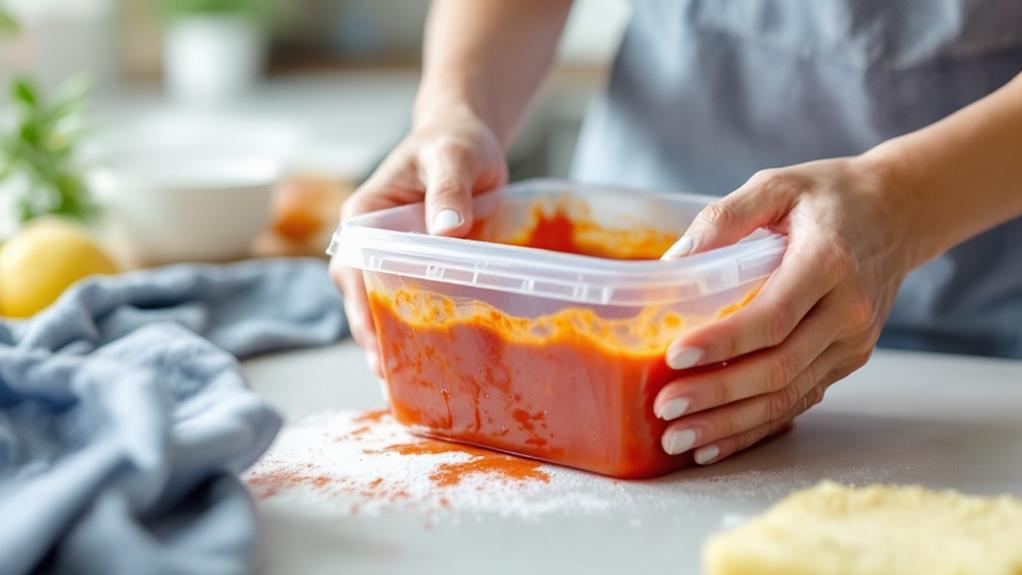
To remove tomato stains from plastic, start by rinsing with cold water. Create a paste with baking soda and water, apply it to the stain, and let it sit for 15 minutes before scrubbing gently. Alternatively, mix equal parts white vinegar and warm water, soak the item for 15-30 minutes, and scrub lightly. A lemon rub followed by sun exposure is a natural way to fade the stain. If the stain persists, use a grease-cutting dish soap and hot water for extra cleaning power. Eco-friendly commercial cleaners are another option. Uncover more about effective techniques and their advantages.
Pre-Treatment Techniques
Before you tackle those stubborn tomato stains on plastic, it's vital to start with effective pre-treatment techniques. Begin by immediately rinsing the stained area with cold water. This step helps flush out surface residue and prevents the stain from setting further. Next, choose a mild dish soap and mix it with warm water, as warm water improves the effectiveness of soap by softening oils and fats, which facilitates the washing away of dirt and grease. Soak the plastic item in this soapy solution, allowing it to sit for about 30 minutes. This soaking time is critical as it loosens the grip of the stain, making it easier to remove later.
While your item is soaking, take care to avoid any actions that might inadvertently set the stain. For instance, using hot water at this stage can cause the stain to settle deeper into the plastic. After soaking, gently scrub the area with a soft brush or sponge. This should lift the loosened stain particles without scratching the plastic surface. Remember, regular maintenance and immediate attention to spills can contribute considerably to stain prevention. By incorporating these pre-treatment techniques, you're setting the stage for a more manageable cleaning process, ensuring your plasticware remains stain-free for longer.
Baking Soda Method
Once you've completed the pre-treatment steps, it's time to harness the power of a common household item: baking soda. Start by making a paste using baking soda and a little water. The consistency should be thick enough to spread easily, but not too watery. This baking soda paste acts as a gentle abrasive, perfect for tackling those stubborn tomato stains on plastic. Notably, the quality of your water can affect the effectiveness of cleaning products; for instance, using soft water can improve the performance of soap and other cleaning agents, leading to better stain removal soap efficiency.
Apply the paste directly onto the stained area, ensuring it's fully covered. Gently scrub the surface using a soft cloth or sponge. The mild abrasiveness of baking soda aids in lifting the tomato stain without scratching the plastic. Make sure you keep the scrubbing motion consistent, applying a bit of pressure but not too much, as you don't want to damage the plastic.
Leave the baking soda paste on the stain for about 15 minutes. This resting time allows the baking soda to break down the stain's compounds, making removal easier. Afterward, rinse the plastic with warm water, ensuring all the baking soda residue is washed away. Dry the plastic thoroughly with a clean towel. If the stain persists, you can repeat the process until the stain removal is complete.
Vinegar and Water Solution
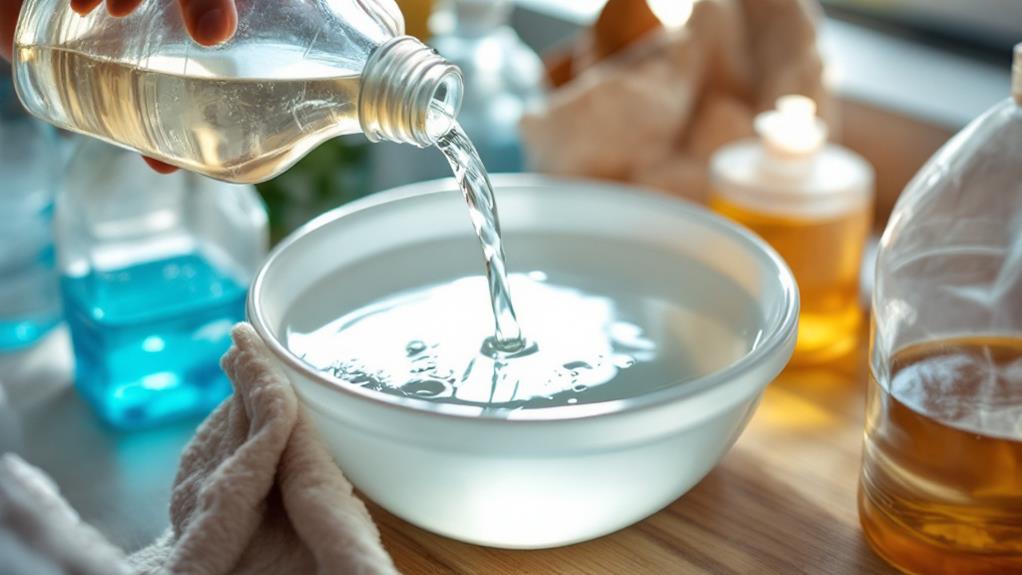
To tackle stubborn tomato stains on plastic, consider using a vinegar and water solution. Vinegar's effectiveness in stain removal is well-known, especially for cutting through the acidic residue left by tomatoes. Start by mixing equal parts of white vinegar and warm water in a bowl. The water temperature is crucial; warm water helps to loosen the stain, making it easier for the vinegar to work its magic.
Once your solution is ready, submerge the stained plastic item or use a cloth soaked in the solution to rub the stain. Let it sit for about 15-30 minutes. This gives the vinegar enough time to break down the stain's components. After soaking, scrub the area gently with a sponge or a soft-bristled brush. You'll notice that the stain begins to lift.
Rinse thoroughly with warm water to remove any vinegar residue. If the stain persists, repeat the process. Don't worry if you need a few attempts; tomato stains can be notoriously persistent. Dry the plastic item completely before storing it away. This method not only helps remove the stain but also deodorizes the plastic, leaving it fresh and clean.
Lemon and Sunlight Trick
When you're faced with tough tomato stains on plastic, the lemon and sunlight trick offers a natural and effective solution. Start by slicing a lemon in half and rub the cut side over the stained area. The citric acid in lemons acts as a natural bleaching agent, helping to break down the stubborn stain. Make sure to cover the entire stained surface with lemon juice for best results.
After you've applied the lemon juice, place the plastic item in direct sunlight. The ultraviolet rays from the sun work alongside the lemon juice, enhancing the natural bleaching process. Leave the item outside for a few hours, checking periodically to see the progress. The combination of lemon and sunlight not only targets existing stains but also contributes to stain prevention by breaking down any residual oils or pigments.
Once you're satisfied with the results, rinse the plastic thoroughly with water to remove any lemon residue. The lemon and sunlight trick is an eco-friendly method that doesn't rely on harsh chemicals, making it a great option for those looking to maintain their plasticware while being mindful of the environment.
Dish Soap and Hot Water
If the lemon and sunlight trick leaves some stubborn tomato stains behind, dish soap and hot water provide a reliable alternative. Start by choosing a dish soap known for its grease-cutting properties, as dish soap effectiveness is essential in breaking down tomato residue. Apply a generous amount directly onto the stained area of your plastic container.
Next, heat water to a temperature that's hot, but still safe to handle. The right hot water temperature enhances the cleaning power of the dish soap, helping to loosen and lift stains from the plastic's surface. Pour the hot water over the soapy area, allowing the combined power of the soap and heat to work on the stain.
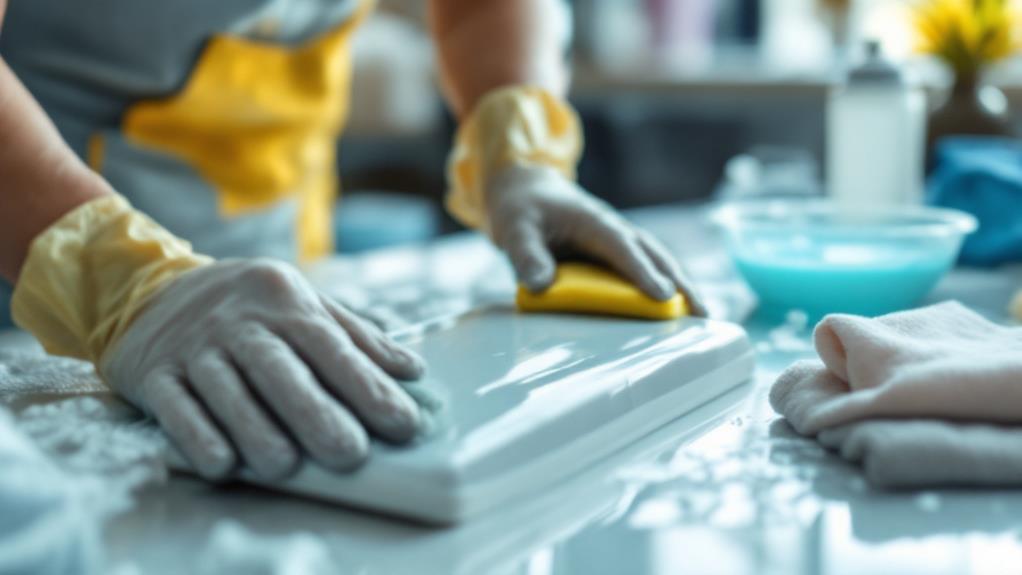
Using a sponge or cloth, scrub the stained area gently but thoroughly. You might need to repeat this process a few times for particularly stubborn spots. After scrubbing, rinse the plastic container with clean water and inspect the stain. If it's not entirely gone, repeat the steps, possibly allowing the soap to sit for a few minutes before rinsing. This method effectively tackles tomato stains without damaging your plastic items.
Commercial Cleaners Options
Many find commercial cleaners to be an effective solution for tackling tomato stains on plastic. When dish soap and hot water don't quite cut it, you might want to investigate different stain removal products specifically designed for stubborn stains. Head to your local store, and you'll find a range of options that promise to restore your plastic containers to their former glory.
When choosing a commercial cleaner, consider both the effectiveness and the environmental impact. Eco-friendly options are increasingly available, catering to those who want to maintain a green lifestyle without sacrificing cleaning power. Look for products labeled biodegradable or non-toxic, which often use plant-based ingredients instead of harsh chemicals. These options not only help you remove stains but also reduce your carbon footprint.
To use a commercial cleaner, follow the instructions on the label for the best results. Typically, you'll apply the cleaner to the stained area, let it sit for a specified time, and then rinse thoroughly. Remember, it's crucial to verify the cleaner is safe for use on food containers, as some products might not be suitable. With the right stain removal product, those pesky tomato stains won't stand a chance.