How Is Plastic Recycled? The Step-by-Step Process
When you recycle plastic, you start by ensuring it's collected and transported properly, often using designated bins. Next, sorting at facilities separates different plastic types, minimizing contamination. Thorough cleaning removes impurities like adhesives and labels, making the plastic ready for further processing. Shredding the cleaned plastic into smaller pieces follows, allowing easier melting and extrusion into new forms. These melted plastics are shaped into products like containers or clothing. By engaging in this process, you're actively reducing the need for virgin plastic and supporting a sustainable environment. There's much more to unveil about how this method benefits our planet.
Collection and Transportation
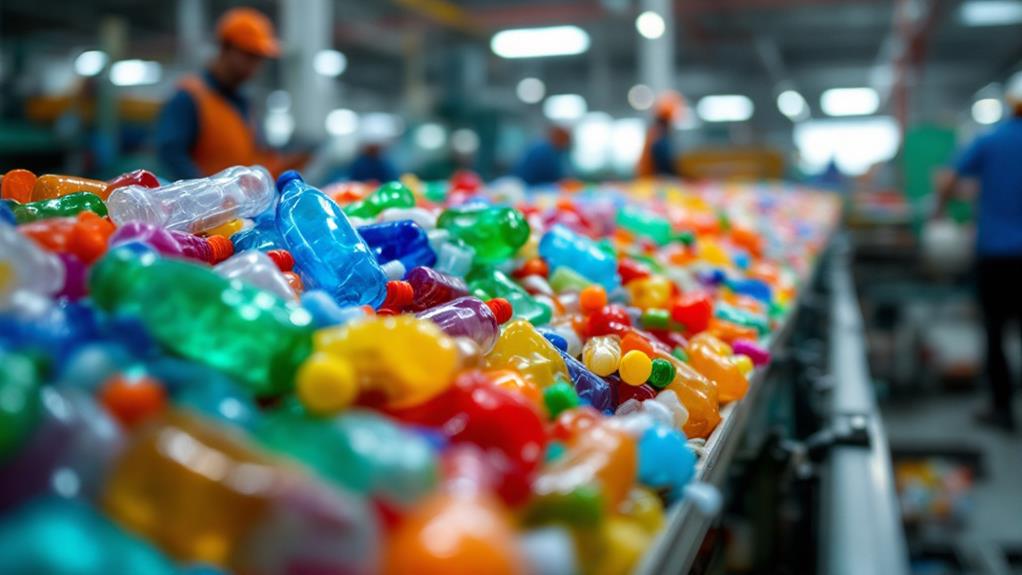
The initial step in recycling plastic is the collection and transportation of recyclable materials. You play a vital role in this process by ensuring your plastics are disposed of in designated recycling bins. Waste management systems are designed to effectively gather these materials from homes and businesses, ensuring they're not ending up in landfills. Once collected, the materials are transported to recycling facilities where the next phases of recycling can begin. Proper sorting of materials is fundamental, as it minimizes contamination, which is essential for effective recycling, much like how general rules for vacuuming can improve carpet care.
As you consider how to minimize your plastic waste, focus on source reduction. This means using less plastic from the start, which reduces the need for extensive waste management. By opting for products with minimal packaging or choosing reusable items, you not only cut down on your plastic consumption but also ease the burden on waste collection systems.
Transportation is another key element. The process from your home to the recycling facility involves logistics that must be efficient to keep the process sustainable. Properly sorted and clean plastics reduce the risk of contamination during transport, ensuring that more material can be effectively recycled. By understanding and participating in these initial steps, you contribute greatly to the overall success of plastic recycling.
Sorting and Categorization
Sorting and categorization play an essential role in the plastic recycling process. When you think about recycling facilities, imagine them as lively hubs where all the collected plastics initially arrive. Here, your primary task is to tackle the challenge of dealing with different material types. Plastics come in diverse forms, such as PET, HDPE, and PVC, and each type has its own recycling requirements. Ensuring these materials are correctly sorted is crucial for the efficiency and success of the recycling process. Furthermore, just as capsules are primarily made from gelatin, the composition of plastics also varies considerably, which impacts their recycling methods and effectiveness.
Contamination issues are another hurdle you'll face. Contaminants, like food residues or non-recyclable plastics, can disrupt the recycling process, making it essential to carefully separate unwanted materials. To aid in this task, advanced sorting technologies come into play. These technologies, including infrared sensors and air classifiers, help identify and segregate plastics based on their material types and properties.
Cleaning and Washing
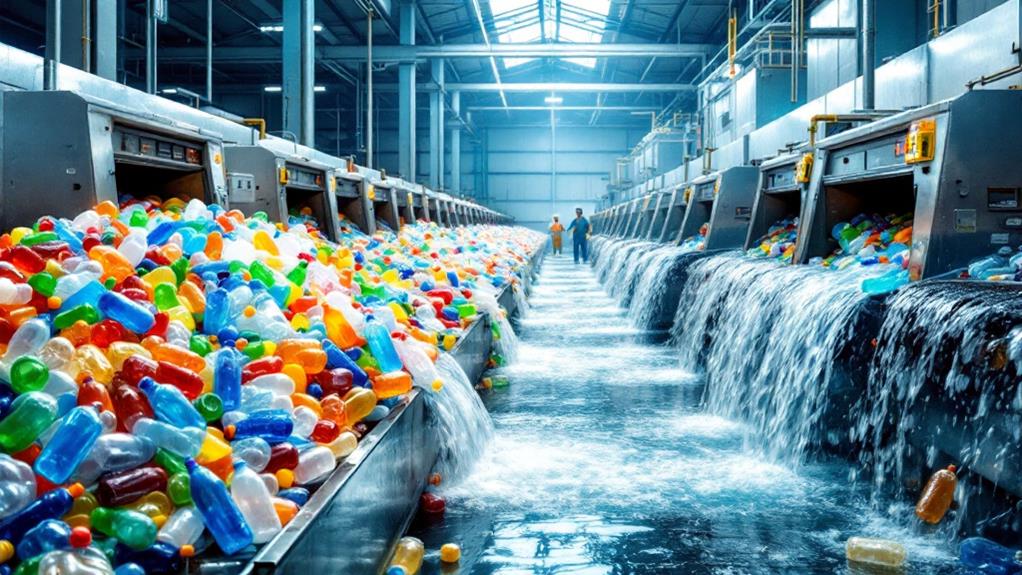
Once plastics are properly sorted and categorized, they move on to the cleaning and washing stage. In this essential step, the goal is to remove any impurities that could affect the quality of the recycled material. You'll see plastics being thoroughly washed to eliminate residues like adhesives, labels, dirt, and other contaminants. This cleaning is critical not just for quality, but also because it helps reduce the environmental impact by ensuring the end product is as pure as possible.
State-of-the-art recycling technology plays a significant role here. Advanced washing systems use water, detergents, and mechanical action to scrub plastics clean. Sometimes, ultrasonic cleaning and other groundbreaking methods are employed to improve efficiency. By using these technologies, you're not only ensuring a higher quality recycled plastic but also conserving resources like water and energy, which further minimizes environmental impact.
As you oversee the process, remember the importance of this stage. The cleaner the plastic, the better it will perform in its next life cycle. Cleaned plastics are now ready to continue their path through recycling, prepared to be transformed into valuable new products.
Shredding and Resizing
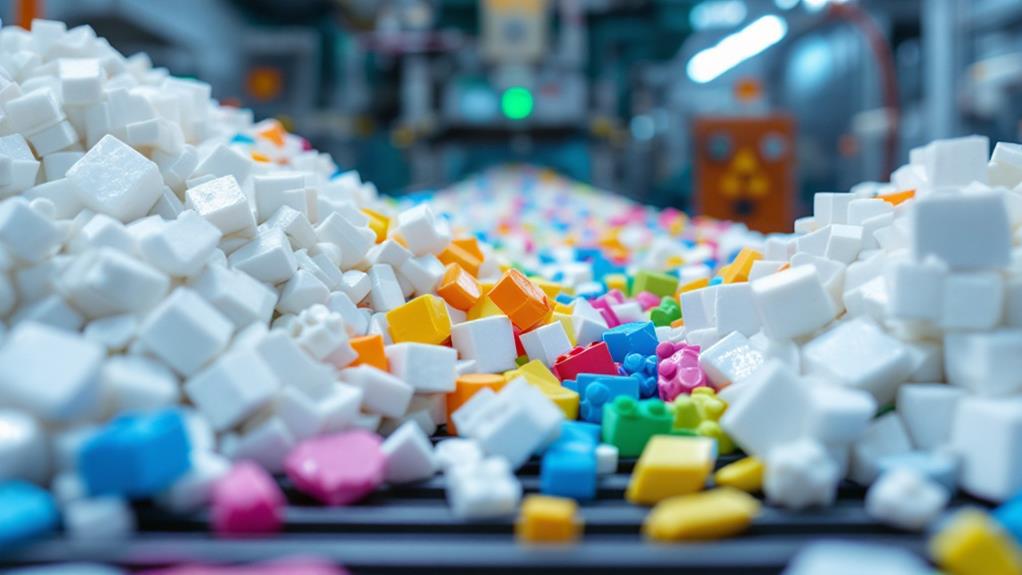
After the cleaning and washing stage, plastics enter the shredding and resizing phase. This step is vital for transforming bulky plastic waste into manageable pieces. You'll notice that diverse shredding techniques are employed, each tailored to the type of plastic and its intended future use. High-speed shredders can quickly break down rigid plastics, while slower, more precise shredders handle softer materials, reducing them into smaller, uniform fragments. The importance of effective resizing can be likened to how New York's name evolved through different governance and cultural influences, showcasing the city's dynamic identity over time, as seen in its historical evolution of names.
Once shredded, these pieces may still vary greatly in size. That's where resizing methods come into play. The goal is to achieve a consistent particle size, making sure the material is suitable for further processing. You might see the use of granulators, which are machines designed to refine shredded plastic into even smaller particles. These granulators work by slicing the plastic into uniform granules, making them perfect for subsequent stages in the recycling process.
In this phase, it's vital to confirm that the shredded and resized plastic is free from contaminants. By doing so, you improve the quality of the recycled material, making it more viable for future applications. Every step you take here directly impacts the efficiency and success of the recycling process.
Melting and Extrusion

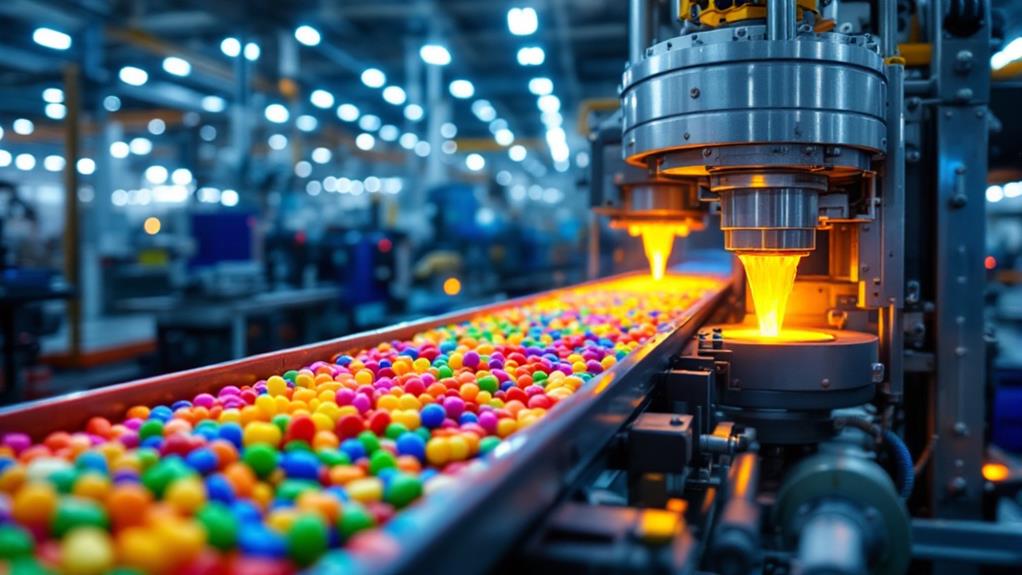
With the shredded and resized plastic ready, the recycling process moves into the melting and extrusion phase. Here, you'll encounter diverse melting techniques tailored to the type of plastic being processed. These methods guarantee the plastic's consistency and quality are maintained throughout the recycling expedition. Generally, the plastic shreds are fed into a machine that gradually heats them until they reach a molten state. The temperature must be carefully controlled to prevent degradation, guaranteeing the plastic retains its desirable properties.
Once melted, the plastic enters the extrusion phase. This step uses specific extrusion methods to shape the molten plastic. You'll see the plastic pushed through a die, which is a mold that helps form the plastic into long, continuous shapes like tubes or sheets. These shapes are then cooled and solidified, making them ready for further processing. Different extrusion methods are employed based on the intended use of the recycled plastic, allowing for flexibility in the final product's design.
Throughout melting and extrusion, maintaining precise conditions is essential. This guarantees that the plastic's quality remains high and that it can be effectively transformed during subsequent recycling stages.
Forming New Products
In the recycling expedition, the transformation of recycled plastic into new products is where innovation truly shines. You've seen plastic bottles become fleece jackets, or packaging morph into stylish new furniture. The possibilities are endless and exciting. Taking advantage of recycling benefits, manufacturers can reduce the need for virgin plastic, conserving natural resources and minimizing pollution. By embracing these practices, you're not only helping the planet but also supporting a sustainable cycle that promotes creativity and economic growth.
When recycled plastic is ready, it's molded into a variety of forms. You might find it turned into pellets, fibers, or sheets, depending on the intended product. From there, it's shaped into everything from containers and piping to clothing and car parts. What's essential here is the shift towards incorporating biodegradable alternatives. These materials break down more easily at the end of their lifespan, reducing long-term environmental impact. As you consider the products you buy, opting for items made from recycled materials or those with biodegradable alternatives can greatly improve your contribution to a greener planet. Remember, every choice you make can drive demand for sustainable innovation.