How Long Does It Take for a Plastic Bottle to Decompose?
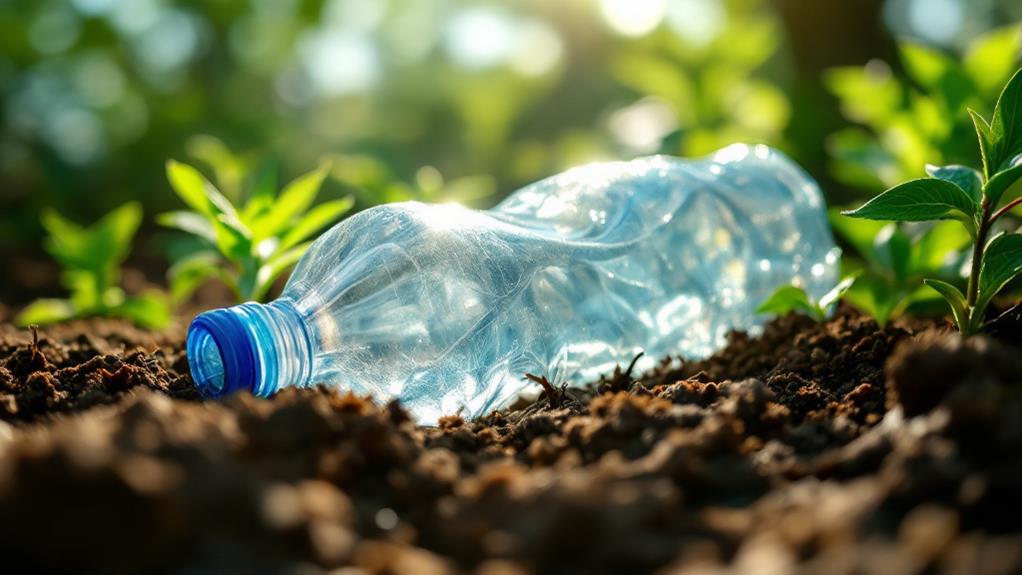
When you toss a plastic bottle into the trash, it can take about 450 years to decompose. Initially, the bottle fragments but remains mostly intact for around 100 years. Between 100 to 200 years, microbial activity starts breaking it down. After 200 years, it continues to degrade into microplastics, lingering for centuries. Environmental conditions like sunlight and temperature can speed up or slow this lengthy process. With limited oxygen and microbes in landfills, decomposition drags on longer. Want to know how this affects the environment and what you can do about it? There's more insight just ahead.
Composition of Plastic Bottles
Plastic bottles, commonly found in everyday life, primarily consist of a material called polyethylene terephthalate, or PET. You probably know PET as a lightweight, durable plastic that's used for packaging everything from water to soda. It's a popular choice because it's clear, strong, and safe for food and beverages. This versatility in plastic choice is somewhat comparable to how bakers utilize yeast's fermentation properties in transforming simple ingredients into delicious bread. But PET isn't the only plastic type used in bottle design. High-density polyethylene (HDPE) is another common material, often used for milk jugs or detergent bottles due to its strength and resistance to impact.
When you examine a bottle, you'll notice that its design is more than just aesthetics. The shape and thickness of a plastic bottle are carefully planned to guarantee it's functional and efficient. For example, the iconic shape of a soda bottle isn't just for looks; it's designed to withstand the pressure from carbonated drinks. Likewise, the neck and cap seal are integral to keeping the contents fresh and preventing leaks.
Understanding the composition and design of plastic bottles helps you appreciate why they're so widely used. From the choice of plastic types to the specific bottle design, each element plays a role in how the bottle performs in everyday use.
Factors Affecting Decomposition
Having examined the composition of plastic bottles, it's vital to understand what influences their decomposition. Several factors play a role in how quickly or slowly a plastic bottle breaks down. One notable factor is microbial activity. Microorganisms, including bacteria and fungi, can help decompose plastic, although they don't work as efficiently on plastic as on organic materials. The presence and type of microbes can impact the rate of breakdown. In some environments, like landfills, microbial activity is limited, slowing down decomposition. Moreover, just as Africa's diverse ecological systems influence its rich cultural history, the different environments where plastic bottles end up can greatly alter their decomposition rates, as seen in the importance of African history.
Temperature effects also play a significant role. Higher temperatures can accelerate the breakdown process of plastics. In warmer climates or during hotter seasons, the increased heat can improve microbial activity and cause the plastic to degrade faster. However, this isn't always consistent, as extreme temperatures might also inhibit microbial growth, depending on the conditions. Cooler temperatures generally slow down both microbial activity and the physical breakdown of plastics, prolonging the decomposition period.
Understanding these factors helps you see why plastic bottles can linger in the environment for so long. By recognizing the roles of microbial activity and temperature effects, you gain insight into how environmental conditions influence decomposition rates.
Timeline of Decomposition
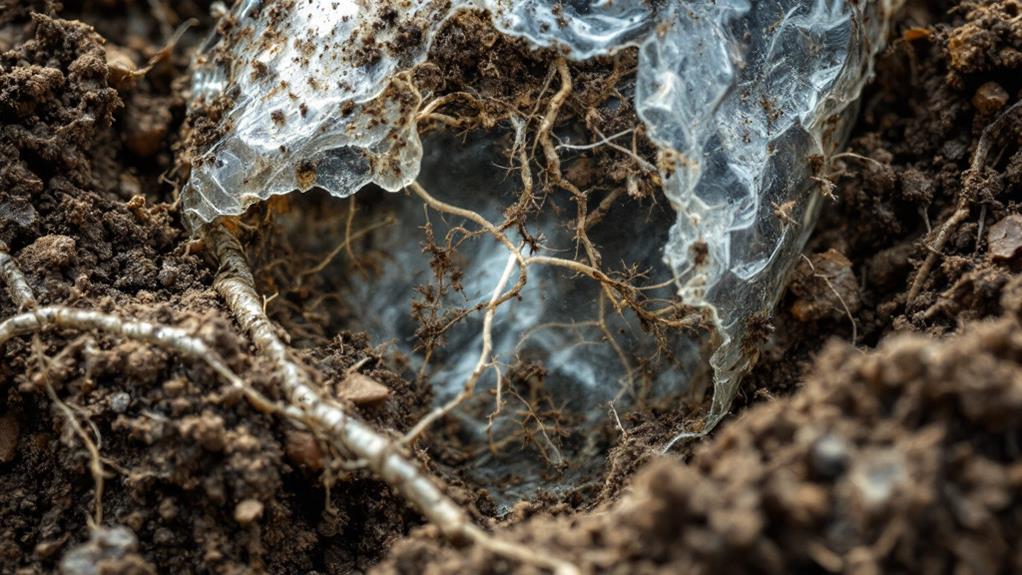
A single plastic bottle can take hundreds of years to decompose, highlighting a pressing environmental issue. Understanding the timeline of decomposition helps you grasp the long-lasting impact of plastic waste. The decomposition stages of a plastic bottle unfold gradually and are influenced by factors like sunlight exposure, temperature, and microbial activity.
Initially, the bottle remains largely intact for several decades, showing little sign of change. This is due to the resilience of plastic polymers. Then, over time, exposure to sunlight and environmental conditions begins to slowly break down the bottle's structure, although it still retains its form.
Here's a simplified timeline of decomposition:
- 0-100 years: During this phase, the bottle experiences fragmentation due to physical forces like sunlight and temperature changes, but the material remains in the environment.
- 100-200 years: Microbial activity starts to play a role, albeit slowly, as microorganisms begin to digest some of the smaller plastic particles.
- 200+ years: Complete decomposition is still not achieved. The bottle breaks down into microplastics, which persist in the environment for centuries.
Environmental Impact
As plastic bottles linger in the environment for centuries, their impact extends far beyond just being unsightly litter. These bottles contribute greatly to marine pollution, affecting vast oceanic ecosystems. When you think about marine pollution, picture the millions of plastic bottles floating in the ocean, breaking down into smaller pieces known as microplastics. These microplastics infiltrate the water, finding their way into the stomachs of marine life. Fish, turtles, and seabirds mistake them for food, leading to severe wildlife harm. Consuming plastic can cause malnutrition or even death for these creatures.
You might not realize it, but the problem doesn't stop with marine life. Plastic bottles can also leach harmful chemicals into soil and water sources, affecting terrestrial wildlife and potentially entering human food chains. As you walk through your local park or beach, notice how plastic bottles can disrupt natural habitats, suffocating plants and affecting any wildlife that calls these areas home. It's essential to understand that the environmental impact of plastic bottles isn't just a distant issue. It's present in your community, affecting the air you breathe, the water you drink, and the food you eat.
Recycling and Alternatives
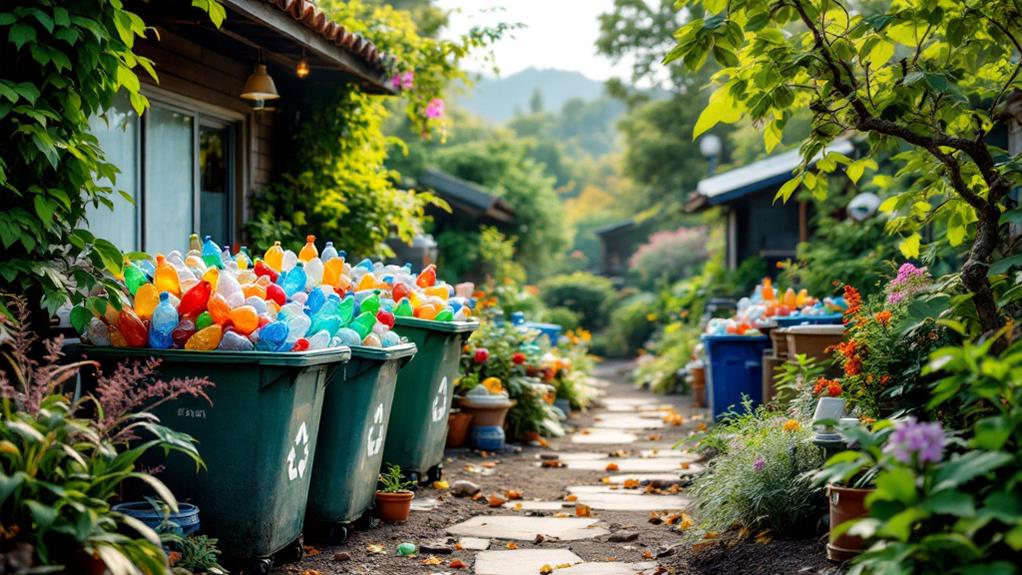
Recognizing the environmental impact of plastic bottles prompts a need for sustainable solutions. You can start by understanding how recycling processes work. Recycling is essential because it reduces the amount of waste sent to landfills and oceans. By engaging in recycling processes, you help transform used plastic bottles into new products, reducing the demand for virgin materials.
To make a personal impact, consider these steps:
- Sort and Clean: Separate your recyclable bottles from regular trash and rinse them to remove any residue. This simple act improves the efficiency of recycling processes.
- Use Recycling Centers: Take your cleaned bottles to a local recycling center. Many centers provide easy drop-off options, making it convenient for you to recycle regularly.
- Educate Yourself and Others: Stay informed about local recycling guidelines and share this knowledge with your community to encourage more participation.
Besides recycling, investigate sustainable alternatives. You can opt for reusable water bottles made from stainless steel or glass. These materials are durable and reduce the need for single-use plastics. By making conscious choices, you contribute to a healthier planet and inspire others to do the same.
Reducing Plastic Waste
Plastic waste clogs our oceans and landfills, posing a significant threat to ecosystems and wildlife. But you can play a part in reducing this environmental menace by adopting sustainable practices and improving waste management. Start by being mindful of your consumption habits. Do you really need that single-use plastic item, or is there a more sustainable alternative? Opt for reusable bags, bottles, and containers whenever possible.
Incorporate waste management strategies into your daily routine. Separate your recyclables diligently and educate yourself on your local recycling guidelines. This guarantees that what you toss into the recycling bin actually gets processed correctly. Composting is another effective way to minimize waste, turning your organic scraps into nutrient-rich soil instead of letting them end up in landfills.
Explore creative products made from recycled materials. By supporting companies that prioritize sustainability, you're encouraging a market shift towards eco-friendly options. Bring awareness to others by discussing the importance of reducing plastic waste. Engage in community clean-up events or start initiatives at work or school. Every small action contributes to a larger impact. Together, you can help create a cleaner, healthier planet by managing waste and practicing sustainability.