How NASA and Space Science Connect to Houston
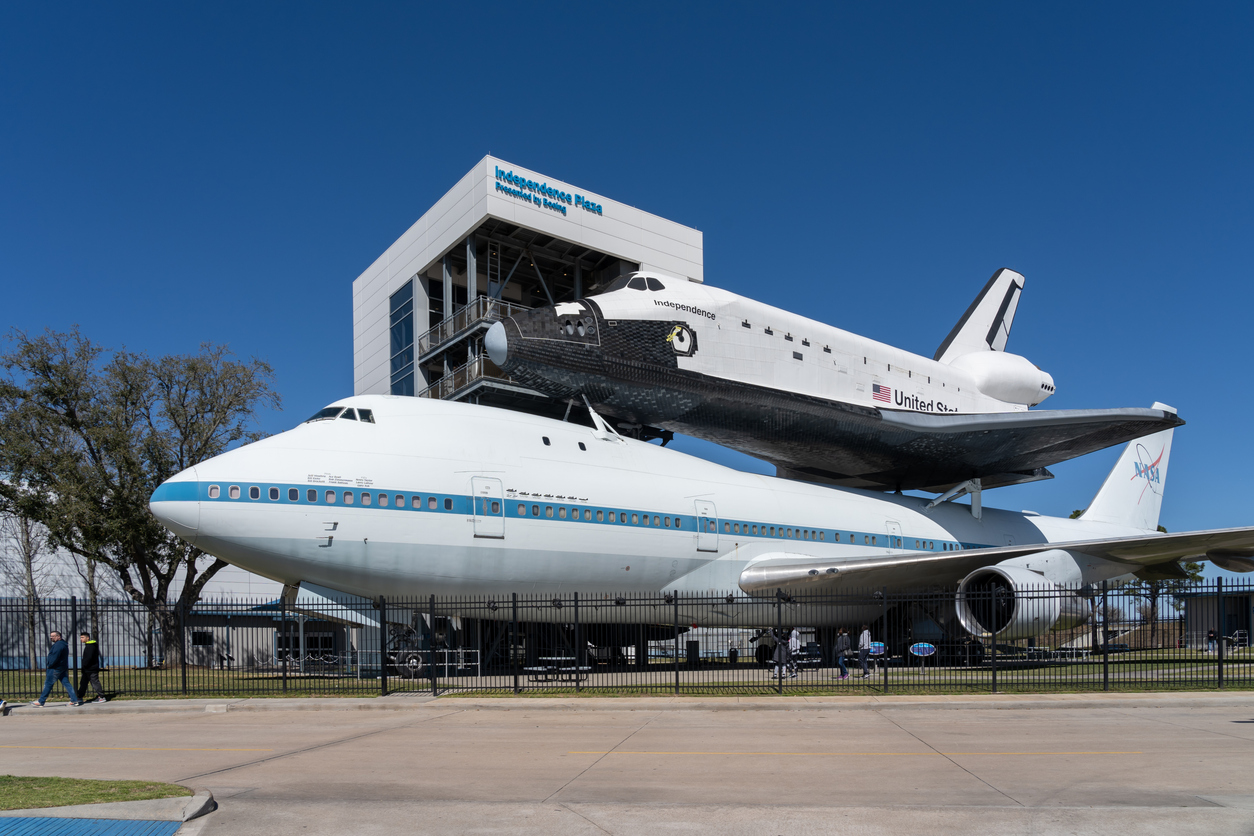
NASA’s connection to Houston began in 1961, when the agency selected the city as the home of its new Manned Spacecraft Center, later renamed Johnson Space Center. The choice was shaped by Houston’s access to transportation, nearby universities, mild climate, available land near Clear Lake, and strong political and civic support. Today, Johnson Space Center remains one of NASA’s most important locations. It serves as the center of human spaceflight operations, astronaut training, mission planning, and Mission Control for crewed missions. The phrase “Houston, we have a problem” became one of the most famous lines in space history, although the actual Apollo 13 transmission was closer to “Houston, we’ve had a problem.” That moment helped cement Houston’s identity as the place where space emergencies are managed, missions are guided, and human spaceflight is supported from Earth.
Why Did NASA Choose Houston for the Manned Spacecraft Center?
When President John F. Kennedy challenged the United States to land a person on the moon before the end of the 1960s, NASA needed a larger home for its growing human spaceflight program. The Space Task Group had been based at Langley Research Center in Virginia, but the Apollo program required expanded facilities, more staff, and closer coordination with universities, contractors, and launch operations. Houston met several important site requirements. NASA wanted access to ice-free water transportation, commercial air service, a nearby university, a mild climate, and at least 1,000 acres of land at a reasonable cost. The Clear Lake site near Houston fit those needs and offered room for a purpose-built spaceflight campus. Rice University also played a major role in connecting Houston to NASA. The land used for the center had been owned by Humble Oil and was made available through Rice, while Rice leaders and alumni helped advocate for Houston’s selection. Political influence from Texas leaders, including Vice President Lyndon B. Johnson and Congressman Albert Thomas, also helped Houston’s case. Still, the city’s practical advantages made it a strong technical choice for NASA’s expanding human spaceflight mission.
How Houston's Mission Control Became the Voice of Spaceflight
View this post on Instagram
Before Mission Control became synonymous with Houston, early crewed missions were directed from Florida’s Mercury Control Center at Cape Canaveral. As missions became more complex, NASA needed a more advanced control center with larger workspaces, faster computers, and stronger support from engineers and specialists. Houston’s Mission Control began handling missions with Gemini IV in June 1965. That mission carried astronauts James McDivitt and Ed White, included the first American spacewalk, and marked a turning point in Houston’s role in human spaceflight. From that point forward, Houston became the operational voice of NASA’s crewed missions. Flight controllers worked in shifts, supported by experts in nearby rooms, to monitor spacecraft systems, communicate with crews, and solve problems in real time. That role became world-famous during Apollo 13 in 1970, when Mission Control helped bring the crew safely home after an oxygen tank explosion forced the lunar landing to be aborted.
The Spacecraft Programs NASA Supported From Houston
View this post on Instagram
Houston became the operational heart of NASA’s human spaceflight programs, beginning with Gemini and expanding through Apollo, Skylab, the Space Shuttle, the International Space Station, and today’s Artemis-era missions. The Gemini program helped NASA learn how to conduct spacewalks, rendezvous operations, longer missions, and spacecraft maneuvers needed for Apollo. Houston’s Mission Control supported those increasingly complex flights. The Apollo program brought Houston to the center of the moon landing effort. Astronauts trained in Houston, flight controllers managed missions from Houston, and the city became permanently linked to the success of Apollo 11, Apollo 13, and the broader lunar program. Later programs continued that connection. Skylab, the Space Shuttle, and the International Space Station all depended on Johnson Space Center for astronaut training, mission operations, and crew support.
Where Apollo Astronauts Trained for the Moon Landing
Apollo astronauts trained in Houston using simulators, mockups, and mission rehearsal systems designed to prepare them for every stage of a lunar mission. Building 5, known as the Mission Simulation and Training Facility, was built to support Gemini and Apollo training. Over time, it adapted to support Skylab, the Space Shuttle, the International Space Station, and future programs. Astronauts practiced spacecraft operations, docking procedures, emergency responses, and mission-specific tasks. These simulations helped crews prepare for conditions they could not fully experience until they were in space. Houston also remains a major training center today. The Astronaut Training Facility supports nearly 200 training courses, helping astronauts understand spacecraft systems, prepare for emergencies, and rehearse mission procedures.
What Johnson Space Center Looks Like Today
Johnson Space Center sits in the Clear Lake area southeast of downtown Houston and remains one of the most important spaceflight campuses in the world. The center covers about 1,620 acres and includes roughly 100 buildings used for mission control, engineering, astronaut training, research, administration, and spacecraft development. One of its most important facilities is the Neutral Buoyancy Laboratory, part of the Sonny Carter Training Facility. This massive indoor pool is used for astronaut spacewalk training, mission planning, hardware testing, and procedure development. Johnson Space Center also continues to evolve through new projects tied to commercial space, lunar exploration, and future missions. Exploration Park, planned near JSC, is designed to support space-related research, development, and industry partnerships.
Space Center Houston and Public Space Education
View this post on Instagram
Houston’s NASA connection is not limited to engineers, astronauts, and mission controllers. Visitors can experience that history through Space Center Houston, the official visitor center for Johnson Space Center. Space Center Houston offers exhibits, artifacts, tram tours, spacecraft displays, and educational programming that connect the public to NASA’s work. For many visitors, it is the easiest way to understand how Houston became one of the world’s leading space cities. The center also supports STEM education by introducing students to engineering, robotics, astronomy, and human spaceflight. This public-facing role helps keep Houston’s space identity active for new generations.
Conclusion
Houston’s connection to NASA is rooted in history, infrastructure, education, and human spaceflight operations. From the selection of the Manned Spacecraft Center in 1961 to the rise of Mission Control and the training of Apollo astronauts, Houston became central to America’s space story. Today, Johnson Space Center continues to support astronaut training, mission operations, and future exploration. When people think of NASA and human spaceflight, they are also thinking of Houston—the city where missions are monitored, astronauts are trained, and space science continues to shape the future.
Related posts