What Is ABS Plastic and Where Is It Used?
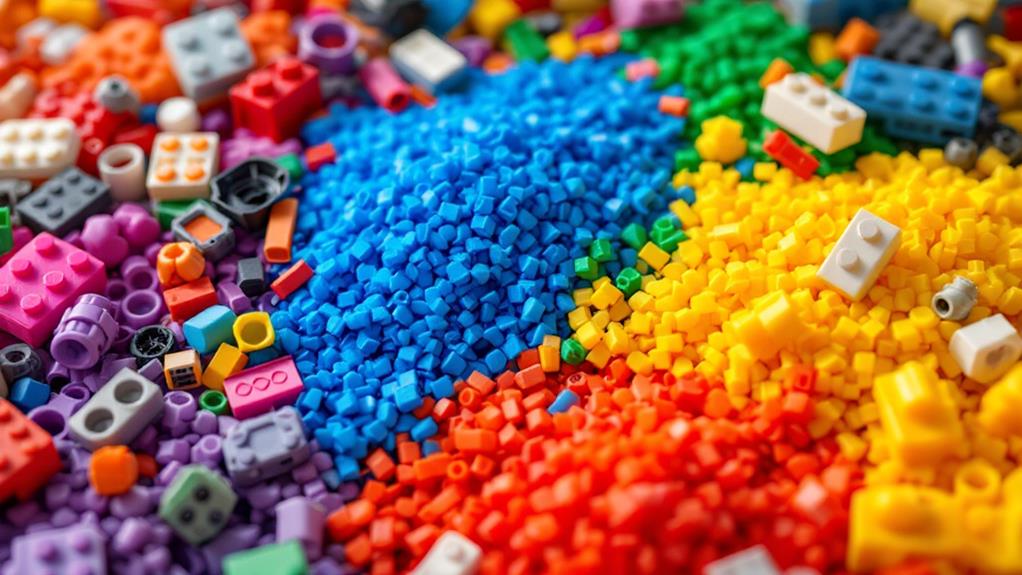
You're using ABS plastic more than you know. It's a durable, versatile thermoplastic made from acrylonitrile, butadiene, and styrene. ABS is lightweight yet tough, making it perfect for toys like LEGO bricks, automotive parts such as dashboards, and electronic housings including smartphones and keyboards. The material is valued for its impact resistance, thermal stability, and aesthetic versatility, allowing manufacturers to create intricate designs. With easy molding techniques like injection molding, you see ABS's application in products everywhere. Each component of ABS adds unique properties, ensuring products are both functional and appealing. There's so much more to uncover!
Understanding ABS Plastic
ABS plastic, or Acrylonitrile Butadiene Styrene, is a flexible thermoplastic polymer known for its durability and impact resistance. When you consider ABS characteristics, you'll find it's a favorite in many industries because it combines strength with flexibility. This makes it perfect for products that need to withstand physical stress without breaking, like automotive parts, toys, and electronic housings. Furthermore, the manufacturing process of ABS can be compared to how bakers utilize yeast activity to create resilient structures in bread, showcasing the importance of material properties in both fields.
One of the main ABS advantages is its ability to resist impact. If you've ever dropped something made of ABS and it didn't shatter, you've witnessed this benefit firsthand. Its toughness doesn't compromise its lightweight nature, making ABS an ideal material where both strength and portability are vital. Moreover, ABS can be easily molded, allowing manufacturers to create complex shapes and designs without sacrificing integrity.
Another advantage you'll appreciate is ABS's resistance to different chemicals and physical conditions. It doesn't warp or crack under extreme temperatures, making it suitable for both indoor and outdoor applications. Plus, ABS can be recycled, providing an eco-friendly angle to its list of benefits. By understanding these ABS characteristics and advantages, you'll see why it's such a widely used and trusted material across multiple fields.
Key Properties of ABS
When considering materials for your next project, it's vital to understand the key properties of Acrylonitrile Butadiene Styrene (ABS) that make it stand out. ABS is a popular choice due to its unique combination of strength and versatility, which allows it to be used in a variety of applications. Just as the smallest countries in the world, such as Vatican City, utilize their unique resources, ABS takes advantage of its properties to serve diverse needs. You're probably interested in knowing what makes ABS such a compelling option. Let's break it down:
- Impact Resistance: You'll appreciate ABS for its superior impact resistance. Regardless of whether it's a toy or an automotive part, ABS can withstand significant stress and impact without cracking or breaking, ensuring durability and longevity.
- Thermal Stability: ABS offers excellent thermal stability, so it can endure high temperatures without degrading. This makes it ideal for products exposed to varying thermal conditions, providing reliability and safety.
- Ease of Machining: ABS is easy to machine, cut, and shape, making it a favorite among manufacturers and designers. This property allows you to create intricate designs and prototypes with ease.
- Aesthetic Appeal: ABS can be easily colored and polished, making it perfect for applications where appearance matters. You'll find ABS in everything from consumer electronics to automotive interiors, where both form and function are significant.
Manufacturing Process
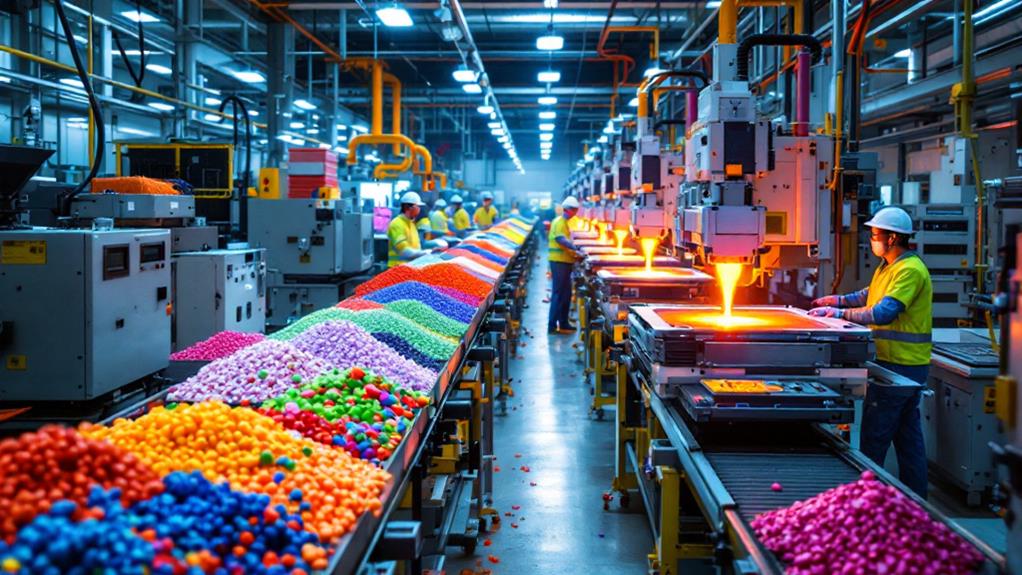
To truly appreciate the versatility of Acrylonitrile Butadiene Styrene (ABS), understanding its manufacturing process is essential. You'll find that the creation of ABS involves a fascinating blend of science and engineering. It all starts with polymer synthesis, where acrylonitrile, butadiene, and styrene are combined. Each component brings unique properties: acrylonitrile adds chemical resistance and thermal stability, butadiene offers toughness and impact resistance, while styrene provides the shiny surface finish and processability. Through polymer synthesis, these monomers are polymerized, resulting in a resilient and adaptable plastic.
Once the polymer synthesis is complete, ABS is ready for shaping. This is where molding techniques come into play. You've got several options, including injection molding, extrusion, and blow molding. Injection molding is popular for its precision and efficiency, ideal for creating complex shapes with high detail. During this process, the ABS is melted and injected into a mold under high pressure, quickly cooling to form a solid part. Alternatively, extrusion involves forcing the molten ABS through a die to create long, continuous shapes, like pipes. Each technique offers distinct advantages, tailored to the specific requirements of the ABS application.
Uses in Consumer Products
With the mastery of ABS manufacturing techniques established, let's examine how this remarkable plastic finds its way into everyday consumer products. You might be surprised to learn just how pervasive ABS plastic is in your daily life. Its durability, flexibility, and affordability make it a favorite among manufacturers, especially in the creation of household items and toys.
- Toys that Spark Joy: In toy manufacturing, ABS plastic shines bright. Think about the lively, sturdy LEGO bricks that have captivated generations, or the durable action figures that withstand hours of play.
- Kitchen Necessities: ABS is commonly used in household items like kitchen appliances. The robust shells of your blender or coffee maker likely owe their resilience to ABS, ensuring they serve you well for years.
- Personal Electronics: Your favorite gadgets, from smartphones to remote controls, often feature ABS plastic. Its ability to withstand impact protects your devices from everyday mishaps.
- Modern Furniture: In modern home decor, ABS finds its place in sleek, contemporary furniture. Its glossy finish and resistance to wear make it perfect for chairs and tables that are both stylish and practical.
Incorporating ABS plastic into consumer goods is a reflection of its versatility and reliability, enhancing your everyday experiences.
Industrial Applications
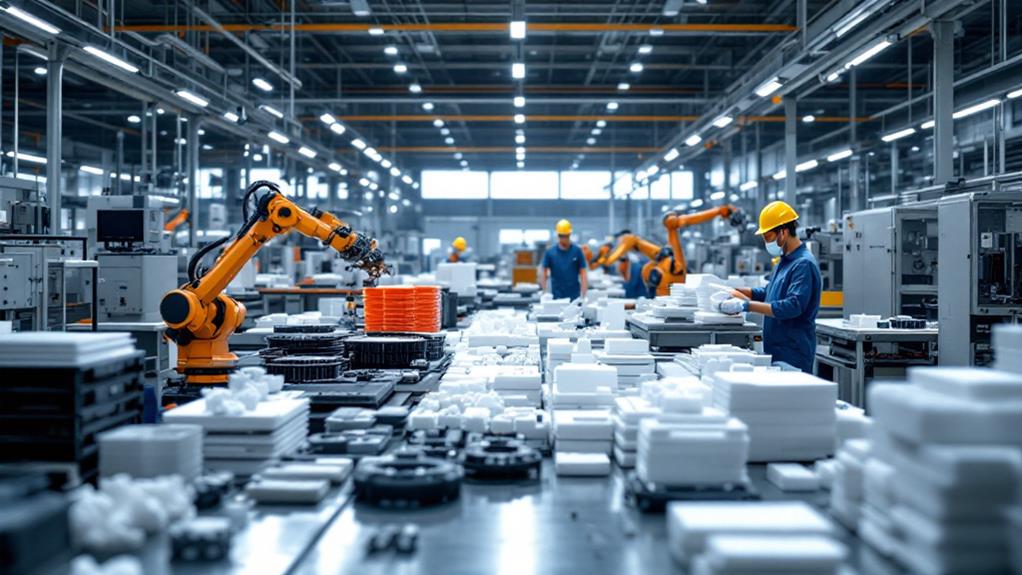
ABS plastic isn't just a household staple—it's a powerhouse in industrial applications too. You might not realize it, but ABS is essential in industries like automotive and electronics. Its strength, lightweight nature, and versatility make it an ideal material for crafting automotive components. Think about the next time you get in a car: the dashboard, wheel covers, and even some body parts are likely made from ABS. These components benefit from ABS's impact resistance and ability to withstand significant wear and tear.
In the electronics industry, ABS plastic is similarly indispensable. It's often used for electronic housings because it provides excellent insulation and protection for delicate electronic circuits. Picture a computer keyboard or the casing of your favorite gaming console—ABS guarantees that these devices can endure daily use while keeping the internal components safe from damage. Its ease of molding allows manufacturers to design intricate shapes and complex parts effortlessly, guaranteeing both functionality and aesthetics.
Environmental Impact
While ABS plastic proves invaluable in diverse industries, its environmental impact raises significant concerns. As you become more aware of this, you'll notice that ABS plastic is not biodegradable, meaning it can linger in the environment for hundreds of years. This leads to growing landfills and harmful effects on wildlife and ecosystems. Despite its durability and versatility, the environmental concerns surrounding ABS plastic are hard to ignore.
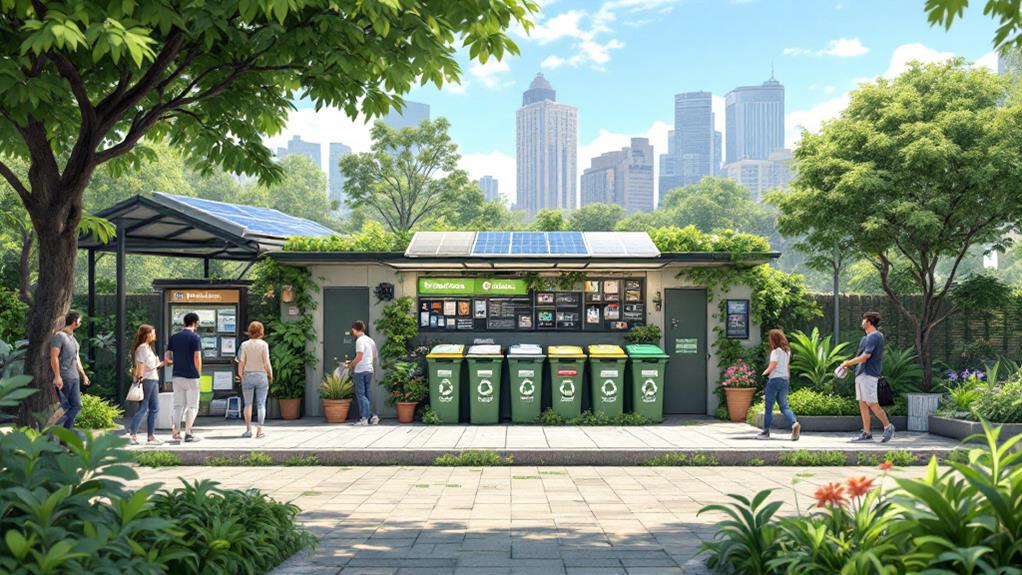
Recycling methods for ABS plastic are available, but they're not as widespread as they should be. The process is complex and often not cost-effective, leading to lower recycling rates. Here are some pressing issues related to ABS and the environment:
- Pollution: Many ABS products end up in oceans, contributing to the alarming issue of marine pollution and threatening aquatic life.
- Carbon Footprint: The production of ABS plastic involves significant energy consumption and greenhouse gas emissions, which exacerbate climate change.
- Waste Management: Inadequate recycling methods mean ABS plastic often ends up in landfills, taking centuries to decompose.
- Resource Depletion: ABS production relies on finite fossil fuels, depleting valuable resources.
You have the power to champion better recycling methods and more sustainable alternatives.