What Temperature Does Plastic Melt At?
You might be curious about the temperature at which plastic melts, but it really depends on the type of plastic. For instance, polystyrene melts around 240°F (115°C), while polypropylene has a melting point near 320°F (160°C). Meanwhile, PVC softens at 176°F (80°C) and fully melts between 320°F and 410°F (160°C to 210°C). High-performance plastics like PEEK can withstand up to 500°F (260°C). Numerous factors such as molecular weight and crystallinity affect these temperatures as well. If you're interested in how these characteristics influence recycling or product durability, there's more to investigate.
Understanding Plastic Types
Understanding Plastic Types
Plastic, a versatile material found in countless everyday items, comes in different types, each with unique properties. As you investigate these types, you'll uncover that their plastic properties are heavily influenced by their polymer structures. For instance, similar to how yeast plays an essential role in transforming dough through fermentation, the molecular arrangement of polymers greatly affects the thermal behavior of plastics. Polymers, which are long chains of repeating molecular units, form the backbone of all plastics. These chains can be arranged in multiple ways, affecting the material's flexibility, strength, and thermal behavior.
Thermoplastics and thermosetting plastics are two primary categories you'll encounter. Thermoplastics, such as polyethylene and polypropylene, have linear or slightly branched polymer structures. This arrangement allows them to melt and reform multiple times without altering their fundamental properties. You'll find them in items like plastic bags, bottles, and food containers. Thermosetting plastics, like epoxy and phenolic, have cross-linked polymer structures. Once set, they can't be remolded, giving them a durable, heat-resistant quality.
Knowing the plastic properties and polymer structures of different types helps you understand their applications and limitations. By grasping these basics, you can better appreciate why certain plastics are chosen for specific uses, guiding you to make informed decisions about their use and disposal.
Factors Affecting Melting Point
When considering the melting point of plastics, it's essential to recognize how their polymer structures influence this property. The molecular structure plays a significant role in determining how much heat a plastic can withstand before melting. More complex structures with tightly-packed molecules typically exhibit higher melting points, similar to how horsepower is defined based on strength and efficiency. However, that's not the only factor at play.
Additives can also influence the melting point. Manufacturers often incorporate additives to improve certain properties, including stability and durability. These additives can either increase or decrease the melting point, depending on their chemical nature and purpose.
To better understand how these factors affect melting points, consider the following:
- Molecular Weight: Higher molecular weight often results in a higher melting point because the chains are longer and more entangled.
- Crystallinity: Plastics with higher crystallinity tend to have a higher melting point due to the orderly arrangement of molecules.
- Additives Influence: Flame retardants, plasticizers, and stabilizers can modify the melting point, often lowering it.
- Polymer Type: Different types of polymers, like thermoplastics and thermosetting plastics, have varying inherent melting points.
Common Plastics and Their Melting Points
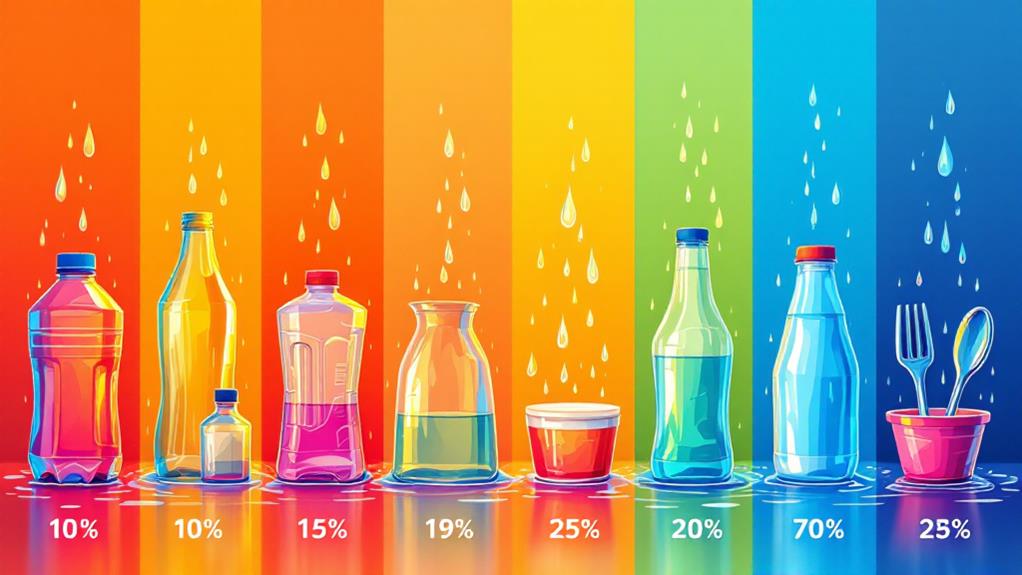
Understanding the melting points of common plastics is vital when selecting materials for specific applications. Each type of plastic has a unique melting point, affecting its thermal stability and suitability for diverse uses. For instance, biodegradable plastics often melt at lower temperatures, impacting their recycling processes and environmental impact. In contrast, plastic composites, which combine different materials, offer improved thermal stability and resist plastic deformation at higher temperatures.
Consider polystyrene, which melts around 240°F (115°C). It's widely used in packaging due to its low melting point and ease of molding. Polypropylene, with a melting point of about 320°F (160°C), is favored for its durability and flexibility in plastic manufacturing. These distinct characteristics are vital when you need to guarantee the product's performance under heat.
Plastic additives can further influence melting points, offering increased resistance to heat or boosting flexibility. However, they may complicate recycling processes and contribute to environmental impact. Keep in mind that understanding these aspects helps in designing products that balance performance and eco-friendliness. By knowing the melting points and characteristics of different plastics, you can make informed decisions that align with your project's requirements.
Polyethylene Melting Range
Polyethylene stands out as one of the most commonly used plastics, thanks to its versatility and wide range of applications. You'll find it in everything from packaging materials to water pipes. One of the key polyethylene properties is its relatively low melting range, which makes it easy to mold into different forms. The melting range typically falls between 120°C and 180°C, depending on the type of polyethylene you're dealing with.
Understanding the polyethylene melting range is essential for its applications. Here's why:
- Ease of Processing: With its lower melting point, polyethylene can be easily processed and molded, saving time and energy in manufacturing.
- Durability: Despite its low melting range, polyethylene remains strong and resistant to impacts, making it ideal for protective packaging.
- Flexibility: Its ability to be molded at lower temperatures allows for a variety of polyethylene applications, like creating flexible films and sturdy containers.
- Cost-Effective: The ease of processing and availability contribute to its affordability in mass production.
Knowing the melting range helps you select the right type of polyethylene for your needs. Regardless of whether you're creating a durable product or something more flexible, polyethylene's properties offer a solution for a wide array of applications.
Polypropylene Temperature Threshold
Polypropylene, another widely used plastic, has a higher melting point compared to polyethylene, typically ranging from 130°C to 171°C. This higher temperature threshold makes it suitable for different applications where heat resistance is vital. Understanding polypropylene properties is important if you're considering it for a project. It's known for its durability, chemical resistance, and flexibility, making it an excellent choice in environments where other plastics might fail.
In terms of polypropylene applications, you'll find it in everything from automotive parts to food containers. Its ability to withstand higher temperatures without deforming is particularly valuable in the manufacturing of items that need sterilization, such as medical supplies. Additionally, polypropylene's lightweight nature and resistance to moisture add to its versatility, allowing it to be used in packaging, textiles, and even ropes.
When working with polypropylene, keep its melting range in mind to maintain its integrity. Regardless of whether you're molding it into car bumpers or using it for household goods, knowing its thermal limits helps you avoid potential mishaps. By leveraging polypropylene's unique properties, you can improve the quality and functionality of your products.
PVC Melting Characteristics
Switching focus to another commonly used plastic, PVC, reveals its distinct melting characteristics. PVC, or polyvinyl chloride, typically starts softening at around 80°C (176°F) and fully melts between 160°C and 210°C (320°F to 410°F). Understanding these temperatures is vital for anyone involved in PVC applications, regardless of you're molding, extruding, or recycling it.
PVC durability is a key reason it's so widely used. Its resistance to environmental factors makes it ideal for construction materials, pipes, and even clothing. However, while PVC is versatile, you should be aware of its safety concerns, especially during manufacturing or disposal. When heated, PVC can release harmful gases, so proper ventilation is indispensable.
Recycling PVC presents its own set of challenges due to these safety issues, but it's still a significant step in reducing plastic waste. If you're considering PVC alternatives, materials like polyethylene or polypropylene might be suitable, depending on your specific needs. Keep in mind:
- PVC's melting point affects its processing techniques
- Durability makes it suited for long-lasting applications
- Safety measures are vital during heating
- Alternatives may offer safer or more sustainable options
Knowing these factors helps you make informed choices about using PVC.
High-Temperature Plastics
In relation to high-temperature plastics, understanding their unique properties is vital for applications that demand exceptional thermal resistance. These materials, often called high performance polymers, are designed to withstand extreme temperatures while maintaining their structural integrity. You'll find them in industries where regular plastics would fail, such as aerospace, automotive, and electronics. Their ability to perform under such conditions makes them invaluable when reliability can't be compromised.
One key aspect of high-temperature plastics is their thermal stability. Unlike standard plastics, these materials don't soften or degrade when exposed to high heat. For instance, polyether ether ketone (PEEK) and polyimide are popular choices known for their impressive thermal resistance. PEEK can withstand temperatures up to 260°C (500°F), while polyimide can go even higher, reaching around 400°C (752°F). These high performance polymers guarantee that devices and components can function safely and efficiently in demanding environments.
When selecting a high-temperature plastic, consider the specific requirements of your application. Assess the maximum temperature the material will face and choose a polymer that offers adequate thermal stability. This careful selection guarantees that your project remains durable and effective, even under extreme conditions.
Melting Points in Recycling
While high-temperature plastics excel in extreme conditions, recycling standard plastics requires understanding their melting points to guarantee effective reprocessing. In recycling processes, knowing the precise melting points of different plastics is essential. It guarantees that each type of plastic can be appropriately sorted and melted without degrading its quality. Effective plastic sorting is the foundation of successful recycling, helping to reduce waste and promote sustainability.
When diving into recycling, here's what you should keep in mind:
- Polyethylene (PE): Melts between 120-180°C. It's commonly found in grocery bags and bottles.
- Polypropylene (PP): Requires a bit more heat, melting at 160-170°C. This plastic is often used in packaging and containers.
- Polyethylene Terephthalate (PET): Melts around 260°C. You'll find this in soda bottles and food containers.
- Polystyrene (PS): Melts at 100-120°C. Think of the foam cups and packing peanuts.
Understanding these melting points helps you grasp why proper sorting is essential. Each plastic type has a specific melting range, and mixing them can lead to contamination and ineffective recycling processes. By sorting plastics accurately, you guarantee that they can be efficiently melted and reprocessed into new products, contributing to a more sustainable future.
Industrial Applications and Considerations
For industries that rely heavily on plastic materials, understanding their melting points is vital to optimizing manufacturing processes. You need to guarantee that your industrial processes are efficient and maintain high product quality. Knowing the precise temperature at which a specific plastic melts allows you to implement effective temperature control. This, in turn, guarantees that you achieve the desired consistency and properties in your final products.
In manufacturing, temperature control isn't just about preventing plastic from melting too early or not melting at all. It's about maintaining the right conditions for molding, extrusion, or any other process you're using. If the temperature isn't carefully monitored, you could end up with defects, such as weak spots or bubbles, which compromise the product's integrity.
Furthermore, different types of plastics melt at different temperatures. For instance, polyethylene melts at a lower temperature compared to polycarbonate. By understanding these differences, you can select the right plastic for your application, guaranteeing both cost-effectiveness and performance. Ultimately, mastering temperature control in your industrial processes leads to increased efficiency, reduced waste, and higher quality products, which are vital for staying competitive in the market.
Everyday Implications of Melting Points
Plastic's melting points play a crucial role in everyday life, influencing everything from kitchen gadgets to children's toys. You're surrounded by products whose performance and safety rely on understanding these points. Regardless of it's the heat resistance of a spatula or the temperature sensitivity of a water bottle, knowing when plastic will melt can guide your usage and purchasing decisions.
Consider these implications:
- Safety Concerns: Using plastic containers in the microwave can release harmful chemicals if they exceed their melting point.
- Environmental Impact: Improper recycling methods can cause plastics to melt, leading to pollution. Being aware of recycling codes helps mitigate this.
- Product Durability: Items like children's toys are designed to withstand specific temperatures, guaranteeing they don't deform easily during play.
- Manufacturing Processes: Companies choose plastics based on melting points to optimize cost considerations and guarantee product reliability.