What Are Bioplastics and Are They the Future?
Bioplastics are plastics made from renewable resources like plants and microorganisms. They offer a greener alternative to traditional plastics by reducing carbon footprints and relying less on fossil fuels. You'll find them in everyday items like packaging and automotive parts. They biodegrade under certain conditions, but not all bioplastics decompose easily, so proper disposal is key. Despite challenges like higher production costs and competition with food resources, advancements in technology and rising environmental awareness are driving their adoption. With ongoing research and innovations, bioplastics could soon become a major player in the quest for sustainability. Investigate further to uncover their true potential.
Understanding Bioplastics
Bioplastics, a rapidly evolving field, are derived from renewable biomass sources like plants and microorganisms. As you investigate understanding bioplastics, you'll reveal they offer a sustainable alternative to traditional plastics. Unlike conventional plastics that rely on fossil fuels, bioplastics aim to reduce carbon footprints and environmental impact. This shift has led to numerous bioplastic applications across diverse industries, from packaging to automotive parts. Significantly, the push for sustainable materials parallels the growing interest in renewable energy sources, such as geothermal energy, which also aims to minimize environmental harm. As a consumer, you're likely noticing bioplastics in everyday products like bags, bottles, and even clothing.
Consumer awareness plays a critical role in the adoption of bioplastics. When you're aware of the environmental benefits these materials offer, you're more inclined to choose products made from them. This shift in consumer preference encourages companies to invest in bioplastic solutions, further driving innovation and development in the field. As you investigate options, consider how your choices can support sustainable practices.
Bioplastics aren't just about being eco-friendly; they're also about functionality. Manufacturers are constantly improving the performance of bioplastics, ensuring they meet the same standards as their petrochemical counterparts. By understanding bioplastics, you contribute to a more sustainable future, making informed decisions that impact the planet positively.
Types of Bioplastics
When investigating the types of bioplastics, you'll uncover a wide range of materials that differ in composition and application. These innovations offer sustainable alternatives to traditional plastics and have numerous uses. In addition to their environmental benefits, many bioplastics are designed to be cost-effective and possess unique properties that improve their usability in various industries, similar to Liquid Thermocol's specifications. Let's explore some of the main types of bioplastics and their applications.
- Polylactic Acid (PLA): Derived from renewable resources like corn starch or sugarcane, PLA is one of the most popular bioplastics. It's used in packaging, disposable tableware, and even medical implants. Its versatility makes it a key player in bioplastic applications, though its thermal resistance can be a limitation.
- Polyhydroxyalkanoates (PHA): These are produced by microorganisms that feed on organic materials. PHAs are biodegradable and suitable for applications like packaging, agriculture, and even in the medical field for sutures. Their ability to degrade in marine environments sets them apart in bioplastic innovations.
- Starch Blends: Combining starch with other polymers creates a bioplastic that's often used in food packaging and bags. They're cost-effective and offer a partially biodegradable solution, though they may not fully break down without proper composting conditions.
Each type of bioplastic brings unique benefits and challenges, paving the way for future innovations in sustainable materials.
Production Processes
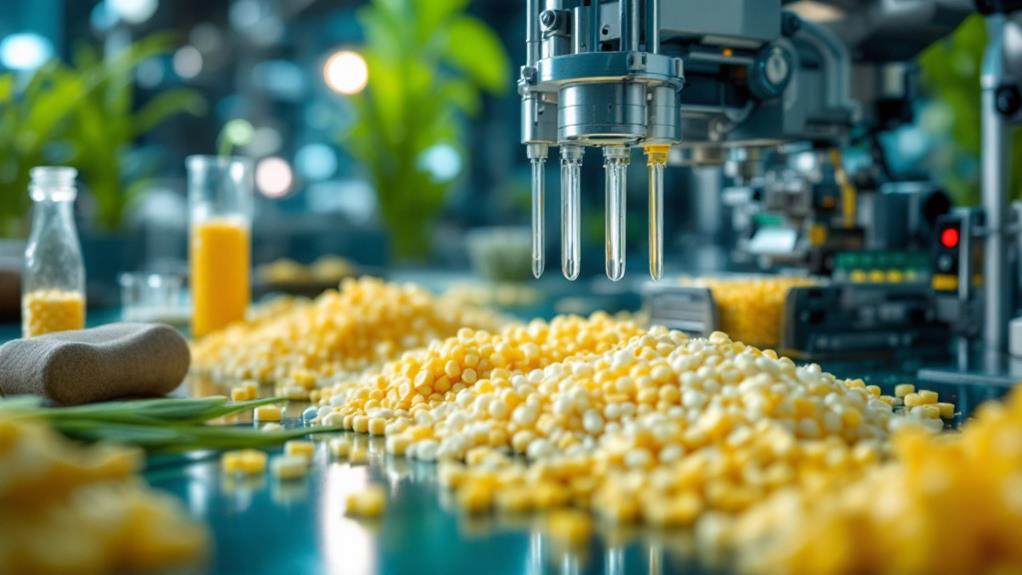
To understand the future of bioplastics, it's vital to investigate their production processes. You need to concentrate on sustainable sourcing of raw materials, which often include renewable resources like corn starch, sugarcane, or even algae. These groundbreaking materials are key to creating bioplastics that not only perform well but also reduce reliance on fossil fuels. By choosing materials sustainably, you can decrease negative impacts on the environment from the start.
Production efficiency is another important aspect. Streamlining processes guarantees that you use fewer resources and less energy, effectively lowering production costs. It's about finding the balance between maintaining quality and reducing energy consumption. Efficient production also contributes to better waste management practices by cutting down on the excess material that needs to be disposed of or recycled.
Conducting a lifecycle assessment of bioplastics helps you understand their comprehensive environmental impact. This assessment evaluates every stage, from raw material extraction to product disposal, allowing you to identify areas for improvement. By incorporating lifecycle assessments, you can make informed decisions to improve the sustainability of bioplastics.
Ultimately, focusing on these aspects guarantees that bioplastics are produced in ways that are both efficient and environmentally responsible.
Environmental Benefits
As you investigate the efficient and sustainable production processes of bioplastics, it's clear that these materials offer significant environmental benefits. To begin with, they are made from renewable resources, which means they drastically reduce reliance on fossil fuels. This shift not only supports resource efficiency but also helps lower the carbon footprint associated with traditional plastics. By choosing bioplastics, you contribute to a more sustainable future, aligning with global efforts to adhere to stricter environmental policies.
By embracing eco friendly alternatives, you're also promoting waste reduction. Bioplastics integrate well into a circular economy, where materials can be reused and recycled, minimizing environmental impact. With increasing consumer awareness, the demand for sustainable materials grows, encouraging industries to innovate and adopt greener practices.
Consider these key benefits of using bioplastics:
- Resource Efficiency: Utilizing renewable resources reduces dependence on finite materials and cuts down on energy consumption.
- Reduced Carbon Footprint: Lower emissions during production and throughout their life cycle make bioplastics a more climate-friendly choice.
- Waste Reduction: Aiding in creating a circular economy by promoting recycling and reuse, thereby minimizing waste and its environmental effects.
Biodegradability Concerns

While bioplastics offer numerous environmental benefits, their biodegradability remains a topic of concern. You might think bioplastics decompose easily, but their decomposition rates vary considerably. Some require specific composting practices and conditions, such as high temperatures and specific microbial activity, to break down effectively. Without these conditions, they can persist in the environment, undermining pollution reduction efforts.
Material durability, while beneficial in some applications, can hinder bioplastics' ability to decompose. As a consumer, it's essential to be aware of the differences between bioplastics and their requirements for proper disposal. Not all are compostable, and improper disposal can lead to increased waste management challenges, rather than resolving them. Effective recycling methods can play a role here, but these systems need to be more widely implemented and understood.
Regulatory frameworks can help guide proper waste management and guarantee bioplastics don't negatively impact ecosystems. However, these frameworks are still evolving, and their effectiveness depends on consumer awareness and participation. As you consider bioplastics, think about their entire lifecycle and how they fit into the broader goal of creating a sustainable future, balancing biodegradability with environmental impact.
Impact on Food Resources
Considering the challenges of biodegradability, it's also vital to examine how bioplastics affect food resources. You might wonder if bioplastics, often derived from crops like corn and sugarcane, compete with food resources. This resource competition raises concerns about food security, as diverting crops for bioplastic production could impact food availability and prices.
- Agricultural Sustainability: Bioplastics can influence agricultural sustainability by promoting crop development practices that might not always align with sustainable farming. It's important to balance the land use for food versus bioplastics to guarantee long-term soil health and water use efficiency.
- Composting Practices: While bioplastics offer an advantage in waste management through composting, they require specific conditions to break down effectively. You should be aware that incorrect composting practices can lead to increased waste, undermining their environmental benefits.
- Policy Implications: Governments and organizations must carefully consider policy implications to manage the impact on food resources. Policies can guide how land is allocated, making certain that bioplastics don't threaten food security.
Ultimately, consumer awareness plays a significant role in supporting policies and practices that prioritize both bioplastic production and food security.
Global Market Demand
Many are curious about how the growing global market demand for bioplastics is shaping their production and availability. As you investigate bioplastic applications, you'll notice a shift in market trends driven by increased consumer awareness of environmental issues. People are looking for sustainable alternatives, and bioplastics fit the bill. This demand is prompting companies to adopt sustainability initiatives, positioning themselves in a competitive landscape where innovation drivers are vital.
Regulatory frameworks also play a significant role. Governments worldwide are enforcing stricter regulations on traditional plastics, pushing industries toward bioplastic solutions. These regulations spur economic impact by encouraging investment in bioplastic technology and infrastructure, enhancing production capabilities.
You'll find that the competitive landscape is rapidly evolving. Established companies and startups alike are racing to meet demand, stimulated by market trends emphasizing sustainability. This competition fuels innovation, leading to more efficient and diverse bioplastic applications across industries like packaging, automotive, and consumer goods.
In this dynamic environment, consumer awareness continues to grow, influencing purchasing decisions and pushing companies to innovate further. As bioplastics gain traction, their global market demand is set to transform industries and redefine how you interact with everyday products.
Technological Advancements
Innovation is the heartbeat of technological advancements in bioplastics. You're witnessing a transformative period where bioplastic innovations are reshaping how we think about sustainable materials. As the world races to find eco-friendly alternatives, technology is at the forefront, driving the development of materials that are both functional and environmentally benign.
- Improved Production Processes: New manufacturing techniques are making it easier to produce bioplastics at scale. These innovations not only lower production costs but also enhance the material's performance, paving the way for broader adoption.
- Enhanced Material Properties: Advances in bioplastic research are leading to stronger, more durable materials. Scientists are engineering bioplastics that can withstand higher temperatures and offer greater flexibility, matching—or even surpassing—traditional plastics in many applications.
- Biodegradable Additives: By incorporating biodegradable additives, new bioplastics break down more quickly and efficiently after use. This improvement guarantees that these sustainable materials minimize their environmental footprint, aligning with global sustainability goals.
These technological advancements in bioplastics are vital as you look to reduce reliance on fossil fuels and decrease plastic pollution. With each breakthrough, the potential for bioplastics to replace conventional plastics grows, offering a promising glimpse into a more sustainable future.
Challenges and Limitations
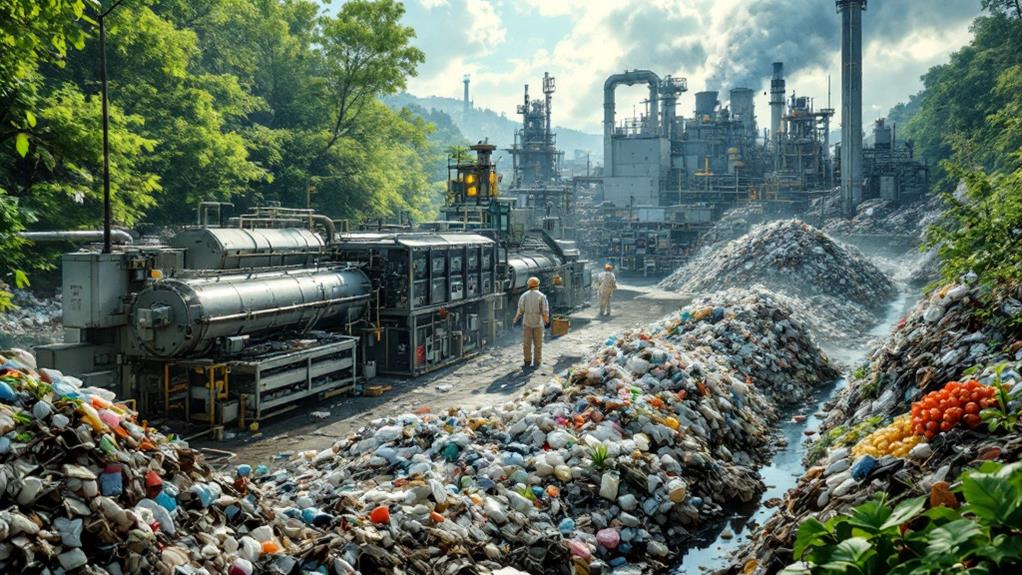
Steering through the world of bioplastics isn't without its hurdles. You'll encounter challenges like bioplastic regulations that aren't yet standardized globally. Different countries have varying rules about what qualifies as a bioplastic, making it confusing for manufacturers and consumers. This lack of uniformity complicates production and distribution on an international scale, slowing the broader adoption of bioplastics.
Consumer awareness is another vital issue. Many people don't really understand what bioplastics are or how they differ from traditional plastics. This lack of knowledge leads to misconceptions about their environmental benefits and proper disposal methods. You might think a bioplastic product will fully decompose in a backyard compost pile, but that's not always the case. Some bioplastics require industrial composting facilities, which aren't widely available.
Moreover, the cost of producing bioplastics can be higher than conventional plastics, making them less attractive to budget-conscious consumers and businesses. Scaling up production efficiently and economically remains a significant challenge. Ultimately, there's the issue of performance. Bioplastics sometimes don't offer the same durability and versatility as traditional plastics, limiting their application in certain industries. Addressing these challenges is essential for bioplastics to gain ground.
The Future of Bioplastics
While challenges and limitations currently hinder the bioplastics industry, there's also a promising horizon ahead. As you investigate the future of bioplastics, you'll notice several key trends that indicate potential growth and advancement. Emphasizing bioplastic innovations, the industry is poised to address environmental concerns and provide more sustainable materials that could replace conventional plastics.
First, research and development are accelerating. Scientists and engineers are working tirelessly to improve the properties of bioplastics, making them more durable and versatile. Breakthroughs in technology will likely lead to bioplastic innovations that can compete with, and possibly outperform, traditional plastics.
Second, consumer demand for sustainable materials is rising. As awareness of environmental issues grows, people are increasingly seeking out eco-friendly products. This shift in consumer behavior is motivating companies to adopt bioplastics and invest in future developments.
Third, government policies and incentives are playing a vital role. Many governments are now implementing policies to reduce plastic waste and promote sustainable alternatives. Financial incentives and regulations can drive companies to prioritize bioplastic innovations, further accelerating their adoption.